Author: Patricia Miller

editor of Encyclopedia Virginia
BLOG POSTPODCAST EPISODE

The Economics of Slavery

Three new entries in EV shed light on some surprising aspects of the economics of slavery. Doug Sanford illuminates a little-understood aspect of slavery: the Hiring Out of the Enslaved. As he notes, “While less well-known than other facets of institutional slavery, hiring out of the enslaved was a common and long-standing arrangement throughout the nearly 250-year existence of race-based slavery in Virginia.”

In fact, “for many enslaved African Americans in Virginia, being hired out was a more common experience than being sold, and one that could occur at multiple points in their lives, causing repeated disruption.” Enslaved families dreaded “hiring day,” which was usually January 1, because it often signaled the parting of family members until the following Christmas.  Read more about: The Economics of Slavery
BLOG POSTPODCAST EPISODE

How Washington Outflanked Smallpox

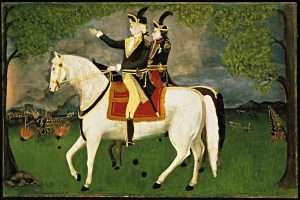
With full FDA approval of the Pfizer COVID-19 vaccine, the Pentagon has announced that all active-duty troops will be required to receive the vaccine as soon as possible—a mandate to protect the health and readiness of the military that stretches back to the very first commander-in-chief, George Washington. His decision to inoculate the Continental Army against smallpox was among the most controversial of his career but not for the reason many assume, as Elizabeth Fenn detailed in Pox Americana, her groundbreaking book about the smallpox epidemic that “coincided almost perfectly with the American Revolution and took many more American lives than the war with the British did.”

The fledgling United States faced two foes in the Revolutionary War. Read more about: How Washington Outflanked Smallpox

BLOG POSTPODCAST EPISODE

The Woman Who Refused to “Obey”

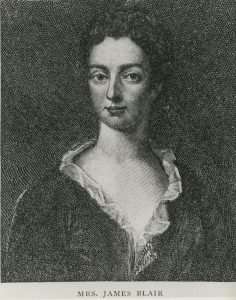
Sarah Harrison Blair offers a tantalizing glimpse of unlikely female agency in colonial Virginia. She was the daughter of wealthy Surry County tobacco planter, trader, and land speculator Benjamin Harrison II. By the time of Sarah’s birth in 1670, the Harrisons were already a political dynasty in the making. Her father served in the House of Burgesses and on the governor’s Council; Read more about: The Woman Who Refused to “Obey”

BLOG POSTPODCAST EPISODE

Juneteenth

As the nation and Virginia prepares to celebrate Juneteenth, our new entry by Lauranett Lee takes a look at how the poignant celebration of the belated emancipation of the Black residents of Galveston, Texas, became a nationwide holiday incorporating a number of Freedom Day traditions, including those celebrated in Virginia.

And while Juneteenth lays claim to being the oldest nationally celebrated commemoration of the end of slavery in the United States, Virginia can lay claim to one of the first recorded celebrations of emancipation—a full two and a half years before Juneteenth. Read more about: Juneteenth

BLOG POSTPODCAST EPISODE

Founding Fathers, Mothers, and Others

Warren G. Harding is credited with coining the term “Founding Fathers” to refer to the men who led the American Revolution and “dedicated a new republic to liberty and justice,” as he said in a 1916 speech to the Republican National Convention. There’s more than a little irony here. Harding was one of our least presidential presidents—he was a confirmed, and boastful, womanizer, gambler, and heavy drinker—who presided over a notoriously corrupt administration. Read more about: Founding Fathers, Mothers, and Others

BLOG POSTPODCAST EPISODE

An especially malevolent form of American entrepreneurship

“Slave trader.” It’s one of the most loathsome expressions in the English language. Even enslavers claimed to recoil at that designation in the era when slavery flourished. Andrew Jackson took umbrage at being called a “negro-trader” during the bitter presidential election of 1828, even though the slaves he bought and sold as a young man as part of the burgeoning interstate trade in enslaved people helped make him rich. Read more about: An especially malevolent form of American entrepreneurship

BLOG POSTPODCAST EPISODE

The Remarkable Journey of Elizabeth Keckly

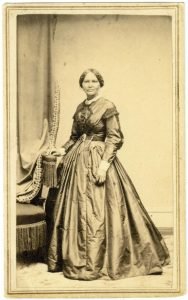
Few stories in Encyclopedia Virginia are more dramatic than that of Elizabeth Hobbs Keckly. Born into slavery in Dinwiddie Courthouse, in the Piedmont region of Virginia, during the presidency of James Monroe, by the time that Abraham Lincoln entered the White House in 1861, not only was Keckly a free woman, but she was also Washington, D.C.’s most celebrated dressmaker.  Read more about: The Remarkable Journey of Elizabeth Keckly

BLOG POSTPODCAST EPISODE

Bernard Cohen and the Legacy of Loving

Bernard Cohen, one of the two lawyers who successfully took on one of the last laws underpinning legal segregation in the landmark Loving v. Virginia case, died on October 12 at the age of eighty-six.

Brooklyn-born Cohen was practicing law in Alexandria in 1963 when he was asked to take the case of Richard and Mildred Loving, a mixed-race couple from Caroline County, by the American Civil Liberties Union. Read more about: Bernard Cohen and the Legacy of Loving

BLOG POSTPODCAST EPISODE

EV Election Edition

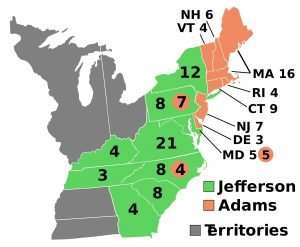
The air is crisp, and the first hints of color are showing in the Blue Ridge, which means that pumpkin spice lattes and the fifty-ninth U.S. presidential election must be around the corner. It’s easy to think that we live in uniquely unsettling political times. But a look at the past shows that the country has weathered political storms in the past and come out the other side, although often battered from the tempest.  Read more about: EV Election Edition

PRIMARY DOCUMENT

“Third report of a committee of the representatives of New York Yearly Meeting of Friends: upon the condition and wants of the colored refugees.” (May 1864)

In this report, dated May 1864, the Committee on Colored Refugees, who were representatives of the New York Yearly Meeting of Friends, gives its assessment of the needs of the formerly enslaved people escaping behind Union lines and how Quaker charity efforts were meeting them in contraband camps across Virginia, including Alexandria. One of their agents, Harriet Jacobs, wrote her own letter documenting what she saw in Alexandria and Washington, D.C. For Quakers, the abolition of slavery was a moral and religious imperative.

PRIMARY DOCUMENT

Letter from Sarah Stewart to Dolley Payne Todd Madison (July 5, 1844)

In this letter, dated July 5, 1884, Sarah Stewart, an enslaved domestic at Montpelier, writes to her enslaver, Dolley Madison, reporting that the Orange County sheriff had seized many of the people enslaved by the Madisons to pay their debts. Stewart implores Madison to ask her neighbors to purchase those enslaved people who had been seized to prevent their being permanently separated from their families by slave traders taking part in the domestic slave trade. Ultimately, the enslaved community at Montpelier was largely broken up because of Madison’s financial difficulty.

PRIMARY DOCUMENT

“Downing and the Fine Collector.” (December 21, 1855)

This article, published in the abolitionist newspaper the Liberator on December 21, 1855, gives an account of the New York state militia mistaking Thomas Downing for a white man of the same name who was trying to escape militia duty, which was required of male citizens between the ages of 18 and 45. At this time, Downing was famous across New York City for his restaurant, community organizing, and activism. The story originally appeared in the New York Evening Post.


PRIMARY DOCUMENT

Governor’s ‘Crucial Decision’ Program

This is a published version of the speech that Governor Mills Edwin Godwin Jr. gave in January 1968 proposing that the General Assembly revise the state’s constitution and submit a new document to the voters for ratification. Rather than summoning a constitutional convention, he argued that the legislators should authorize him to appoint a Commission on Constitutional Revision, who would revise the constitution. In November 1970, voters ratified the new constitution.

PRIMARY DOCUMENT

“Suit Seeks End of Virginia Poll Tax for Voting” (December 7, 1963)

In this article, published December 7, 1963, in the Norfolk Journal and Guide, Evelyn Butts states her reasons for filing suit against Governor Albertis S. Harrison Jr. and three Norfolk city employees: the unconstitutionality of the poll tax. Her case was combined with another case under the name Harper v. Virginia State Board of Elections, and on March 24, 1966, the U.S. Supreme Court ruled that the poll tax was unconstitutional. In 1962, as Congress debated the Twenty-Fourth Amendment banning poll taxes in federal elections, Governor Harrison reaffirmed his support for the poll tax in Virginia’s state and local elections.

PRIMARY DOCUMENT

Surnames, by Counties and Cities, of Mixed Negroid Virginia Families Striving to Pass as “Indian” or White

Walter Plecker, Virginia’s registrar of vital statistics, compiled this list of the surnames of families he believed were Black and misidentifying themselves as white or Indian to distribute to public health personnel. This was part of Plecker and the state’s attempts to eliminate documentary records of Virginia Indians’ existence. These actions are known as the Paper Genocide and affected tribal communities’ efforts for federal recognition into the twenty-first century.

ENTRY

The Impact of the Haitian Revolution in Virginia

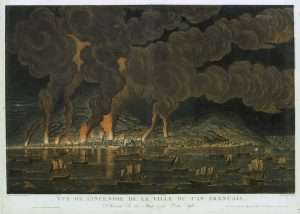
Between 1791 and 1804, the Haitian Revolution transformed Saint-Domingue from a slaveholding French colony into the free Black nation of Haiti. The Haitian Revolution sent shockwaves across the world and had a profound impact on people and politics in Virginia. Thousands of people, free and enslaved, arrived in Virginia from revolutionary Saint-Domingue. For free and enslaved Black Virginians, the revolution served as a model of a revolution that was predicated on Black liberation. Most white Virginians viewed the Haitian Revolution with horror, sympathizing with French enslavers and expressing fear that the revolution might inspire similar uprisings in Virginia. Over the next decade, conspiracies including the Secret Keeper Plot and Gabriel’s Conspiracy were alleged to have either been inspired by the Haitian Revolution or to have had direct French and Haitian involvement. These fears influenced not only white Virginian attitudes toward people from revolutionary Saint-Domingue but also affected national and foreign policy. Decades after the revolution, its memory continued to shape how Virginians understood slave revolt and abolition.

ENTRY

Education in Virginia in the Revolutionary Era

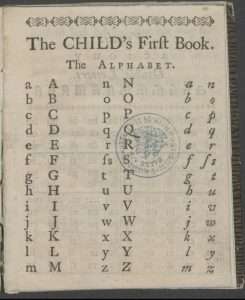
The American Revolution was an important but inconclusive moment in American educational history. Revolutionary republicanism provided an initial impulse for tax-supported, widespread public education, including in Virginia, where Thomas Jefferson proposed a plan for public education. Countervailing ideological trends, and a limited embrace of universal human equality, kept republican ideas about education from coming to fruition in the early republic, especially in the South. Still, gains were made toward universal public education. New England made primary education accessible to most children, and private academies increasingly served the needs of middling students, including girls and young women. In the North, institutions such as the New York African Free School expanded educational opportunities for free African Americans, while in Virginia, education for Black people was slowly criminalized. Jefferson realized his plan to create a free institution of higher education in the University of Virginia, but a system of widespread public education would have to wait until after the American Civil War (1861–1865).

ENTRY

The Continental Navy in Virginia during the American Revolution

At the outset of the American Revolution (1775–1783), the thirteen colonies faced Great Britain without an army or a navy. While a Continental Army was soon created, the question of building and outfitting a navy plagued the Continental Congress. Finally, a Continental fleet was given the green light and American naval ships slowly took to the seas. During the course of the war, the Continental Navy outfitted about sixty-five vessels. This small fighting force faced the greatest sea power of the eighteenth century, in addition to the challenges of weather, scarcity of supplies, dearth of manpower, and enemy privateers. Engagements between the Continental Navy and His Majesty’s Royal Navy along the shores and waters of Virginia were few. Yet the Continental Navy fought the enemy in the waters of Europe and the Caribbean, harassing the British and drawing their attention away from colonial ports. The size of the American fleet never came close to the might of the Royal Navy, however, and the hopes held at the time of its creation faded as the war raged on. By the time the final shots of the Revolution rang out, the Continental Navy was on its last legs, numbering only five ships, and would soon disappear completely.

ENTRY

Robert Mush (1758–1837)

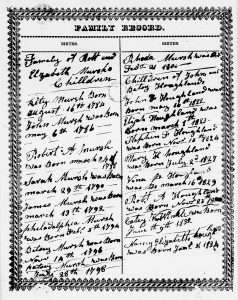
Robert Mush (sometimes Mursh) was a member of the Pamunkey Indian Tribe who fought as a Patriot in the Revolutionary War (1775–1783). Mush was born around 1758 and attended the Brafferton Indian School at the College of William and Mary beginning in 1769. He enlisted in the Continental Army in 1776 and fought at the Battle of Brandywine (September 11, 1777) and the Battle of Germantown (October 4, 1777). In 1778, he marched south to Charleston, South Carolina, for the siege of that city, where he was captured by the British and spent time as a prisoner of war before being exchanged. He remained in the army and served under General Anthony Wayne in Georgia until the war ended in 1783. Mush subsequently returned to the Pamunkey Indian Reservation in King William County, where he married a woman named Elizabeth and served as a tribal leader. Mush became involved with the Baptist Church, and by 1800 he had moved his family to South Carolina, where he served as a minister among the Catawba Indian Tribe and later at the Flint Hill Baptist Church until his death on December 7, 1837. Following his death, Elizabeth Mush petitioned to receive the pension afforded to the widows of Revolutionary War veterans, and her claim file provides a rare glimpse into the life of an Indigenous Revolutionary War veteran.

ENTRY

William Fitzhugh of Chatham (1741–1809)

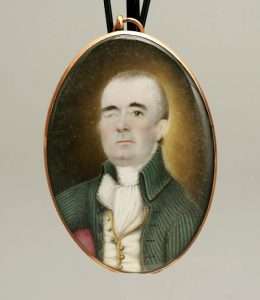
William Fitzhugh of Chatham was a wealthy Virginia planter, politician, and civic leader, descended from one of the colony’s earliest and most prominent families. He was born on September 4, 1741, in King George County, the only son of Henry Fitzhugh and Lucy Carter Fitzhugh, daughter of Robert “King” Carter. His father died when he was an infant, and a childhood accident left him blind in one eye. Educated at home under tutors, Fitzhugh inherited vast estates—including Eagle’s Nest, Somerset, and extensive lands in Fairfax County—making him one of the richest men in Virginia. In 1763 he married Ann Randolph, a cousin of Thomas Jefferson. The couple later built the grand Georgian mansion Chatham, overlooking Fredericksburg, which became famous for its hospitality. More than 100 enslaved people worked the plantation, cultivating crops and practicing skilled trades. Fitzhugh was also a noted horse breeder and racer, corresponding with both Jefferson and George Washington about horses. A supporter of the Patriot cause, Fitzhugh represented King George County in the House of Burgesses (1772–75), attended the Virginia Conventions of 1775 and 1776, and held numerous posts during and after the Revolution—including delegate to the Continental Congress (1779), member of the House of Delegates (1776–1777, 1780–1781, 1787–1788), and state senator (1780–85). After the war, Fitzhugh continued in public life, serving as a presidential elector in 1789. The financial burden of entertaining guests at Chatham eventually led him to relocate to Fairfax County and Alexandria. In 1805, an uprising by enslaved men at Chatham ended violently, reflecting widespread white fears following Gabriel’s Rebellion. Fitzhugh sold Chatham the following year. During his later years, Fitzhugh remained active in civic affairs. Fitzhugh died on December 19, 1809, and was buried at Ravensworth.