


Education in Colonial America

Education was limited in colonial America, where it was expensive and largely the purview of wealthy colonists. In colonial Virginia, it was common for planters and other members of the elite to hire personal tutors for their children. Other Southern elites—and especially planters from the sugar islands—sent their children to college in England or to the Inns of Court. In the last half of the eighteenth century, the Mid-Atlantic colonies saw a rapid expansion of colleges and academies—what we would think of as secondary schools—but only a small portion of colonists could afford them. Only New England made primary education accessible to most children through tax-supported town schools that taught literacy, numeracy, and religion. New England’s system was imperfect, however. The town schools inculcated communal values of work and piety, but they often did so through forced obedience secured by corporal punishment, including the rod or a cowhide whip. Larger towns also had to create grammar schools, though most did not maintain them. Despite these limitations, New England’s educational system was a model for reformers who wanted publicly funded local schools that served all free children at minimal cost, taught communal values and the skills for participation in public life, and created pathways to higher learning for the talented.
The Revolutionary Fervor for Public Education
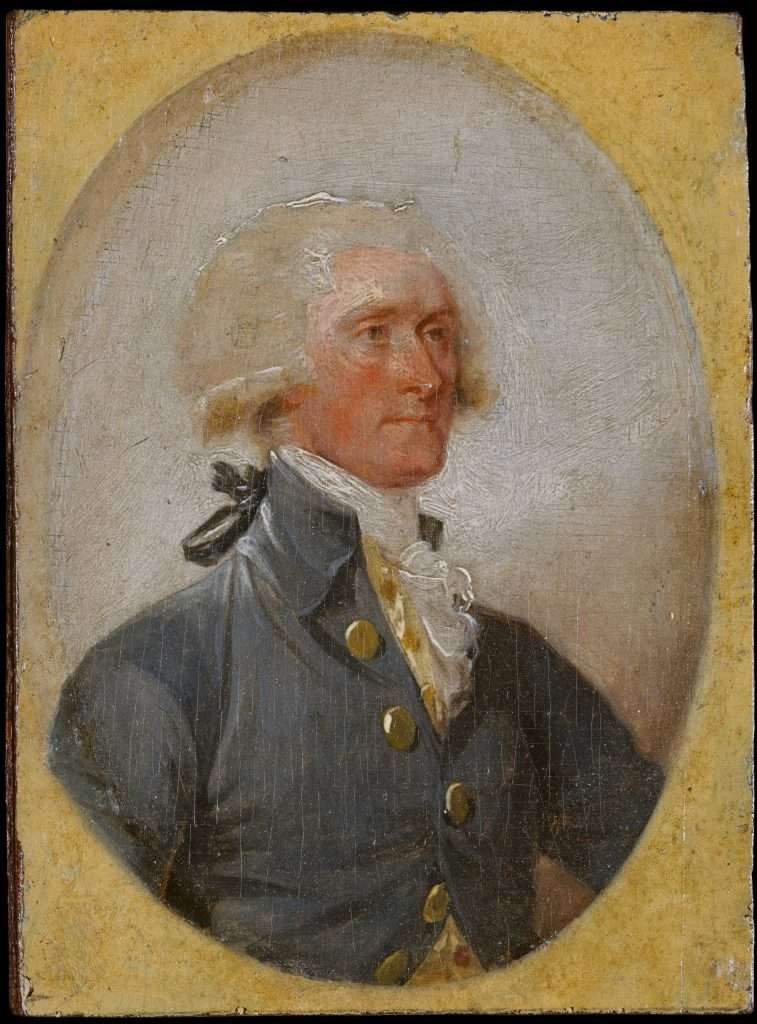
Thomas Jefferson became governor of Virginia in 1779 at the height of the American Revolution. Amid his state’s and would-be nation’s uncertain bid for independence, Jefferson drafted a plan for public education in Virginia. The “Bill for the More General Diffusion of Knowledge” called for tax-supported common (primary) education for all free white boys and girls. Under his plan, promising non-elite boys from each common school would receive public funds to attend more advanced “grammar schools” that otherwise educated only children whose parents could afford the tuition. The best of these scholarship recipients would receive public funding to attend the College of William & Mary alongside the children of Virginia’s elite.
This was an ambitious plan. Yet it captured the revolutionary zeitgeist. Five revolutionary state constitutions called for public support of at least common schools. The Northwest Ordinances provided funding for schooling in those territories. Several leading intellectuals—like Benjamin Rush and Noah Webster—proposed plans for comprehensive public education. Political leaders, including the first six presidents, suggested that Congress create a “national university.” As historian Lawrence Cremin put it in American Education: The National Experience, 1783–1876 (1980): “No theme was so universally articulated during the early decades of the Republic as the need of a self-governing people for universal education.” In addition, the education of women in female academies gained wide support from radical women and conservative men alike. And free Black activists and abolitionists promoted education as the vehicle to civic equality. They believed it would be a means to raise the formerly enslaved “to an equal participation in the rights and benefits of political society,” as the leaders of the New York Manumission Society put it in 1805.

Jefferson’s 1779 plan also was representative because it failed. Public education at the scale Jefferson proposed would not arrive in Virginia until after the Civil War. While common schools—tax-supported primary education—fared better in the early national North, it was a hard-won fight to fund and build them. The most ambitious plans of reformers came to naught, and most constitutional provisions for public education remained dead letters into the Jacksonian era. While educational opportunities did increase for northern, middle-class women, that expansion seemed relatively great only in comparison to how little education was generally available to women in colonial America. State support for female academies in the early national period was basically non-existent.
Why was education—especially public schooling—on the mind of seemingly every good republican in revolutionary America? And why, despite that widespread support for public education, did these grand plans—and even less-ambitious versions of them—fail to take root before 1800?
Planning for Public Education

The various plans for public schooling shared some basic assumptions. First, universal common education seemed necessary for creating informed republican citizens. One might compare Jefferson’s sentiments with those of the royal governor, Sir William Berkeley, who “thank[ed] god there are no free schools nor printing” in colonial Virginia. Ignorance among subjects let monarchs do as they pleased; ignorance among sovereign citizens spelled disaster because, unlike subjects, citizens had an active role to play. But it was not easy to be a capable citizen; it was a learned skill. Second, republics required virtuous leadership. If one believed that all men were created equally—as Jefferson nominally did—then one had to assume that talent was spread out equally among the populace. Children born to wealthy and powerful parents were no more likely to possess the capacity for good leadership than those born into poverty and obscurity. Tiered educational systems with scholarship spots aimed to ensure that talented, non-elite children had a path to prominence. As Noah Webster explained, “a system of education as gives every citizen an opportunity of acquiring knowledge and fitting himself for places of trust” was “the sine qua non of the existence of the American republics.” This was a nascent, republican idea of meritocracy. Early Americans called it an aristocracy of merit.
Education also was viewed as a way to inculcate values. It was, therefore, seen as perilous to send American children abroad for schooling, where they might learn the wrong, monarchical ideas and habits. Even domestically, one had to be careful. Though Jefferson prioritized primary education in his 1779 bill, he focused more on colleges. The College of William & Mary seemed to him a bastion of Anglicanism and backward values. Honor-bound students acted impetuously and extravagantly; it was where republican values went to die. His feelings about William & Mary prefigured his later role in creating a new University of Virginia.

The results of republicanized schools could be stifling—Protestant and capitalist values certainly suffused common schools. Yet, the republican faith in education also had liberatory potential. Early school reformers saw education as a tool to allow children to find themselves and live their fullest lives. Likewise, Black activists and their anti-slavery allies believed education would allow formerly enslaved people to prove their worth as citizens and disabuse racist whites of their prejudice. Through education, they believed, Black people could lay claim to equal citizenship.
Impediments to Reform
If the model for educational reform was clear, why didn’t every state implement it? Why were common schools so slow to be created and funded?

Until recently, historians probably underestimated the economic devastation of the Revolutionary War. Anti-tax sentiment was also a real factor, especially in the South. Any priority that required significant public funding faced long odds. Moreover, many existing colleges and academies were damaged or destroyed during the war. The British targeted school buildings because Americans used them for military purposes—as storehouses, barracks, and hospitals. In Virginia, the College of William & Mary was occupied for a time. Many of these schools made successful claims for compensation from the state. This diverted what little funding states could muster for education to schools that existed prior to the Revolution, which did not serve the goals of educational reformers like Jefferson.
Growing political partisanship did not help matters. Every time Congress considered a proposal for a national university, it was ensnared in partisan debates about the scope of federal power. The fact that Americans valued education as a tool to transmit values only made things more complicated. Republicans believed Federalists used colleges to instill aristocratic beliefs in young people. Federalists thought Republicans used them to convey godless radicalism. If education could not help but be partisan, how could a school ever serve the public good and justify public support? Virginians saw the effects of educational partisanship firsthand. Before he was the famed orator known as Mr. O, James Ogilvie was a schoolteacher in various Virginia academies. The Federalist trustees of at least one of those schools fired him, in part, for sharing radical political ideas, including the work of proto-anarchist William Godwin, in the classroom.

The rise of academies—privately run but publicly chartered and supported secondary schools—also was partisan. The distinguishing feature of academies was their emphasis on classical education, ornamental subjects (French, dancing, and art), and preparing students for college or professional life. This catered to the demands of middling and elite parents who wanted to educate their children in a traditional way as a marker of their elite status. In Virginia, and elsewhere, members of the Society of the Cincinnati—the hereditary organization of Continental Army officers—raised money and lent support to academies. In most states, it was Federalist Party officials who ensured academies received the charters of incorporation that allowed them to operate. Twenty-six academies opened or received charters in Virginia between the Revolution and 1800.
Dissatisfaction with academies’ exclusivity fueled a renewed commitment to tax-supported common education in the North. The 1790s witnessed a range of attempts by northern states to discourage further chartering of academies and instead encourage townships to create public schools. The clearest national expression of this reform impulse came via the American Philosophical Society’s 1795 essay contest to design a national system of education. Several entries envisioned a plan similar to what Jefferson had designed for Virginia: a tiered system that ran from universal common education to a national university. Redistributive taxes would ensure talented children received scholarships for advanced schooling. By the 1800s, New York began building the infrastructure for a common-school system. New England states recommitted to their tradition of town schooling. These regions drew on local networks of support and communal initiative to realize their plans. The same impulse also led to reforms of academies, which came to serve the needs of middling students and to train teachers for the expanding number of common schools. This was less successful in the South, where governance tended to happen at the county, not town, level, and local social capital was in short supply.
Taken together, these early reforms provided a basis for widespread public education in much of the North. Later, famous reformers like Horace Mann built upon these foundations. School reform also helped to expand democracy in the North. As public schooling became widespread, some Northern politicians used it to justify removing property qualifications for voting for white men.

But these early reforms were blinkered in many ways. Just as voting rights expanded for white men, states closed off the franchise for free Black men, which many had exercised since the Revolution. This was despite the fact that free Black northerners had committed themselves to education, in part, to convince racist whites that they were their civic equals. At the same time, Black educators often were the most innovative. Many Black reformers in northern states pinned their hopes for widespread common education on a system promoted by Joseph Lancaster, an English educational reformer, who promoted the idea that schools could teach children cheaply if one teacher oversaw a room with hundreds of students and older student “monitors” instructed the younger pupils. Lancaster, however, was a charlatan, and the system never worked. Before that became clear, though, reformers saw it as the wave of the future. The first real attempt to institute it in the United States was at the New York African Free School, which, no thanks to the Lancasterian system, trained a generation of Black professionals and political leaders. In Virginia, Black education was slowly criminalized out of fear that literacy would beget resistance to slavery and insurrection. This was a regression from the colonial period when institutions like the Bray school in Williamsburg held out the promise of educating African Americans.

Women’s education fared slightly better in this initial burst of reform. White girls in most northern states attended new common schools with white boys. This expanded the pool of girls who were prepared to attend female academies, which offered a curriculum that equaled that of many academies for boys and even colleges. Women educators also seized on the spread of common schools to justify the need for female academies to train women as teachers at a time when teachers were in short supply because ambitious young men increasingly saw education as a dead end not a career. This didn’t yield much movement toward women’s political equality, however, and some leading female educators disavowed women’s suffrage. Benjamin Rush, a noted educational reformer and a signer of the Declaration of Independence, delivered a lecture on female education in 1787 that was widely reprinted into the nineteenth century that argued that the purpose of educating women was not to prepare them for civic life, but to raise their sons to be virtuous citizens and to be “an agreeable companion for a sensible man.”
In Virginia, republican school reform failed yet again at the end of Jefferson’s life. Jefferson’s University of Virginia received state support in 1819, but he and the state chose to build a new college instead of funding a system of widespread public education. Such a system would not arrive until after the Civil War.


