

Early Years

Fitzhugh was born on September 4, 1741, at Eagle’s Nest plantation in King George County, the only son of Henry Fitzhugh (1706–1742) and Lucy Carter Fitzhugh, the daughter of Robert “King” Carter. William Fitzhugh was the third generation of the Fitzhugh family to be born in Virginia. He was often referred to as William Fitzhugh of Chatham to distinguish him from several relatives of the same name. His great-grandfather, William Fitzhugh (1651-1701), arrived in the colony from Bedfordshire County, England, sometime before 1674, acquiring over 50,000 acres of land by the time of his death.
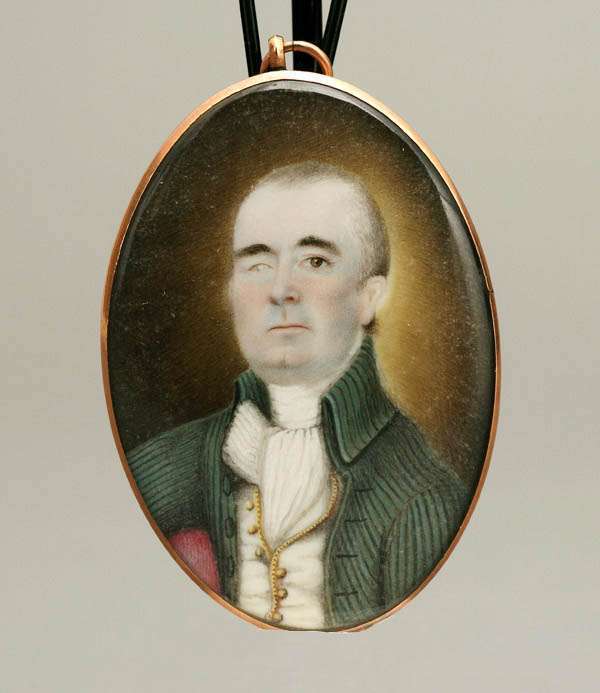
Henry Fitzhugh died before William Fitzhugh turned two years old. William and his mother continued to live at Eagle’s Nest after Henry Fitzhugh’s death. In 1748, Fitzhugh’s mother married Nathaniel Harrison of Brandon, who had two children from a prior marriage. One of the children, Benjamin Harrison, received a bullwhip as a gift and accidentally hit the then ten-year-old William, leaving him blinded in his right eye. Some portraits show him in profile but there are two, one painted at the time of his marriage and another done much later in life, that show his injury.

William spent much of his youth living with the family of his mother’s brother Charles Carter of Cleve (1707–1764) in King George County, who was named as his guardian in Henry Fitzhugh’s will. During this time, Fitzhugh formed lifelong relationships with his Carter kin. Unlike his father and many of his contemporaries, William Fitzhugh did not go to school in England, but presumably was educated by tutors at home.
Upon reaching his majority, Fitzhugh became one of the wealthiest men in Virginia because of the inheritance he received from his father. He inherited two plantations, Somerset and Eagle’s Nest in King George County, land in Westmoreland and Stafford counties and various other tracts of land, including 12,000 acres in Fairfax County. An inventory of Henry Fitzhugh’s household effects, enslaved laborers, and livestock taken a few years after his death totaled £3,646 and included silver worth £236 and books valued at £258, considerable sums of money at the time.
Chatham

On April 2, 1763, Fitzhugh married Ann Randolph, a cousin of Thomas Jefferson. Peter Randolph, who had been Jefferson’s guardian after the death of his father, was Ann Randolph’s father. Initially, the young couple lived at Eagle’s Nest and then later at Somerset, both in King George County. Fitzhugh moved to a plantation of 1,280 acres on the north side of the Rappahannock River near to Fredericksburg, a busy port and tobacco inspection point. The house, completed by 1771, stood on a bluff overlooking the town across the river. The imposing Georgian-style house was 185 feet long with flanking outbuildings at each end that made it appear even larger. Fitzhugh’s support for the Patriots’ cause is evident in his naming of the plantation Chatham after William Pitt, the Earl of Chatham. Pitt was one of the chief supporters in England of the American colonists in the years leading up to the Revolutionary War.
Chatham was known for its hospitality, and its location on a major north-south road made it a convenient stopping point for travelers. The site of Fitzhugh’s plantation had long had a mill, and he added a fish hatchery and orchard in addition to two dozen support buildings. More than 100 enslaved people worked in the house and the fields of oats and corn and tended the livestock. Other enslaved people practiced skilled trades as carpenters, millers, and blacksmiths.

One of Fitzhugh’s greatest claims to fame during his lifetime was his reputation as a knowledgeable judge of horseflesh. Fitzhugh was a noted horseman and was one of the leading enthusiasts of horse breeding and racing in Virginia. One of the main reasons that Fitzhugh chose to move closer to Fredericksburg may have been his great interest in horse racing. He owned a number of racehorses that he entered into races at Fredericksburg as well as in Annapolis and Port Royal. There was even a track on the Chatham property. After the war, Fitzhugh became more involved in horse breeding. Fitzhugh corresponded with both George Washington and Thomas Jefferson about horses. Jefferson purchased Tarquin, one of Fitzhugh’s former racehorses who had won races in Fredericksburg and Alexandria, in March 1790 and later that year asked Fitzhugh to find a carriage horse for him.
The American Revolution
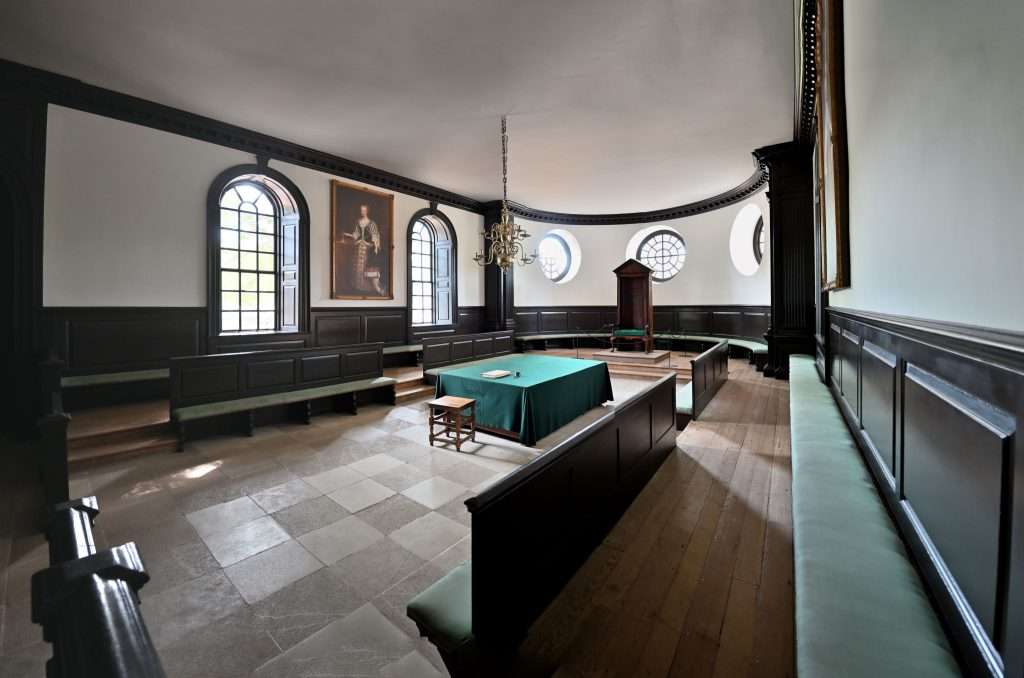
Fitzhugh is an exemplar of the men of his time and station in life. He inherited great wealth and all of the privileges that went with it, but also the expectation that he would be a leader in the community and colony. After marrying and establishing his plantation at Chatham, Fitzhugh began to fulfill his public duty when he stood for election to the House of Burgesses in December 1771 representing King George County. He served between 1772 and 1775, arriving in Williamsburg just as debate on how the colonies should react to the strictures that Great Britain was placing on the American colonies was escalating. From 1774 to 1775 he served on the Committee of Safety.
Fitzhugh held a number of offices throughout the Revolutionary War. He served as a member of the Virginia House of Delegates from 1776–1777 and again from 1780– 1781. Fitzhugh was a delegate to the Continental Congress from September 12, 1779, until October 31, 1779. He served as a Virginia state senator from 1780–1785. Fitzhugh fully supported the war effort and served as a commissioner for two Stafford County arms and munitions factories that supplied Continental Army forces.
Postwar
Fitzhugh spent his post-Revolutionary War years engaged in farming and politics, as well as public life. He served in the House of Delegates for a third term from 1787 to 1788. Fitzhugh was chosen as one of the electors of the Westmoreland District for the first presidential election in 1789. The district covered King George, Lancaster, Northumberland, Richmond, Stafford, and Westmoreland counties. He donated part of the land for the new Stafford County Courthouse and pledged money toward improvements to the Fredericksburg Market House that had been damaged during the Revolutionary War. Additionally, he served as a county road commissioner and operated a ferry across the Rappahannock River to Fredericksburg beginning in 1787.
Eventually, Fitzhugh decided to move from Stafford to Fairfax County, at least in part to escape the financial drain caused by the hundreds of guests who came to Chatham each year. Travelers expected elite Virginians to provide hospitality, but food and entertainment for so many people was expensive. Life many of his peers, Fitzhugh had material wealth, but found getting payment in cash for items he sold to be nearly impossible because of frequent currency shortages.
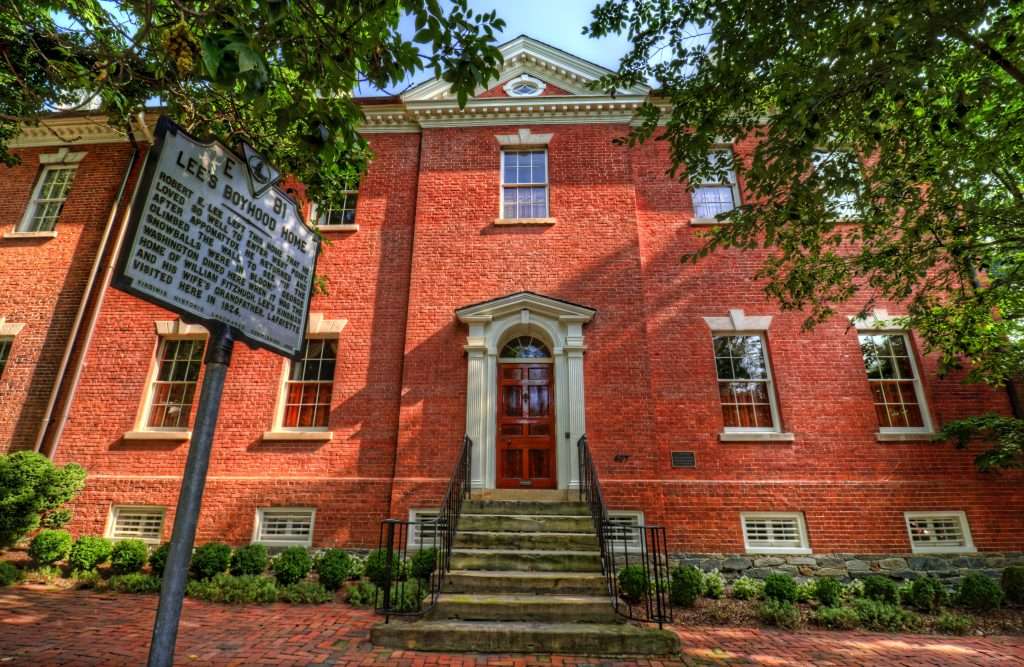
Near the end of the eighteenth century, Fitzhugh established two residences in Northern Virginia. A house was constructed on the 12,000-acre Ravensworth tract in Fairfax County, and by December of 1797, Fitzhugh and his family also had taken up residence in a Georgian townhouse built in 1795 at 607 Oronoco Street in Alexandria by John Potts, Jr. a secretary of the Potomac Canal Company.
Slave Uprising at Chatham
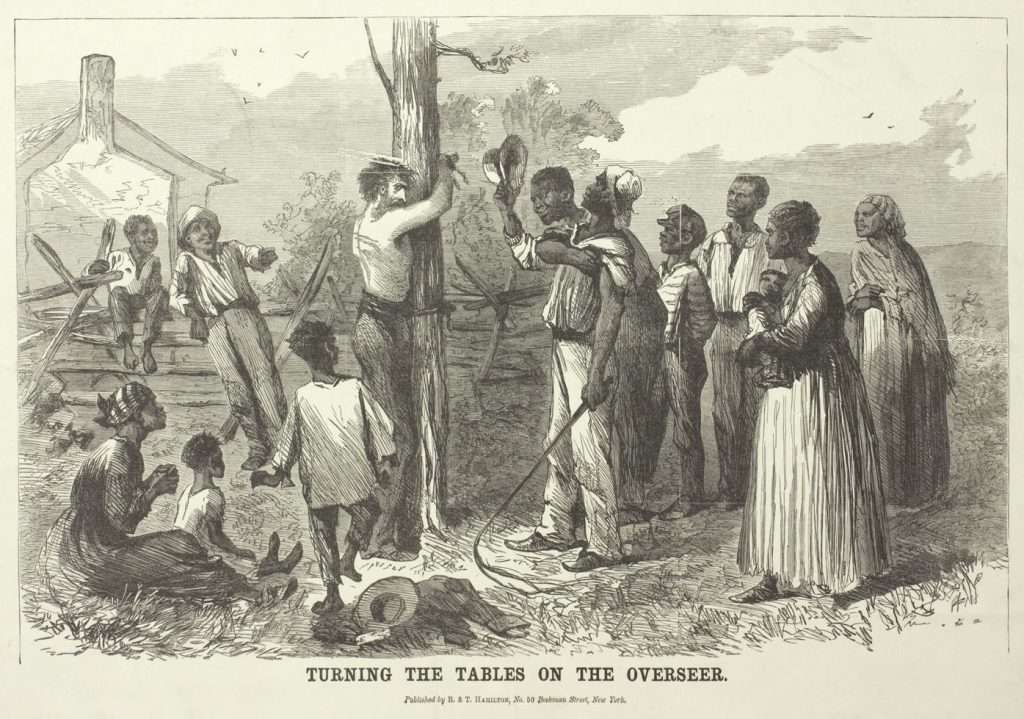
In early 1805, a group of enslaved men at Chatham struck out against their overseer. The Fitzhugh family had already relocated to Northern Virginia by this time. Enslaved people were often given the week between Christmas and New Year’s Day as a holiday from work. On January 2, 1805, a newly hired overseer at Chatham attempted to return the enslaved people to their labor, but six of the enslaved men refused to return to work. They overpowered the overseer, tied him up, and whipped him. The overseer escaped and returned to the plantation with reinforcements to aid him in restoring order, but the enslaved men again attacked them. Finally, a group of men armed with weapons and arrest warrants approached Chatham. One of the enslaved men was killed outright, another was wounded as he attempted to flee, and one drowned in the river. The three remaining enslaved men were tried and condemned to death. One was killed, but the other two were sold out of the country. One of the white men involved in the uprising died as a result of his injuries. Although the Fitzhughs were not living at Chatham at the time, the incident must have been on the minds of everyone in the vicinity coming just five years after Gabriel’s Revolt in Richmond in 1800, which had caused consternation among white enslavers. One year later in 1806, William Fitzhugh sold Chatham to Major Churchill Jones, a former officer in the Continental Army, for 20,000 dollars.
Last Years in Fairfax County and Alexandria
William Fitzhugh continued to take an active part in civic concerns. President Thomas Jefferson appointed Fitzhugh as a justice of the peace for the District of Columbia, Alexandria County in 1801. He was one of the directors of the Little River Turnpike Company that was established in 1802. The company’s mission was to develop a gravel toll road to help farmers transport their goods from Loudoun County to the port at Alexandria. He was also a director of the newly formed Bank of Potomac in 1804. Fitzhugh was a trustee of the Alexandria Academy. The school was founded in 1785, and George Washington was one of the major supporters throughout his life.
Fitzhugh was a long-time friend of Washington, and their families socialized. The two men shared a love of experimental farming, and both were members of the Philadelphia Society for Promoting Agriculture. Fitzhugh sent orchard grass seeds and a tame deer for the park Washington created at Mount Vernon in the 1780s. Chatham was located near to Washington’s Ferry Farm property in Stafford County, and Fitzhugh rented it for some time. After Washington’s death in December 1799, a Washington Society of Alexandria was formed, and William Fitzhugh was the first president. The group held celebrations on February 22, Washington’s Birthday, and the Fourth of July.
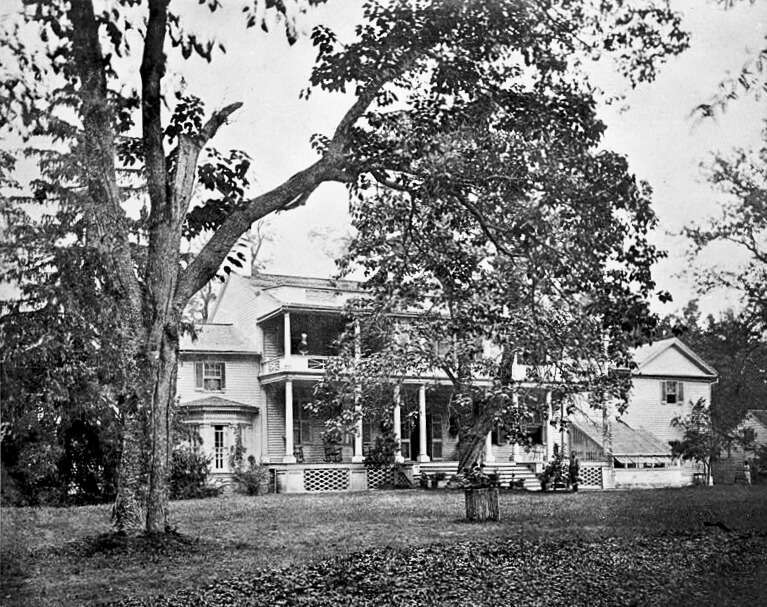
Fitzhugh died at the age of 68 on December 19, 1809, and was buried at the family cemetery at Ravensworth with his wife, who preceded him in death in 1805. The three children of William and Ann Fitzhugh who lived to adulthood were all born at Chatham. The eldest was Anne, who married William Craik, the son of Dr. James Craik of Alexandria. Their other daughter, Mary Lee, married George Washington Parke Custis. The youngest child, only son, and principal heir was William Henry Fitzhugh who married Anna Maria Goldsborough of Maryland.

William Henry Fitzhugh and his wife did not have any children. After their deaths, the Ravensworth estate passed to the only grandchild of William Fitzhugh to live to adulthood: Mary Custis, who married Robert E. Lee. Their children inherited the estate, and they and their descendants continued to live at the property into the early twentieth century. The Ravensworth mansion was destroyed by fire on August 1, 1927, and the land was eventually sold to developers in 1957. At that time, the Fitzhugh family gravestones were moved from Ravensworth to Pohick Episcopal Church Cemetery.


