


Citizenship Prior to the Indian Citizenship Act
Before Indigenous peoples gained citizenship in 1924, the federal government classified tribes inconsistently and did not formally acknowledge some tribes. Several Virginia Indian communities have at times been recognized by the commonwealth and the federal government as “Indians not taxed” or “noncitizen Indians”—classifications that denote federal responsibility. In some instances, tribal leaders actively sought these classifications to demonstrate that the commonwealth should acknowledge their peoples’ status as Indians.

The classifications “Indians not taxed” and “Indians not a part of any state” refer not to tax exemption but rather to Native people the government deemed unassimilated or those still living as members of a tribe. Before the 1924 Indian Citizenship Act, these people would have been referred to as “noncitizen Indians.” The classification “Indians not taxed” originated in the Articles of Confederation and appears in the U.S. Constitution, Article 1, Section 2. James Madison, who coauthored the Constitution and went on to serve as U.S. president, described the classification “Indians not members of any of the states” as meaning those “who do not live within the body of the Society, or whose Persons or property form no objects of its laws.”
Before the 1924 Indian Citizenship Act, Indigenous people could become eligible for citizenship if they were deemed fully assimilated, were no longer living among their tribes, or were tribal allottees who had gained their lands based on the 1887 Dawes Act. The Dawes Act privatized large swaths of reservation lands and allotted them to Indigenous families, called allotees, who could in turn sell the lands and pass them out of tribal ownership. People with this status were often referred to as “citizen Indians.”
The nation’s assimilationist policies meant that obtaining citizenship before 1924 posed a threat to tribal sovereignty. On the one hand, citizenship for Native people provided access to the right to vote, albeit with limitations (such as poll taxes) that were designed to limit the vote of nonwhite citizens during the period. On the other hand, citizenship signaled the erasure of tribal political status and the disappearance of tribal sovereignty in the sense that a tribe made up of citizens was no longer a domestic dependent of the U.S. government and thus no longer eligible for the same rights of self-determination.

In 1868, the federal classification “Indians not taxed” was applied to Virginia’s Pamunkey Indian Tribe per military order by General John McAllister Schofield, the secretary of war under President Andrew Johnson. (The Office of Indian Affairs was administered under the Department of War at this time.) His order directed that the “Remnants of Pamunkey Indians living on an island in the Pamunkey river will be recognized as ‘Indians not taxed,’ and the County Court of King William County and all State officers will recognize them as such until their status is defined by an act of the General Assembly of Virginia.”

The “Indians not taxed” status also applied to Virginia Indian communities on reservation lands, leading to their exclusion from the U.S. Census. The U.S. assistant marshals under the federal court system, and later the census takers under the Department of the Interior, who gathered and certified census returns, received explicit instructions to “exclude Indians not taxed.” Therefore, in censuses from 1800 to 1820, the U.S. marshals tasked with taking the census regularly omitted residents of the Pamunkey and Mattaponi reservations, which were considered separate jurisdictional spaces: their inhabitants were considered “Indians not taxed” or “Indians still in tribal relations” (i.e., “noncitizen Indians”) for whom no enumeration was needed. Members of the Mattaponi and Pamunkey tribes were later classified as “Indians not taxed” by the Bureau of the Census in 1870 and on separate Indian Schedules enumerated by the bureau in 1900 and 1910. These efforts fell under the U.S. Census Bureau’s constitutional mandate to enumerate the population, excluding “Indians not taxed,” for the purposes of apportionment in representation and taxes.
The classification “Indians not taxed” applied to tribal communities in Virginia during the Civil War and further demonstrated their continued existence outside U.S. citizenship. This status gave tribes some agency to choose their role or lack thereof in the war and reinforced recognition of the special status of reservation lands in Virginia. For example, the Pamunkey Indian Tribe allied itself with the Union despite the advice of Francis Harrison Pierpont, the governor of the restored government of Virginia, that they avoid taking a side. As one of the tribe’s headmen, Thomas Sampson, noted, “I have never voted. I always thought it best to keep to ourselves. We asked the advice of Governor Pierpont and our trustees and that was the advice they gave us. During the rebellion we were on the side of the Union.”

The Pamunkey served as soldiers, gunboat pilots, guides, and spies for the Union. In response, Confederate leaders punished the tribe through forced labor in places such as Williamsburg and imprisonment in Richmond’s infamous Castle Thunder Prison. According to Pamunkey member Holt Langston, “I was arrested by the Confederate authorities and taken to Richmond to work on the fortifications. After being there three days, it was decided by the Governor that as I was an Indian, I was not liable to military service and therefore discharged me and I returned home.”
The Pamunkey Tribal Council appealed to the commonwealth to verify the status of its tribal members. The Virginia Senate considered the issue in March 1862, after the governor wrote a letter protesting the actions of King William County in causing “certain free persons of mixed blood, living in what are called the Indian towns, in said county, to be enrolled and drafted for service.” This likely affected the discharge of imprisoned tribal member Thomas Bradby, who said he was “kept in Castle Thunder for seven weeks” and then discharged “because we were Indians.”
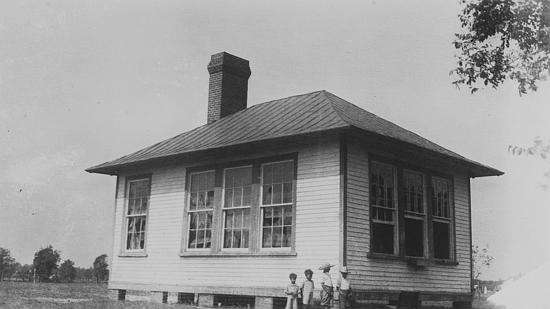
In the decades following the Civil War, Virginia’s tribes collaborated with the commonwealth to gain access to services and resources to support their communities. One such inquiry included an 1877 request from the Pamunkey Indian Tribe for a “free-school teacher for the education of many fatherless children. We would like to have a teacher furnished to us by the State, but so as not to bring us under the head of taxation.” In response, the governor’s office outlined the state’s opinion regarding Indigenous citizenship in the commonwealth: “It is a mistake to suppose that when the present Constitution enfranchised the great body of people, without regard to race or color, it destroyed the distinctive character of the tributary Indians and merged them as citizens into the body of the Commonwealth. … Such members of this race as have no less than one fourth of Indian blood are entitled under existing laws to hold the relation of tributaries to the Commonwealth. They still hold lands which are inalienable except as among themselves. They are exempt from taxation and the other burthens and duties, while they are debarred from any of the rights and privileges which belong to citizens of the State.”
The classification of “noncitizen Indians” was again pivotal during World War I. The Selective Service Act of 1917 authorized the federal government to raise an army through conscription. The act established local boards to administer the draft and make initial determinations regarding any exemptions, as well as district boards to handle appeals regarding exemption inquiries and decisions. The draft applied to all citizens but exempted “noncitizen Indians.” For the purposes of registration, the Selective Service System defined an Indigenous person as a citizen if: (1) he (or his father or mother, prior to his birth or before he reached the age of twenty-one) had been allotted land prior to May 8, 1906; or (2) he had been allotted land after May 8, 1906, and received a patent in fee to his land; or (3) he had resided in the old Indian Territory on March 3, 1901; or (4) he lived separate and apart from his tribe and had adopted the “habits of civilized life.”

By these standards, the two reservation tribes in Virginia, the Mattaponi and Pamunkey, would be classed as noncitizens. Yet local draft boards attempted to classify members of the Pamunkey and Mattaponi tribes as citizens eligible for the draft. The tribes enlisted the help of the commonwealth and the U.S. provost marshal general to confirm that male Pamunkey and Mattaponi members were considered noncitizens and thus exempt from the draft. However, some registrars shared their opinions on the exemption documents of tribal members. Though the noncitizen box was checked on Opechancanough Miles’s form, the registrar, James T. Robins, wrote, “I consider him a citizen” in the Registrar’s Certification section of the card. Miles’s registration occurred following a series of appeals in 1918 when tribal members who worked in Richmond had been denied noncitizen status and state and federal agencies had again been engaged to clarify the issue with the commissioner of Indian affairs.
These tribal members were not trying to avoid war service; in fact, once the tribal challenge to conscription was legally upheld, the same men who had sought exemption voluntarily enlisted to serve. Rather, tribal leaders sought the “noncitizen Indian” classification and application of federal law to demonstrate to the commonwealth their people’s status as “Indians,” particularly during a period when Virginia was beginning its efforts to remove this legal classification.
Members of Virginia tribes were among the approximately 10,000 Indigenous men who joined the U.S. armed forces to support the country’s efforts in World War I. Recognizing the service of these Indigenous men, the federal government offered them the option of citizenship when Congress enacted legislation in 1919 creating a path to do so.
Indian Citizenship Act of 1924

Broadening the path to citizenship, President Calvin Coolidge signed the Indian Citizenship Act (also referred to as the Snyder Act) in 1924 partly to honor Indigenous peoples’ wartime contributions. The act declared that “all non-citizen Indians born within the territorial limits of the United States be, and they are hereby, declared to be citizens of the United States: Provided, That the granting of such citizenship shall not in any manner impair or otherwise affect the right of any Indian to tribal or other property.”
Not all tribal nations supported a sweeping declaration of U.S. citizenship for Indigenous peoples: some tribes thought the change would negatively impact tribal citizenship within their communities, tribal sovereignty, and their unique cultural identities. And while the act granted citizenship, it did not guarantee certain citizen rights, such as the right to vote, since the U.S. Constitution grants states the power to determine voting rights and requirements. Not until the 1965 Voting Rights Act was Indigenous peoples’ suffrage codified nationally.

Also in 1924, Virginia passed the Racial Integrity Act, which eradicated the recognition of Virginia Indians residing within state borders. Walter Plecker, registrar of the Virginia Bureau of Vital Statistics, used the law to make it impossible for Indigenous people to identify their race as “Indian” on their vital records, including birth, marriage, and death certificates. This initiated decades of erasure of Indigenous peoples from the state’s vital records, which is referred to as the Paper Genocide. These actions still reverberate in Virginia’s Indigenous communities and affected many tribes’ ability to provide necessary documentation when pursuing U.S. federal acknowledgment during the late twentieth and early twenty-first centuries.
One effect of the Indian Citizenship Act was the creation of a dual or “nested” citizenship for Indigenous peoples in the United States: Indigenous individuals were citizens of their respective sovereign tribes as well as of the United States. This dual status produced varying rights and responsibilities based on whether people were interacting with a federal or tribal governing system and whether they were within federal or tribal land jurisdiction. This citizenship status parallels the unique position of tribal nations within the United States, where such nations exist as sovereign entities nested within the larger sovereignty of the federal government.
The Indian Reorganization Act of 1934

Nested or dual citizenship was further solidified with the 1934 Indian Reorganization Act (IRA), also called the Wheeler-Howard Act or the Indian New Deal, which was signed by President Franklin D. Roosevelt. This act reversed decades of U.S. policy that sought to assimilate Indigenous peoples into American society. The IRA encouraged the expression and perpetuation of Indigenous culture and traditional practices; included provisions that restored the management of tribal assets such as land, albeit with federal oversight; and supported economic initiatives for reservation communities. The act also encouraged tribal self-governance; however, it pushed tribes to replace traditional forms of governance with those that mirrored the U.S. government, including U.S.-style constitutions, thus further establishing dual or nested citizenship for Indigenous peoples.
The IRA influenced how Virginia tribes wrote governing documents, sought funding to support tribal health and economic development programs, and established more formal relationships with the U.S. government. Virginia tribes—including the Pamunkey Indian Tribe, Mattaponi Indian Tribe, and Chickahominy Indian Tribe—paid close attention to the IRA’s passage in 1934, and it set off a flurry of efforts to establish federal relationships. For example, the Pamunkey reached out to the Bureau of Indian Affairs (BIA) before the act was passed to request guidance about how to access funds to establish two riverside parks on its reservation and to provide health care for tribal youth. The bureau responded with information on the possibility of the law’s application but lamented the budgetary constraints if the tribes were fully integrated under the IRA.

An internal struggle occurred at the BIA regarding how to deal with tribal communities across the southeastern United States that had less formalized and more fractured relationships with the federal government. To aid in understanding these Indigenous populations, the BIA created a Memorandum on Indian Groups in the Southern States that discussed the obligations of the Office of Indian Affairs. The document noted that while “it is customary to refer to these Indian settlements as ‘small, scattered groups,’” there were “from 12 to 15 Indian communities in Virginia, several of which are well established on ancient reservations.” The memorandum also determined that the federal government had an “obligation to all people of at least one-fourth Indian blood who have a diminished social, health, and educational service in the communities in which they are living as a result of the fact that they are Indian.”
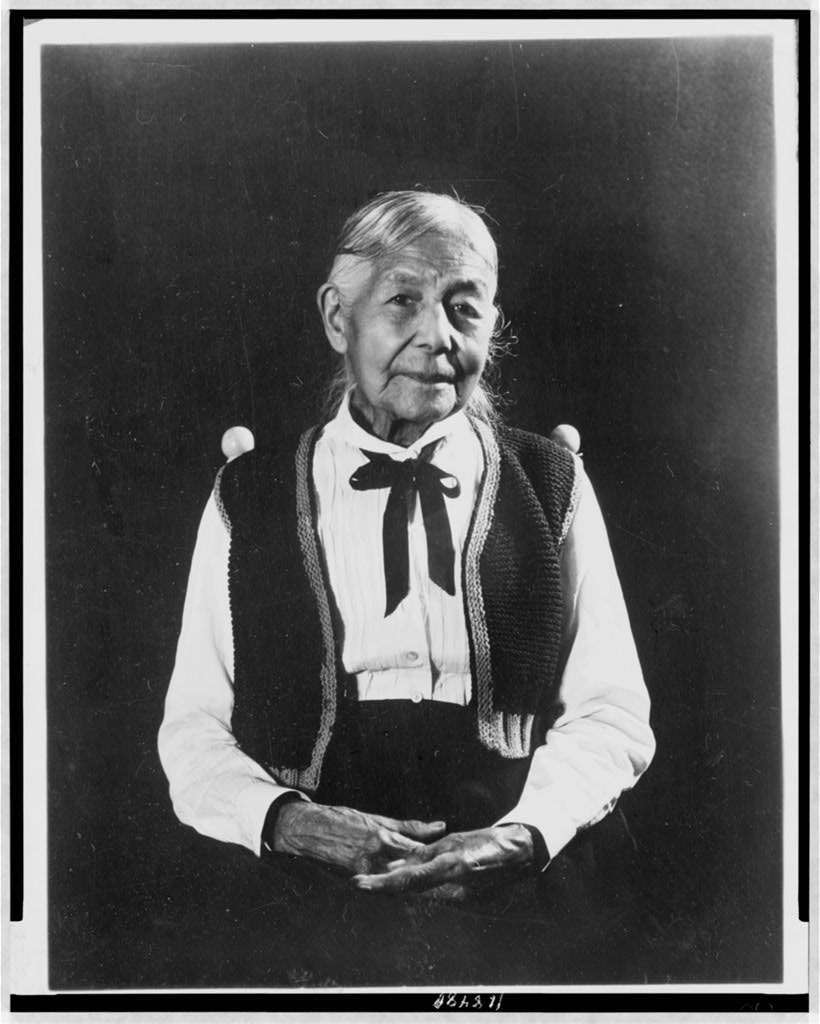
The specific situation of tribes residing on state reservations was explicitly addressed in 1936 when the Shinnecock, a tribe based on New York’s Long Island, sought to organize under the IRA. In response to those efforts, the Department of the Interior’s Assistant Solicitor Kenneth Meiklejohn noted that “there is nothing to indicate that [the IRA] was intended to be limited to reservations established and recognized under federal jurisdiction.” Commissioner of Indian Affairs John Collier later reinforced this viewpoint, stating that the IRA “applie[d] to Indians living on reservations that are not federal reservations,” though he also asserted that the individuals in question must continue to live as “Indians.”
The federal government clearly recognized that the IRA and the benefits it administered should apply to tribes such as those residing in Virginia. However, at the same time, the bureau wrestled with how budgetary issues might limit the tribes’ ability to fully realize the promise of the IRA. Thus, the question of whether these tribes would be brought under the IRA was a financial one. While such internal debates failed to culminate in the Office of Indian Affairs’s explicit application of the IRA to the tribes in Virginia, it did demonstrate the office’s recognition of the federal government’s responsibility for such tribes.
While the IRA was not fully realized in Virginia’s Indigenous communities, the legislation nevertheless inspired the tribes to implement forms of governance that mirrored the U.S. democratic system and to pursue economic development support through other federal opportunities. As several of Virginia’s tribal communities had recently reestablished their traditions of self-governance through political reorganization, the IRA influenced how they wrote their governing documents. Tribes adopted formalized laws that governed elections and voting, defined their membership, and established parameters for citizen behavior on tribe-owned lands.


