


Origins of the Virginia Plan
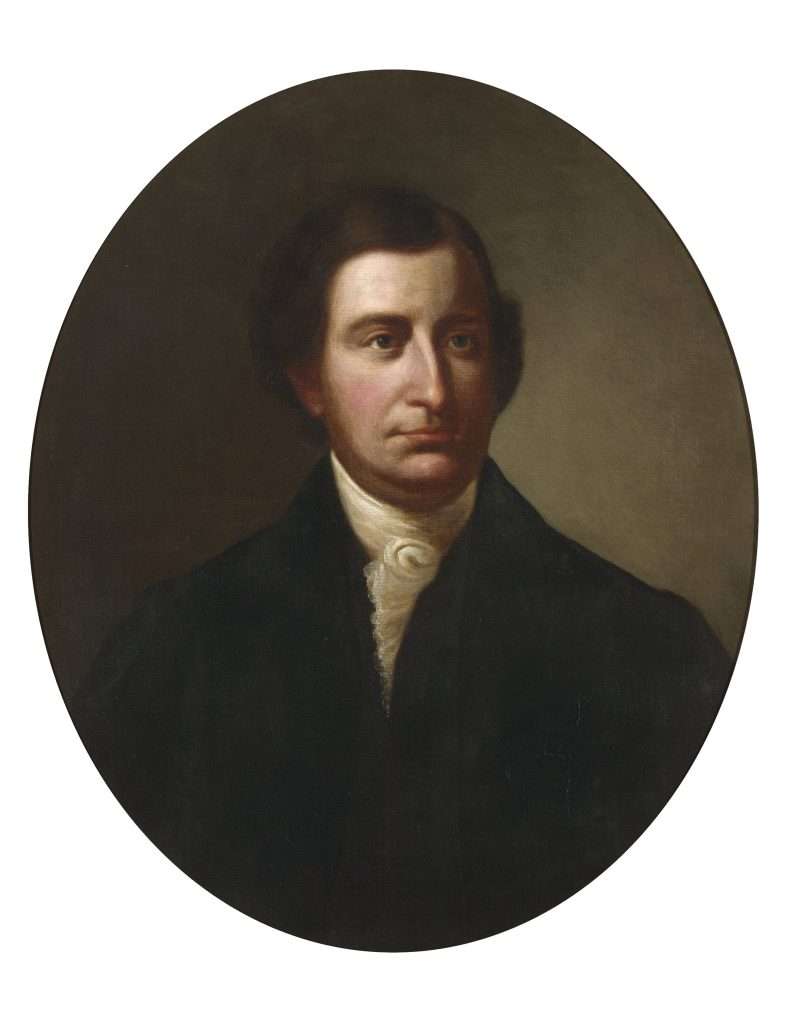
On May 29, 1787, Governor Randolph presented the Virginia Plan to the Constitutional Convention. The plan’s fifteen resolutions set the framework for the convention’s debates through the late spring and summer. The Virginia Plan thus holds a critical place in American constitutional history. Yet the plan was also something of a historical accident. The Constitutional Convention was scheduled to assemble on May 14, but only the Virginians arrived promptly. While awaiting the other delegations, they caucused daily to produce an agenda for the deliberations. Consulting with a few members from other states, especially the host Pennsylvanians, the Virginians prepared a plan of governance that would radically transform the federal union.
Had the other delegations mustered on time, the convention could have taken a different course. The delegates might have first discussed their general objectives or appointed a select committee to do so. Instead, the Virginia Plan enabled the delegates to get to work immediately.
Two other factors deepened the impact of the Virginia Plan. The first was the catalytic role the state had played in advancing a program of constitutional reform. Virginia’s influence became evident in January 1786, when the legislature proposed an interstate convention to discuss the need to provide the Continental Congress with authority to regulate foreign commerce. Departing from the amendment rules of the Articles of Confederation, the Virginia proposal presumed that anything proposed by Congress had little chance of adoption by all thirteen states. Some other experiment had to be tried.
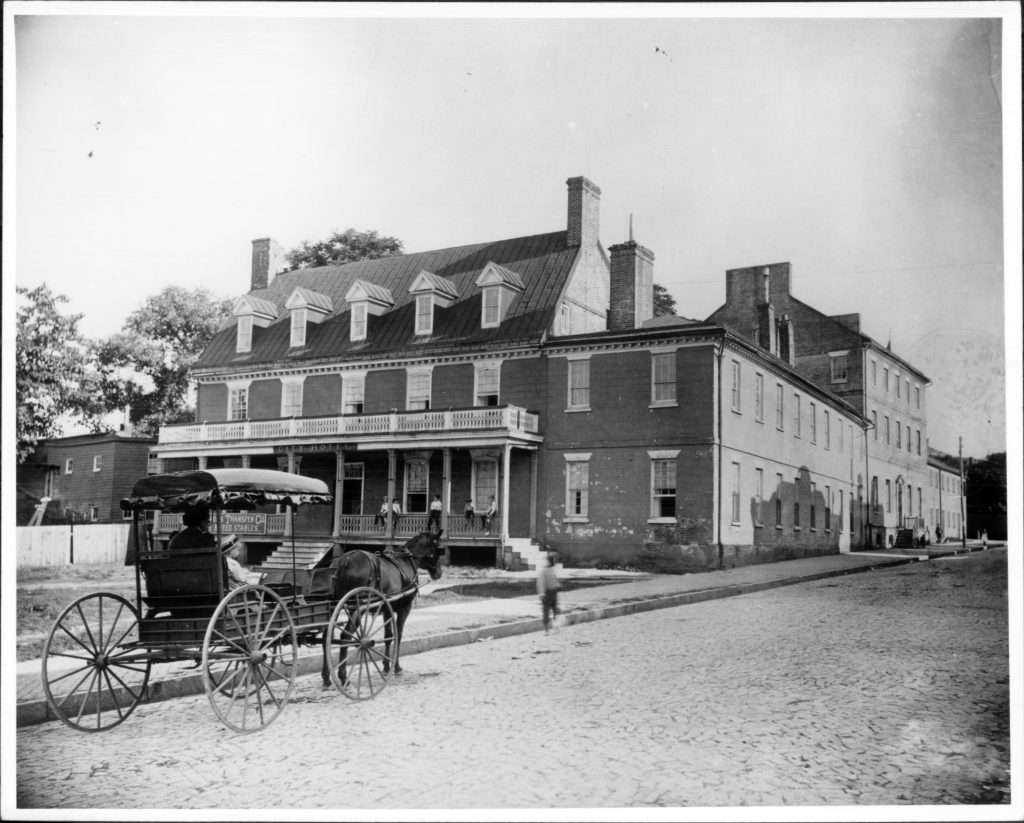
When the convention met at Annapolis, Maryland, in September, however, attendance was too small to permit decisive action. But the delegates who did convene at Mann’s Tavern refused to concede defeat. They included Edmund Randolph, James Madison, Alexander Hamilton, and John Dickinson, the celebrated “Pennsylvania Farmer” who had been the main author of the Articles of Confederation. Rather than adjourn empty-handed, they issued a report proposing that a general convention meet in Philadelphia the following May.
Madison carried that report with him as he hurried back to Richmond, Virginia’s new capital. He stopped first at Mount Vernon to brief George Washington. Madison revealed his intention to have the legislature formally invite all the other states to attend the Philadelphia meeting but did not tell Washington that he would be included in Virginia’s delegation.
In taking these steps, Madison illustrated the second factor that made the Virginia Plan so important. By the beginning of 1787, if not earlier, he had become the leading strategist of constitutional reform, the individual who worked hardest to map how the entire process of adopting a new framework of national government should work. That process would begin with setting an agenda for debate at the Constitutional Convention and then determining which issues took priority and would end with a determination of how a constitution, once framed, would be ratified. In primitive form, the Virginia Plan contained all of these steps. Though Madison was not its sole author, he was its main contributor, meaning that any explanation of its origins and character must begin with his constitutional and political thinking in the 1780s.
Madison’s Preparations
Madison’s interest in federal constitutional reform began as soon as he entered the Continental Congress in the blizzardy winter of 1780. But his interest in constitutionalism dated to his political debut at Virginia’s Fifth Provincial Convention (1776). Just turned twenty-five, he quietly served on the committee chaired by George Mason that drafted the state’s new constitution and Declaration of Rights. Madison made one important contribution to the Declaration of Rights: his efforts prompted the provincial convention to convert its religion article from an endorsement of a policy of toleration to an affirmation that the free exercise of religion was a right that individual Virginians naturally possessed.
Recollections of that initial exercise in constitution-making still shaped his ideas a decade later. But the critical turns in his thinking flowed from his three and a half years of uninterrupted service in Congress (March 1780–October 1783) and three further terms as the leading member of the Virginia House of Delegates (1784–1786). From these experiences, Madison drew a set of complementary lessons. Some related to the obvious weaknesses of national governance under the Confederation, some to the shortcomings of the state constitutions, and others—perhaps the most provocative—to the political behavior of ordinary citizens.

One of his first tasks after 1780 was to help Congress navigate the cession of Virginia’s western land claims. The matter was essential to the final ratification of the Articles of Confederation, because Maryland, the last holdout state, refused to act before a national domain was created above the Ohio River. Once Maryland ratified the articles in the winter of 1781, Madison shifted his attention to the additional amendments the first national constitution would need for Congress to grow more effective. The initial amendment, known as the impost of 1781, would give Congress the power to levy a 5 percent tax on imported goods, thereby creating a national income independent of the states. This amendment was sent to the states even before Maryland completed its ratification, but the measure failed after Rhode Island rejected it, a blow worsened by Virginia’s decision to repeal its endorsement of the measure.
Congress began debating a fresh set of amendments to the Articles of Confederation in the fall of 1782, after Superintendent of Finance Robert Morris proposed a comprehensive plan to give the union adequate revenues to secure foreign loans and fund its expenses. In the ensuing debates, Madison became the leading architect of the three compromise amendments that Congress sent to the states in April 1783. After returning to Virginia the following October, he continued to follow the progress of two modest amendments that Congress proposed in April 1784 that were designed to give it limited authority over the regulation of foreign commerce.
None of these proposals involved enlarging Congress’s authority in any radical way. None involved rethinking the underlying structure of the union or its institutions. If these proposals reflected any latent theory of constitutional change, it was simply that Congress would identify specific realms of policy that needed reform, and the state legislatures would unanimously ratify those proposals. The crucial hurdle was that all thirteen legislatures would need to approve, which, given the leisurely calendar of state legislative activity, could take some time.
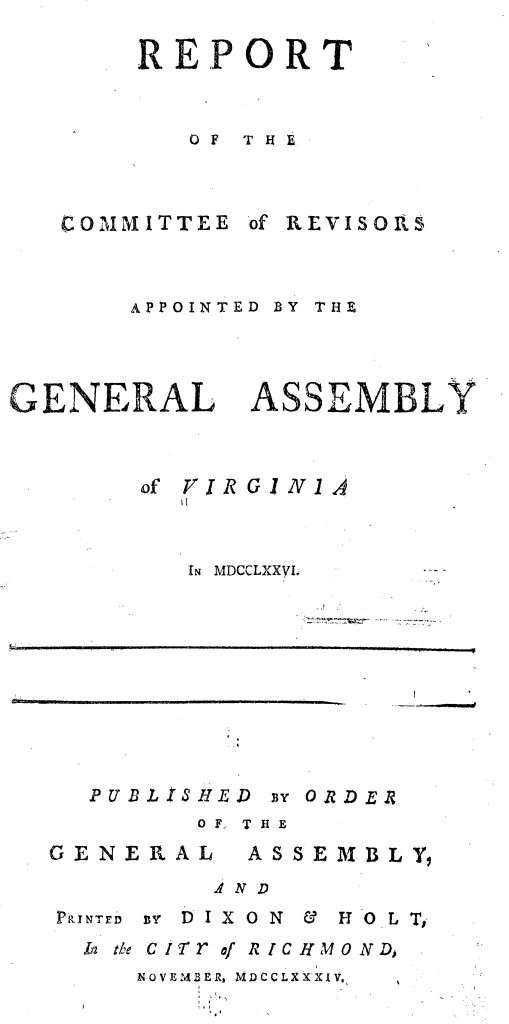
Meanwhile, Madison turned his attention to the Virginia House of Delegates. Once elected, he urged his colleagues to support the pending amendments to the Articles of Confederation. He also invested substantial energy in getting the assembly to enact the revised code of legislation that a committee chaired by Thomas Jefferson had prepared in the late 1780s. The experience of working the floor in a House of Delegates composed of mostly amateur lawmakers deeply influenced his thinking in two fundamental ways.
First, it alerted Madison to the difficulty of encouraging parochial and inexperienced representatives to think nationally, to transcend their limited experience to address the collective concerns of the union on broad grounds. Madison concluded that the framers of the Confederation had been naive in assuming that when Congress submitted its decisions to the state assemblies, they would implement those resolutions conscientiously. Sour experience had undermined that expectation.
Second, Madison decided that the constitution-makers of 1776 had been too obsessed with curbing the power of the executive, the branch of government that had embodied royal authority in America. Though the people’s elected representatives now formed the dominant institution of government, the framers had not paid enough attention to designing the best procedures for their deliberations. But the war forced the revolutionary assemblies to become much more active legislators than their colonial predecessors had been. Madison was a keen observer of deliberative procedures, and the lessons he drew from his experience in the House of Delegates profoundly influenced his thinking.
These insights could have little effect as long as would-be constitutional reformers were bound by the amendment rules of the Confederation. But when those rules broke down in one respect, they would grow less effective, and perhaps even become impotent, in others. At that, the field for radical constitutional reform would be cleared, and a document such as the Virginia Plan could have a catalytic impact.
Yet even in early 1786, Madison remained cautious about the prospects for reform. He had not been the author of the Virginia invitation to the Annapolis convention, nor had he been wholly optimistic about its prospects. Though he agreed that trying this stratagem seemed “better than nothing,” he initially thought that it was “liable to objections and will probably miscarry.” But Madison’s thinking shifted after New Jersey refused to pay its congressional requisition and New York rejected the revenue amendments proposed in April 1783. When his friend James Monroe reported that Congress was considering proposing new amendments to the Confederation, Madison decided on another strategy. Since the prescribed method of amending the articles had failed, Madison decided that the convention route should be tried, perhaps only as an experiment but perhaps as a potential step forward.
Madison prepared himself in other ways. At home at his Montpelier plantation in 1786, he assiduously read the history of ancient and modern confederacies, relying on his own library as well as on the “literary cargo” Jefferson had sent from Paris. After Virginia called for a general convention, Madison was eligible to return to Congress, which had met in New York City since 1785. There he began pulling together his thoughts on reform. Four documents served as the precursors to the Virginia Plan: confidential letters he wrote to Jefferson, Randolph, and Washington between mid-March and mid-April 1787 and an analytical memorandum, “Vices of the Political System of the United States,” that Madison wrote for himself in early April.
Six main conclusions emerged from these reflections. The first and most important point was that any system of federalism based on individual member states’ voluntary compliance with national decisions was fatally flawed. Second, the national government, therefore, had to have independent authority to enact, execute, and adjudicate its own legislation. Third, it must then be reconstituted as a substantive government, with separate legislative, executive, and judicial branches. In designing those branches, the framers in Philadelphia would draw lessons from the experience of the state governments under the constitutions written a decade earlier. Fourth, because the national government would possess these legal powers, its political institutions should be proportionally designed to reflect the distribution of population (and perhaps property) across the states. Thus, the Articles of Confederation’s provisions giving each state an equal vote had to be abandoned. Fifth, drawing on the evidence of political misbehavior within the individual states, the national government should possess some kind of negative power (or veto) over their legislation to block laws that were either inimical to national policies or unjustly injurious to the rights of individuals and minorities. Sixth, because the Confederation’s existing amendment rules would likely doom these changes, some new mechanism of constitutional ratification had to be devised.
The Debates in Philadelphia
The Virginia Plan initially had fifteen articles. Its opening resolution stated the broad purpose of the meeting: to enable the Articles of Confederation “to be so corrected & enlarged as to accomplish the objectives proposed by their institution.” The next five articles were devoted to the “National Legislature.” It would have two houses, with membership “proportioned to the Quotas of contribution, or to the number of free inhabitants” of the states. The lower house would be elected by the people, the upper house by the lower house from nominations made by the state legislatures. The last of these five articles offered a broad definition of the powers the national legislature would wield.
The next three articles (resolutions 7–9) turned to the executive and judicial branches, which were regarded as the two weaker branches of government. Notably, the Virginia Plan proposed that the national executive should serve a single fixed term. The judiciary was a more complicated matter. “Superior” and “inferior” tribunals would be necessary, and their jurisdictions would have to be refined. But the most interesting proposal was the product of Madison’s own studies. Drawing on a remarkable innovation in the New York Constitution of 1777, resolution 8 called for the creation of a joint executive-judicial council of revision that would have a limited veto over both national and state legislation. Such a council represented a striking departure from the orthodox views of both federalism and the separation of powers that most revolutionaries had shared in 1776.
Resolutions 9–15 dealt with an array of topics: the admission of new states to the Union; a guarantee of republican government in every state; the transition from the Confederation to the new government; procedures for constitutional amendments; binding state officials to be faithful to the articles of union; and the submission of a new constitution to popularly elected conventions in the states.
The most important of these resolutions related to the rule of representation in the national legislature and the definition of its legislative powers. In the days before a quorum gathered, Madison and his allies made a crucial political decision. They would not insist that the smaller states yield their equal vote within the Constitutional Convention itself. But to create the potent national government that most of the framers desired by giving the legislature the extensive powers it needed, the equal state vote would have to be abandoned in both houses.
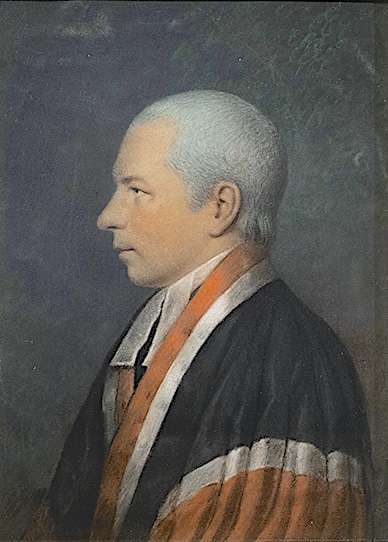
One plausible alternative existed to the Virginia Plan. On June 15, William Paterson introduced the New Jersey Plan. Its nine resolutions would preserve the Continental Congress as a unicameral assembly where each state cast one vote. Its powers would be modestly augmented, and it would be empowered to appoint a national executive, who in turn would appoint a supreme judicial tribunal. However, Dickinson privately explained to Madison that many small-state delegates supported the more potent national government the Virginia Plan was proposing but would do so only if the states retained an equal vote in one house of the legislature. The delegates knew that the New Jersey Plan had been proposed more as a threat than a serious alternative, and it was never discussed on its merits.
On June 19, following a long speech from Madison, the convention rejected the New Jersey Plan, instead voting to pursue the modified version of the Virginia Plan. Four more weeks of debate followed. When the convention remained at an impasse over whether the states should have an equal vote in one house, it appointed a committee to propose a compromise. The part of their report relating to the House of Representatives proved relatively straightforward. It would allocate seats according to population, with enslaved African Americans (described as “other persons”) counting as three-fifths of free persons. The deadlock over the Senate persisted. In a crucial July 16 vote, the convention voted 5 to 4 to give each state an equal vote, with one populous state, Massachusetts, divided on the matter (Rhode Island did not send a delegation to the convention, the New York delegation had left at this point, and the New Hampshire delegation had yet to arrive, leaving ten states to vote).

This was no great compromise but a victory for one side and a defeat for the other because the composition of the Senate had always been the main point of contention. Only in hindsight did it make sense to call it a compromise. Madison always believed that his position was right on principle. His defeat on this point and on other key proposals led him to leave Philadelphia convinced that the Constitutional Convention had been a failure in some crucial respects. Only over time did he come to recognize what a remarkable event it had been and the Virginia Plan’s crucial role in its success by enlarging the scope of debate well beyond what most of his contemporaries had ever imagined.


