

Written State Constitutions
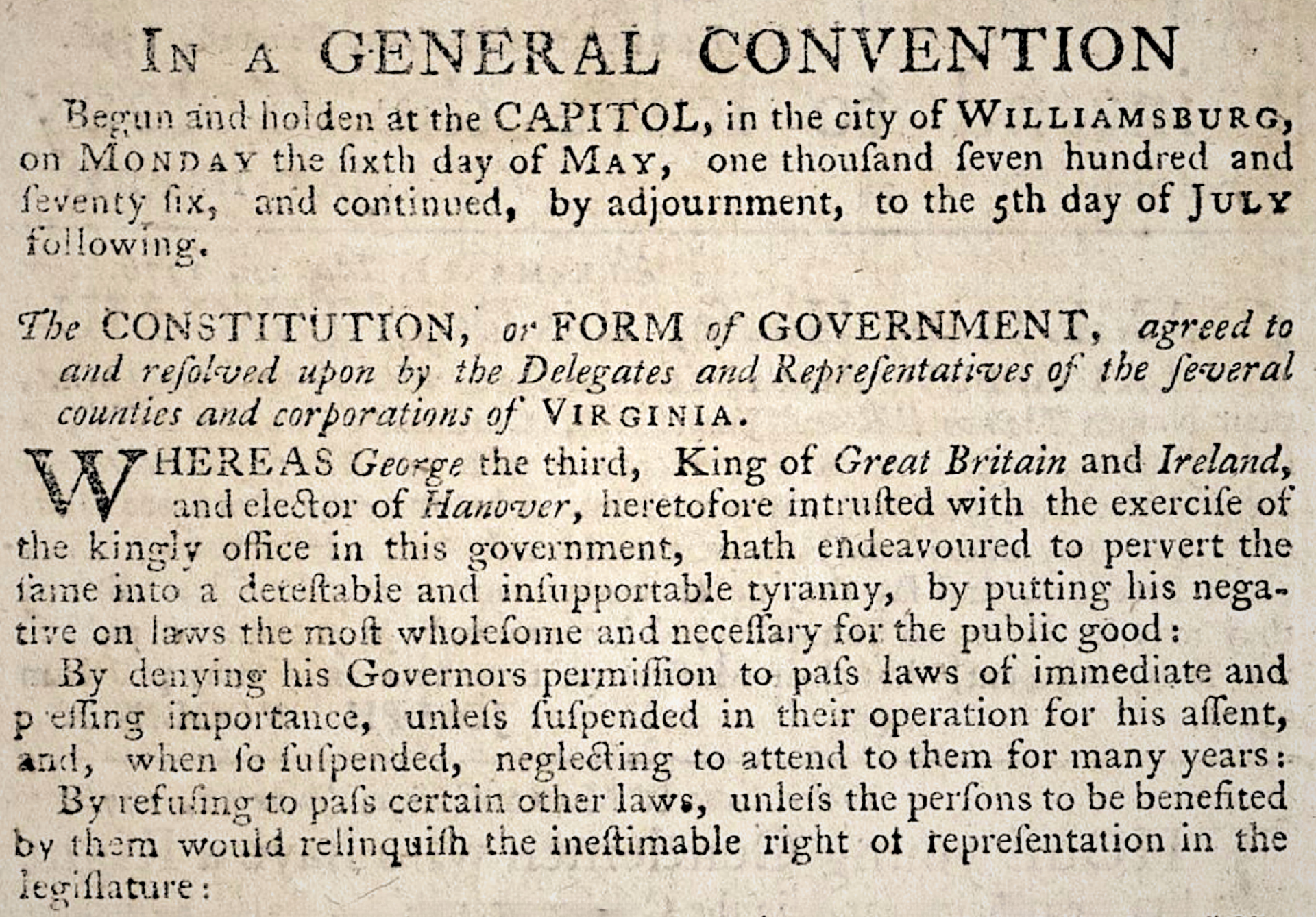
Before the American Revolution, colonial Virginia had no royal charter or colonial constitution that a twenty-first-century American would recognize. Modern Americans regard federal and state constitutions as a separate kind of law superior to ordinary statute law. Those constitutions define the duties and describe the limitations on institutions of government and embody the governmental elements of the social contract. Colonial and Revolutionary Americans did not think of constitutions in that same way. Their ideas about constitutions reflected the English constitution, which was a collection of documents, institutions, practices and traditions that explained how royal government functioned. They regarded their separate governmental institutions and practices of each colony in the same manner. So, too, the first state constitutions that members of the Revolutionary generation wrote.
The Virginia Constitution of 1776
Convention President Edmund Pendleton appointed a twenty-eight-member committee to draft the Declaration of Rights and constitution that included most of the experienced delegates under the chairmanship of veteran legislator Archibald Cary. Pendleton included some promising young men, chief among them Edmund Randolph, alternate delegate from Williamsburg sitting in for George Wythe, who was representing the colony in Congress, and James Madison, making his political debut as a delegate from Orange County. Pendleton appointed a few other men to the committee later, the most important of them being George Mason, who arrived late and took his seat in the convention on May 18.

Mason took the lead in the committee and introduced drafts for both the Declaration of Rights and the Constitution. He based his ideas for the form of government on a brief, skeletal outline that Richard Henry Lee published in the spring. The committee made amendments to both, as did the full convention, but the major outlines and provisions of both of Mason’s drafts formed the basis for the two principal components of the Constitution of 1776. The convention unanimously adopted the Declaration of Rights on June 12, and the Constitution, or form of government, on June 29, 1776. The unanimity masked some serious disagreements among convention members about what to include and what not to include, but because they had reached a consensus in favor of independence, they all voted for both elements of the new state’s new constitution.
In addition, the convention adopted an ordinance that with other provisions of the Constitution in effect made the county courts part of the constitution, which allowed the two institutions of local government, the county courts and the parishes of the Church of England, to continue functioning as they had even though the Constitution did not mention them.
The Constitution or Form of Government
Richard Henry Lee described what the convention called the “Constitution or Form of Government” that the convention adopted as “very much of the democratic kind” and “sufficiently guarded against the Monster Tyranny.” By “democratic,” he meant that the constitution lodged most of the powers of government in an elected General Assembly composed of a Senate and a House of Delegates. The constitution empowered qualified voters to elect all members of the House of Delegates annually and to elect one-fourth of the members of the Senate every fourth year, to create a rotation in Senate membership. By “sufficiently guarded against the Monster Tyranny,” Lee meant that the powerful offices of king and royal governor no longer existed, and that the governor of the state would be a weak official.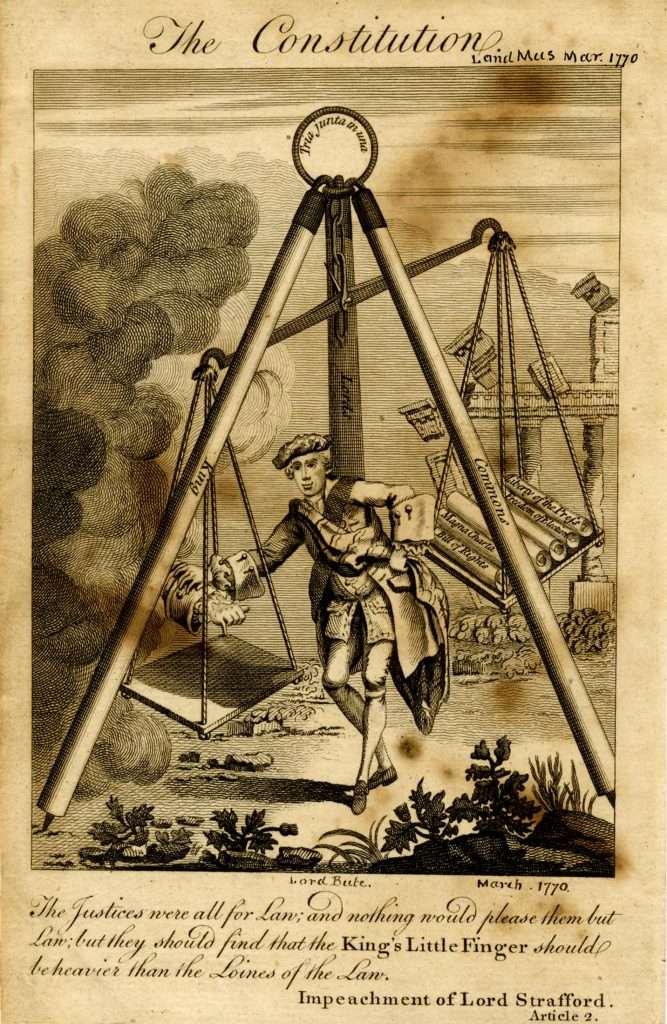
The constitution begins with a preamble that Thomas Jefferson wrote. It closely resembled the Declaration of Independence and includes a long recitation of abuses by King George III, “heretofore intrusted with the exercise of the kingly office in this government,” by which he “hath endeavoured to pervert the same into a detestable and insupportable tyranny” and consequentially forfeited any claim to the allegiance of Virginians or any right to participate in their government.

The provisions of the constitution destroyed or severely weakened institutions of the colonial government that kings had imposed on Virginia and preserved or enlarged the importance and influence of institutions that Virginians had created. The most consequential innovation of the new state constitution was to the executive branch of government. The king had appointed the royal governor and a Council of State who possessed powers that appeared dangerous to the Revolutionary generation. The king or governor appointed most public officials in the colony and together the governor and members of the Council of State served as judges of the General Court, the highest court in the colony and the only court of appeals. Members of the Council of State served as executive advisors to the governor and also as the upper house of the General Assembly. The king and governor determined when to hold elections for members of the House of Burgesses and when the assembly would meet. Both the governor and the king could veto bills that the General Assembly enacted with no opportunity for legislators to override a veto.
The Constitution of 1776 enlarged the power of the General Assembly and by distributing the authority of the colonial Council of State, effectively destroyed that institution. The constitution provided for an elected Senate to be the upper house of the assembly and transformed the powerful office of governor into a weak administrative officer with almost no independent authority and no power to veto bills that the General Assembly enacted. The constitution left the governor as commander in chief of the militia but otherwise reduced his authority severely. It empowered the General Assembly to elect the governor for a one-year term and an eight-member advisory “Privy Council, or Council of State” with no legislative or judicial responsibilities. No person who served as governor for three consecutive years could be reelected until four years later; and the assembly had to displace two members of the Council of State and replace them every third year. The General Assembly also appointed all other executive officials, including the treasurer and attorney general.
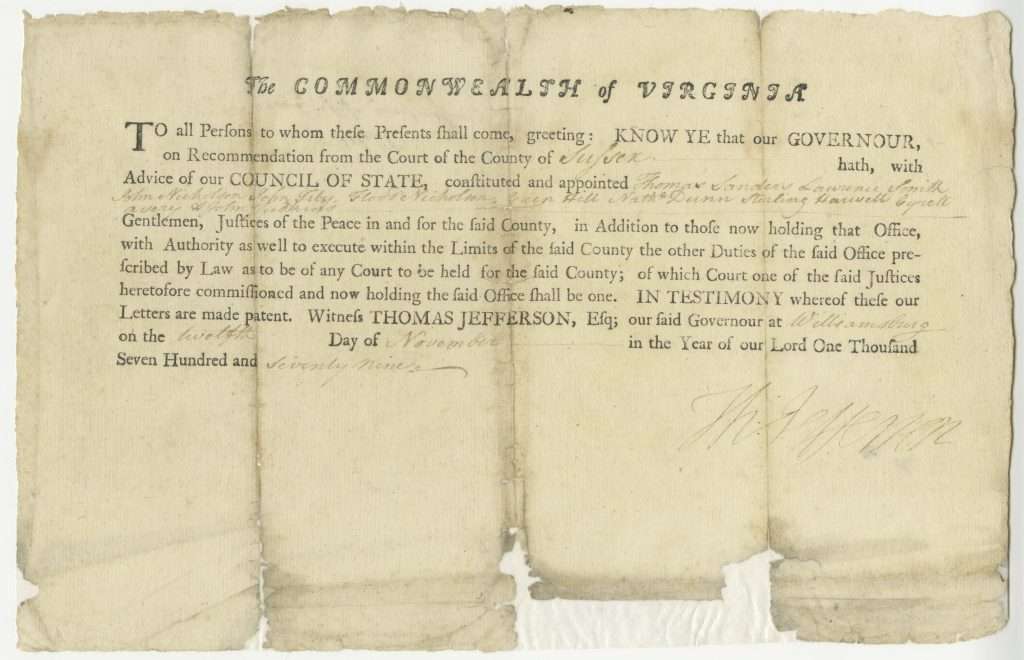
The constitution authorized the General Assembly to appoint all judges in the state except justices of the peace for the county courts. It made mandatory a practice that arose in the seventeenth century by which the governor issued commissions to justices of the peace to fill vacancies on the county courts from lists of names that justices of the peace submitted to the governor. The governor lost any discretion the royal governors had to appoint any other people. Since the middle of the seventeenth century, county courts had in effect been self-appointed local oligarchies, and they continued to function in precisely the same way after 1776. A new General Court inherited the criminal court jurisdiction of the colonial General Court; a new Court of Chancery inherited the chancery responsibilities of the old General Court; and a new Supreme Court of Appeals inherited its appellate jurisdiction.
“The right of suffrage in the election of members for both Houses” of the General Assembly, the Form of Government decreed, “shall remain as exercised at present.” That thereby incorporated into the new constitution the 1736 election law (the statute in force “at present” in 1776), which restricted the vote to free adult white men who owned or possessed a long-term lease on at least one hundred acres of land or fifty acres and a house in the country or a lot or part of a lot in Williamsburg or Norfolk. It provided for no other popularly elected public officials.
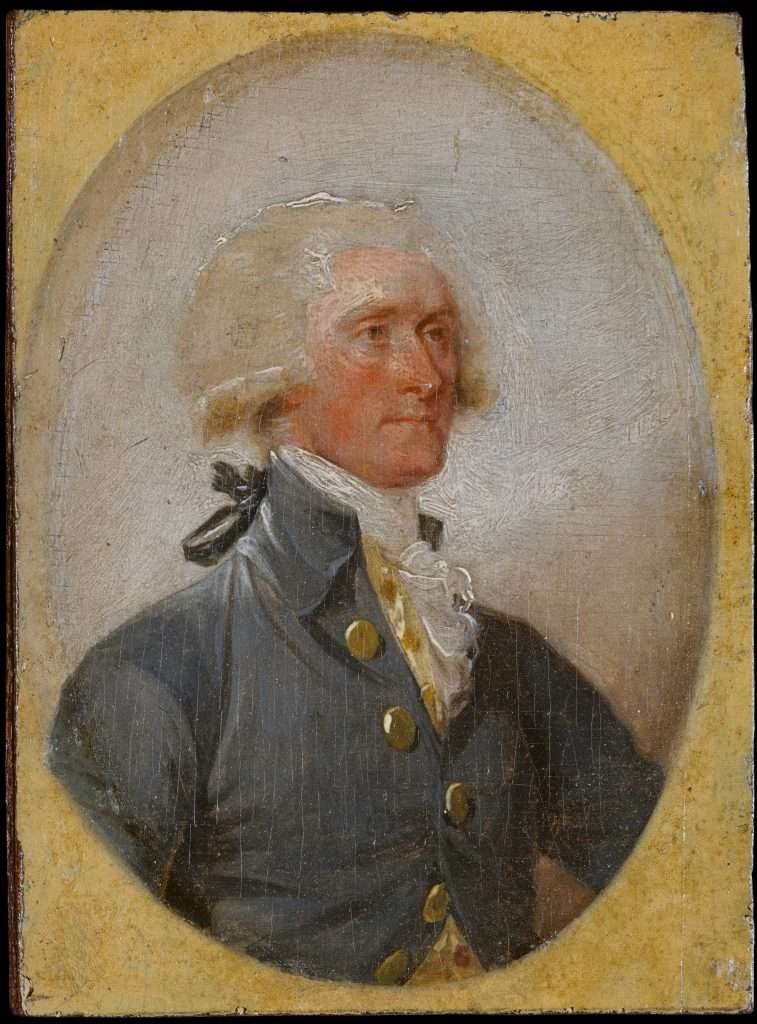
The convention did not submit the Declaration of Rights or the Constitution to voters for ratification or rejection. Whether members of the convention discussed the possibility of or necessity for a ratification referendum is not recorded. Jefferson included a provision for popular ratification in a draft constitution that he sent from Philadelphia, where he was serving in the Continental Congress, but it is unlikely that very many delegates were aware of his suggestion. Nor was it self-evident, to use a memorable phrase from 1776, that ratification by the voters in a referendum was then generally understood to be requisite to render a constitution legitimate. Nobody could cite a precedent because nobody had ever done anything remotely similar in the whole history of English-speaking people before 1776. In the language of the final section of the preamble, the delegates did “ordain and declare the future form of government of Virginia.”
Some form of popular ratification of a constitution or form of government very soon became associated in the public mind with the common understanding that developed during the Revolutionary period that a convention elected for the express purpose of writing constitutions was the sole or preferred legitimate method of creating constitutions. But that came later.
The Constitution of 1776 in Operation
Together, the Declaration of Rights and the Constitution or Form of Government were about 3,450 words long, approximately three-quarters the length of the Constitution of the United States that was ratified in 1788. Both constitutions, as with the new constitutions of the other states, were brief and general in their terms, unlike the much longer and more detailed state constitutions of the nineteenth and twentieth centuries. The Virginia Constitution resembled most other Revolutionary-era state constitutions in many respects, including retaining the property qualification for suffrage, a weak executive, and bicameral legislatures. Only the first constitutions of Pennsylvania and Georgia briefly dispensed with bicameral legislatures.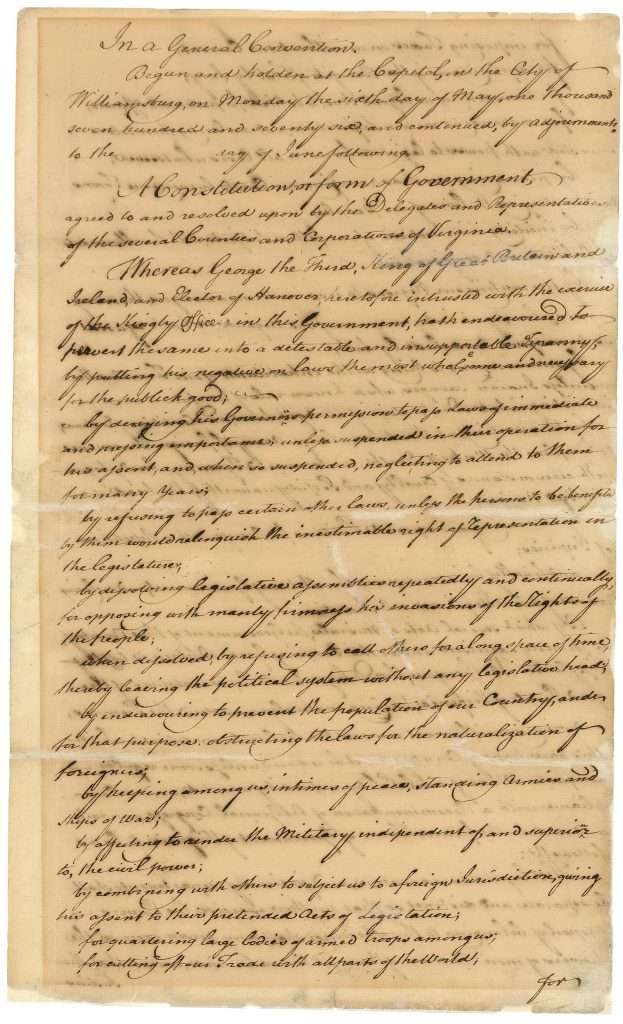
The government began operating under the new constitution on July 6, 1776, when Patrick Henry took the oath of office as governor. Justices of the peace took oaths of office and of allegiance to the new Commonwealth of Virginia before the end of the summer, and in the autumn the General Assembly appointed judges and administrative officials. The Constitution of 1776 contained no provision for amendments. It remained in effect and unaltered until the Constitution of 1830 replaced it when voters ratified the state’s second constitution in April of that year.

Even though Richard Henry Lee had called the new constitution democratic, it was in almost no way democratic as Americans came to understand that word in the nineteenth century. To the extent that it was even representative, or republican, it represented the interests of tobacco planters who formed the bulk of the electorate. Tobacco planters and lawyers continued to win most seats in the General Assembly as they had before the American Revolution, and the new constitution allowed those men to continue to dominate local government through the unelected county courts and until passage of the Act for Establishing Religious Freedom in 1786 dominate the only other institution of local government, the parishes of the Church of England, through their membership on unelected parish vestries.
The effect of the new constitution was to abolish “the kingly office” and empower the men who had controlled colonial and local government institutions before the Revolution to continue their influence and even increase it afterward. By continuing in force all laws that the General Assembly had passed, the Constitution also allowed chattel racial slavery to continue to exist in Virginia.


