

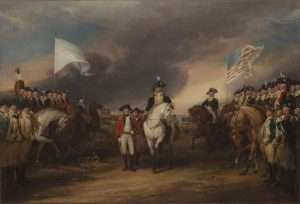
The American Revolution in Virginia (1775–1783) emerged from the colony’s experiences during the Seven Years’ War (1754–1763), which reshaped imperial relationships, intensified competition for western lands, and prompted new British policies on taxation, trade, treasury notes, and the territory beyond the Appalachian Mountains. In response to parliamentary reforms—including the Proclamation of 1763 and the Stamp Act—Virginians organized protests, boycotts, and inter-colonial political networks such as the Virginia Committee of Correspondence, while also expanding militia activity and extralegal governance through local committees of safety. By summer 1774, disaffected white male freeholders throughout Virginia convened to pass a series of resolves, including the Fairfax Resolves, which asserted their fundamental rights and called for a union of colonists. By summer 1775, Virginia’s last royal governor, John Murray, fourth earl of Dunmore, had fled Williamsburg following the Gunpowder Incident and was raiding settlements along the shoreline, leading to the first fighting of the Revolutionary War south of Massachusetts in the Battle of Hampton (October 26–27, 1775). The Battle of Great Bridge (December 9, 1775) was the first major battle of the American Revolution in Virginia and a significant early victory for Patriot military mobilization. Following defeat at Great Bridge, Dunmore relocated to Norfolk Harbor and, on the afternoon of January 1, 1776, opened fire on the city. The Patriots completed the destruction of Norfolk, which they blamed on the British, inflaming support for the revolutionary cause. By 1776, Virginia was at the forefront of the independence movement. The Fifth Revolutionary Convention adopted the Virginia Declaration of Rights on June 12, the state’s first constitution on June 29, and instructed its delegates in the Continental Congress to propose independence. The Revolutionary War in Virginia was marked by internal divisions, including conflicts between Patriots and Loyalists, and by the actions of enslaved Virginians who sought freedom by joining British forces, particularly under Lord Dunmore’s Proclamation, which further alienated many Patriot enslavers. Military conflict returned to Virginia in late 1780 and early 1781, with turncoat British general Benedict Arnold’s raid on the Tidewater and the Yorktown Campaign, which culminated in the Siege of Yorktown (September 28–October 19, 1781). Combined American and French forces under General George Washington and the Comte de Rochambeau defeated General Charles Cornwallis at Yorktown, effectively ending major military operations in North America. The Treaty of Paris (1783) secured American independence and confirmed expansive territorial claims, including lands long claimed by Virginia in the trans-Appalachian West. In the war’s aftermath, Virginians faced the challenges of transitioning to peacetime governance, addressing Loyalism, managing public debt, and confronting questions of slavery, property, and political participation in the new republic.
ENTRY


