


Background
On June 15, 1775, the Second Continental Congress in Philadelphia unanimously elected Washington “to command all the Continental forces raised or to be raised for the defence of American liberty.” Washington was nominated by John Adams of Massachusetts, who argued that a Virginian would help to dispel the belief that New England was attempting to dominate the colonies. But the forty-three-year-old Washington had other qualifications. Physically imposing at more than six feet tall, he was among America’s most experienced native-born soldiers. Between 1754 and 1758, while serving alongside the British during the Seven Years’ War, Washington had “heard the bullets whistle,” becoming acquainted with the visceral horrors of frontier fighting and the grinding logistical realities of campaigning in the Appalachian backwoods.
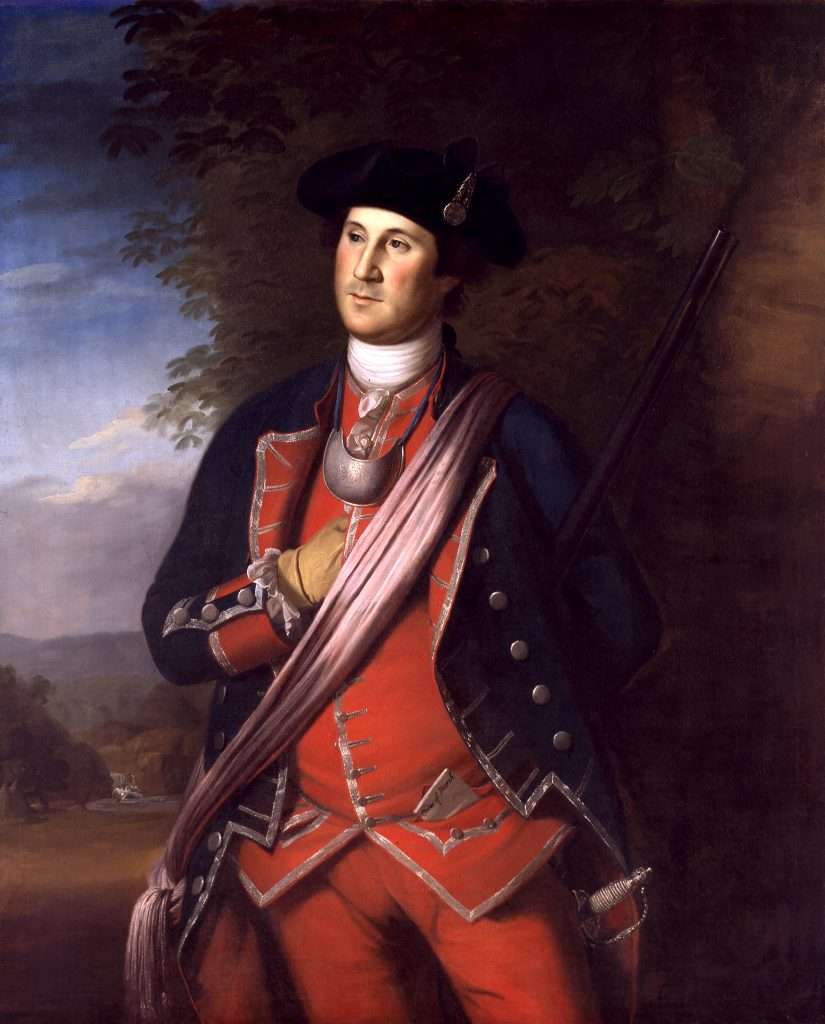
As colonel of the Virginia Regiment, Washington defended his colony’s long frontier against raiding by France’s Indigenous allies from late 1755. He forged his own regiment into a highly disciplined formation, very different from other American “provincial” units and the colonial militia. Washington never lost his preference for long-service professional soldiers nor his disdain for unreliable amateurs. Washington’s youthful soldiering taught him another enduring lesson: that victory often hinged less on glorious factors like courageous leadership than on everyday discipline, planning, training, hygiene, and, not least, harmonious relations between soldiers and civilians.
Headstrong and outspoken when dealing with military and political superiors, Washington was occasionally reprimanded by both. Denied the British Army commission he craved, in late 1758 he resigned his colonelcy, married the wealthy widow Martha Custis, and became a gentleman farmer at Mount Vernon. Washington’s sterling military service resonated in Virginia, helping to secure his seat in the colony’s House of Burgesses. Significantly, when Washington sat for a portrait by Charles Willson Peale in 1772, he wore his old uniform.
Assuming Command
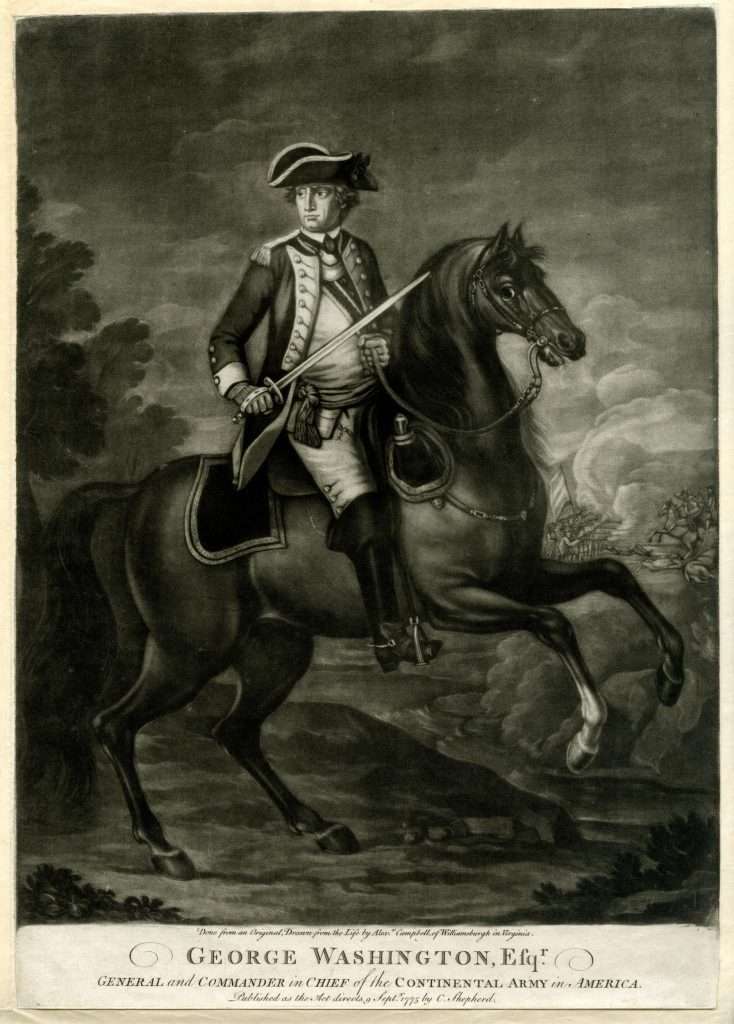
Before taking command of the “army of the United Colonies” mustering at Cambridge, near Boston, Washington in June 1775 received “instructions” from Congress for his “better direction” outlining his duties. Although the instructions made it clear he was subordinate to Congress, they also directed him to use his initiative as events unfolded, while seeking the advice of his senior officers. Initially, Washington believed that the majority verdict of a council of war—which consisted of his generals—was binding; reliance upon them would become both a blessing and a curse.
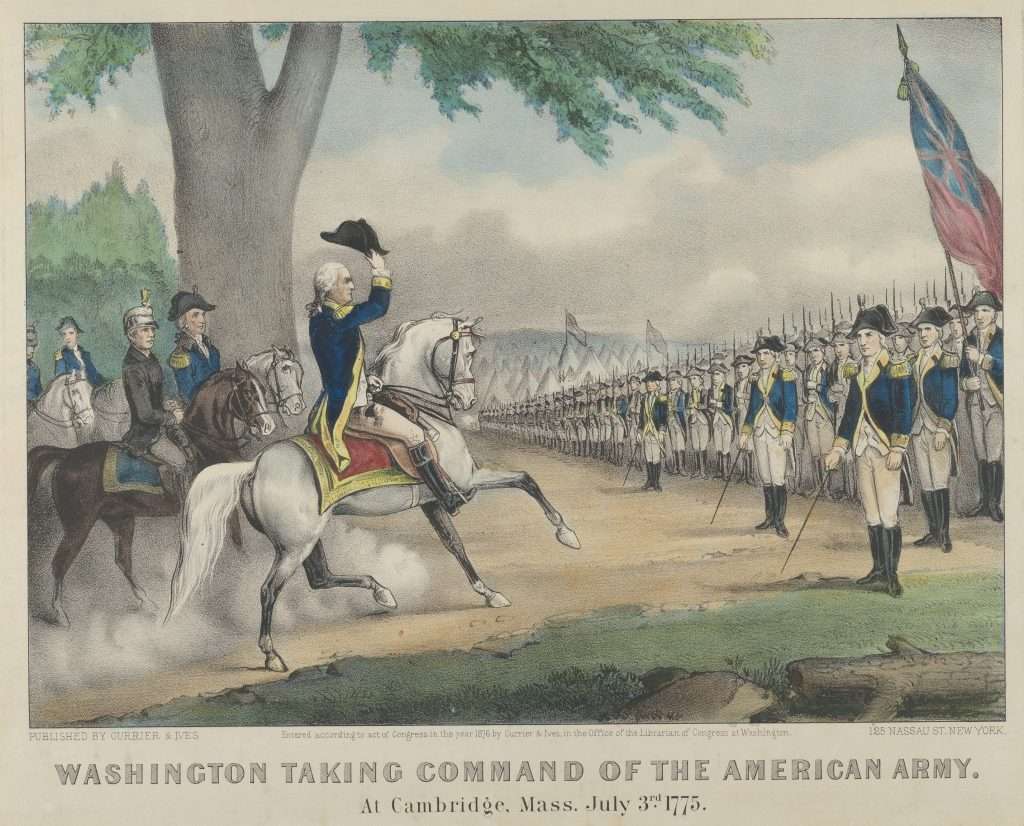
Arriving at Cambridge on July 2, 1775, Washington found himself heading 16,000 men, more than twice the number of the British besieged in Boston, but very different in quality. Washington soon grappled with a perennial problem: an army of part-timers would drain away as the men’s enlistments expired. Writing to John Hancock, president of the Continental Congress, on September 21, he warned that the Connecticut troops were only engaged until December 1, and no others beyond January 1, 1776. “Dissolution” of the army was unavoidable “unless some early provision is made against such an event,” he warned. The firm but respectful way that Washington acknowledged the primacy of the Revolution’s civilian leadership, while emphasizing the needs of the men fighting to uphold American liberty, characterized his relations with Congress. His approach had the desired effect; a committee of Congress was soon sent to tackle key issues.
Meanwhile, Washington was eager to capture Boston while he still had an army. In early September 1775 he canvassed his generals to discuss a proposed surprise attack, striking across Boston Harbor by whaleboat and overland against the fortifications at Roxbury that defended the port’s narrow neck. The council of war unanimously deemed the plan too risky. Washington abided by its judgment.
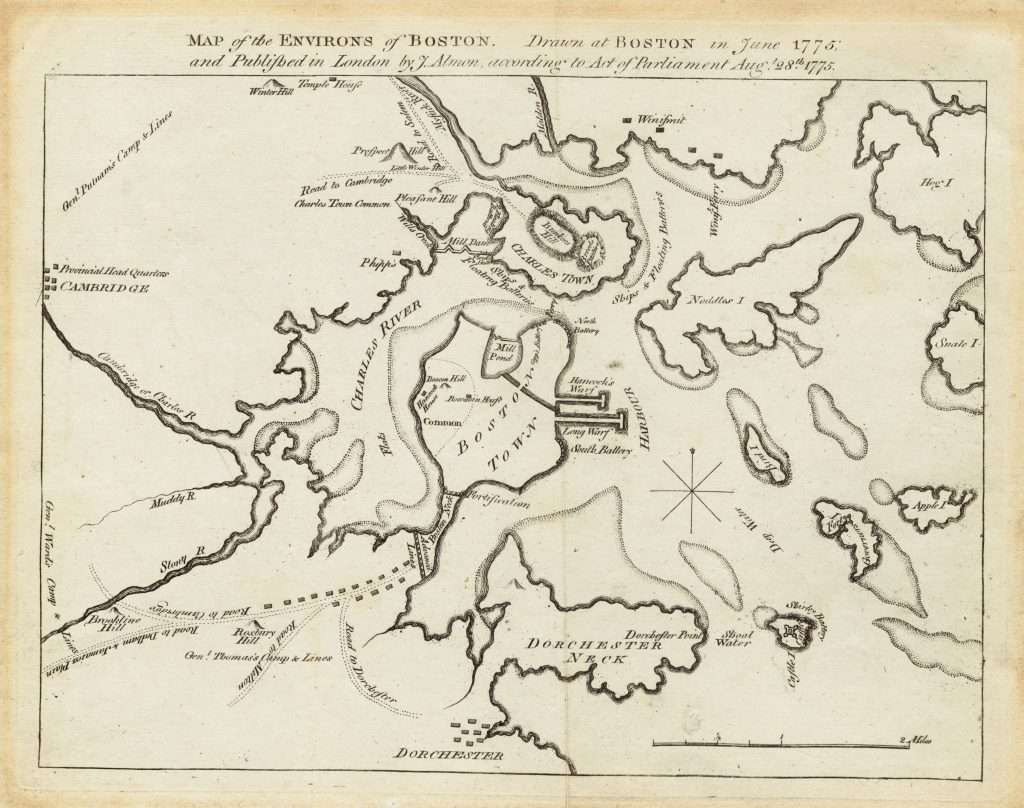
Congress remained keen for Washington to gain possession of Boston before British reinforcements arrived. This was not the last time politicians would urge him to seek swift, decisive victory. Such prompting was scarcely necessary, but once again, Washington’s subordinates wisely reined him in. They knew sending raw troops against regulars behind entrenchments would likely have massacred the fledgling Continental Army.
On October 10, British commander-in-chief Thomas Gage was replaced by the more aggressive General William Howe. Facing full-scale rebellion, the ministry in London agreed to reinforce his army to at least 20,000 men, with orders to make New York, not Boston, his base. A shortage of shipping prevented Howe from shifting his troops that autumn. Despite his bullish reputation, Howe was reluctant to break the deadlock by storming the rebel siege lines. Washington chafed at the continuing inactivity, but this lull gave an opportunity to overhaul the Continental Army, which was expanded to a theoretical strength of 20,372 men, all serving until December 31, 1776.
As Washington’s original army trickled away, frantic efforts were made to recruit its successor. On New Year’s Day 1776, Washington issued orders announcing the “commencement” of the new army. Both the organization and discipline of the revamped Continental Army sought to emulate the old Virginia Regiment, which had itself imitated British precedents. Many General Orders used phrases identical to those employed by Washington between 1755 and 1758. Rather than relying on an amateur citizen militia, Washington envisioned a corps of long-service professionals—the “standing army” abhorred by many Americans. Nor was Washington inclined to unleash irregular, guerilla warfare, preferring a more conventional conflict that limited destruction.
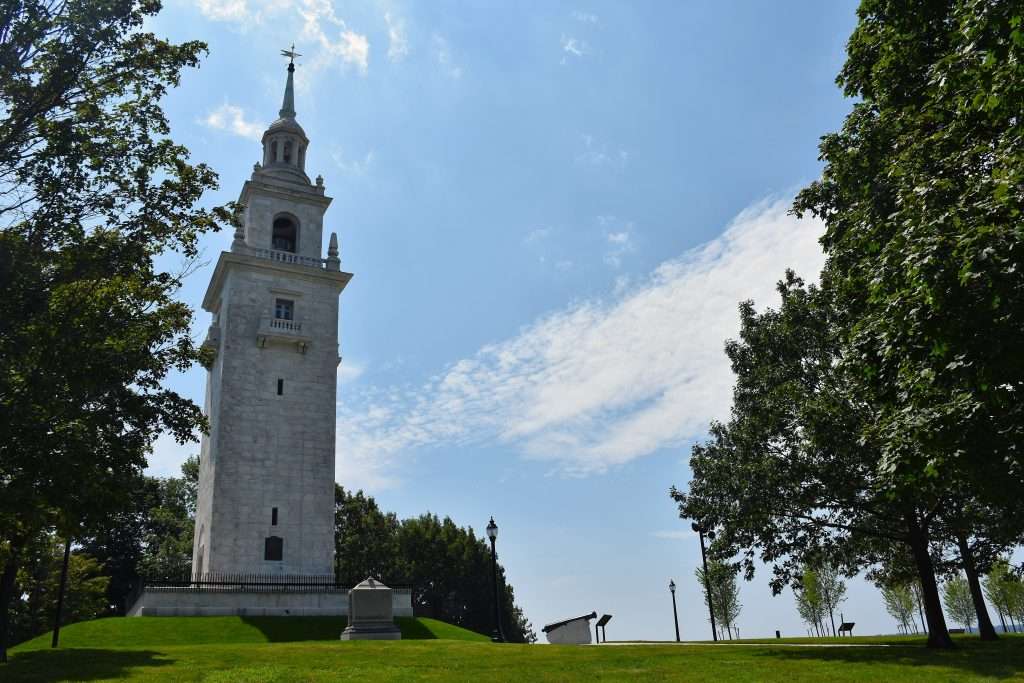
By March 1776, Washington had stockpiled enough gunpowder to begin bombarding Boston with guns brought from northern New York by Colonel Henry Knox. After the Continentals occupied Dorchester Heights south of town on the night of March 4–5, 1776, Howe’s position became untenable. Two weeks later, Washington reported the outcome of the siege to Congress. “The ministerial army” had evacuated Boston, which was now in the possession of the “forces of the United Colonies.”
Washington’s first major victory was a moment to savor. The Redcoats were gone from Boston, but they had not left America. Reorganizing at Halifax, Nova Scotia, Howe would be back, his likeliest target New York.
Disaster at New York
On purely strategic grounds, Washington should have abandoned New York City to the British. It was surrounded by navigable water, and with naval dominance General Howe and his brother, Admiral Richard, Lord Howe, could strike where they chose. But both the wishes of Congress and his own inclinations persuaded Washington to defend Manhattan. By early August 1776, British forces had converged on Staten Island, swelling Howe’s strength to about 25,000 men. Washington had about 20,000, many of them militia, to defend a fifteen-mile front.
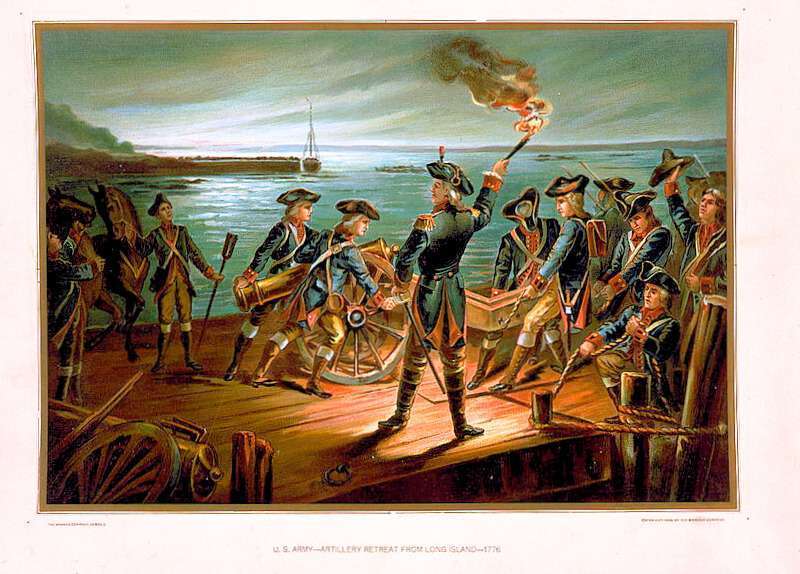
On August 22, the Howes landed 15,000 men on Long Island; another 5,000 soon followed. Washington’s intelligence reports underestimated this force, leaving him uncertain whether it was intended to deflect attention from an assault on New York City. As a result, Washington sent only 9,000 men to Long Island, mostly concentrated within fortifications on Brooklyn Heights, with about a third posted forward along the wooded Heights of Guan. Howe’s subordinate, General Henry Clinton, proposed to outflank the American left under cover of darkness, while feigned attacks on the right and center distracted attention there. At dawn on August 27 the feints began. When the undetected flanking column struck from behind, the defenders crumpled.
Utterly bewildered by the devastating assault, Washington looked on helplessly from Brooklyn’s defenses. Although about 7,000 Americans were now hemmed within them, Howe declined to attack, instead preparing a formal siege. This pause gave Washington the chance to save his army—and American independence. On the night of August 29–30, in dense fog, the Americans were ferried to Manhattan before the British realized what was happening.
Defeat on Long Island undermined Washington’s faith in his troops and his readiness to fight the British in open battle. Explaining his dilemma to Hancock on September 8, Washington outlined his “Fabian” strategy: “we should on all Occasions avoid a general Action or put anything to the risque, unless compelled by a necessity, into which we ought never to be drawn.” Such a cautiously defensive “war of posts,” always shunning a potentially disastrous battle, was contrary to Washington’s aggressive instincts. He was prepared to interpret this creed as flexibly as possible and even to ignore it completely.
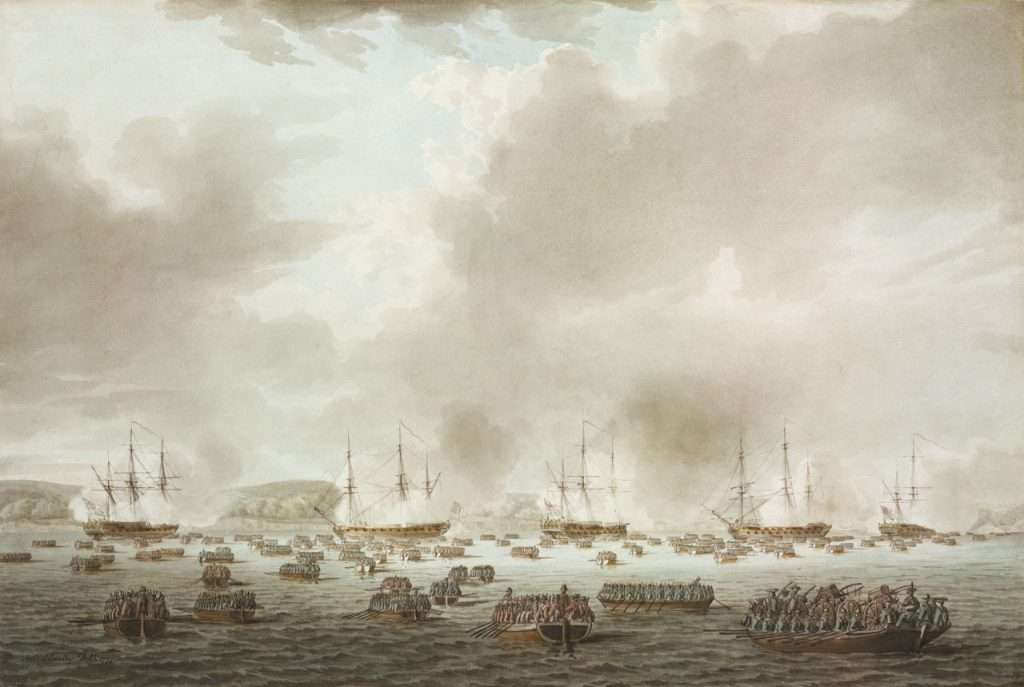
After futile peace negotiations, the British launched an amphibious assault on Manhattan’s eastern shore at Kips Bay on September 15, 1776. To Washington’s disgust, the defenders—mostly militia—fled their trenches. But once again, the British lost momentum, and 3,500 American troops still in and around New York escaped. The next day, Washington’s men rebuffed an attack on Harlem Heights. Dismissed by the British as a skirmish, it increased the confidence of Washington and his soldiers. That same day, Congress authorized a major expansion and reorganization of the Continental Army along lines that Washington had long urged. Men who signed up for “the duration” would get a $20 bounty and 100 acres of land. Days later, Congress approved stricter “Articles of War” to improve discipline.
After that summer’s humiliations and frustrations, Washington could take satisfaction in having persuaded Congress to recognize that the advantages of a disciplined standing army outweighed the “evils to be apprehended from one,” as he told Hancock. This force, however, existed only on paper. Already, Washington knew the burden of command, as he told his cousin Lund, being “wearied to death all day with a variety of perplexing circumstances.”
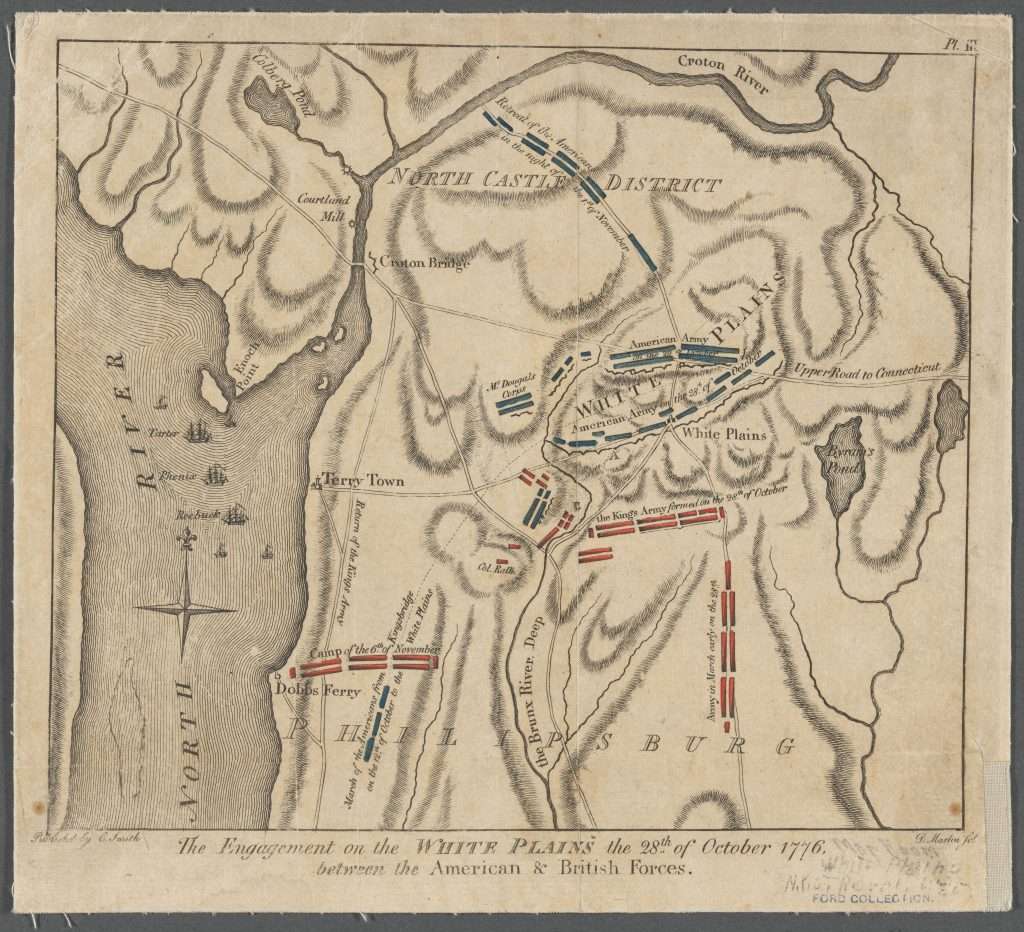
On October 16, another council of war urged retreat from Harlem Heights, but backed defending Fort Washington, in northern Manhattan. On November 4, after an indecisive encounter with Washington at White Plains, New York, Howe headed back to Manhattan. Despite Fort Washington’s vulnerability, Washington was under pressure to maintain it to block a British advance up the Hudson River. General Nathanael Greene was sure the position could be held. But on November 16, Howe captured the strongpoint and its garrison of nearly 3,000 Continental troops. As Washington reported to his brother Jack, this “most unfortunate affair” caused him “great mortification.” Instead of following his own convictions, he had accepted bad advice.
Redemption in New Jersey
That winter, Washington longed to take a stand as Howe harassed him across New Jersey. As he informed Hancock on December 5, 1776, duty and inclination alike impelled him to fight back “as soon as there shall be the least probability of doing it with propriety.” But by the morning of December 8, all of Washington’s men had been ferried across the Delaware River into Pennsylvania.
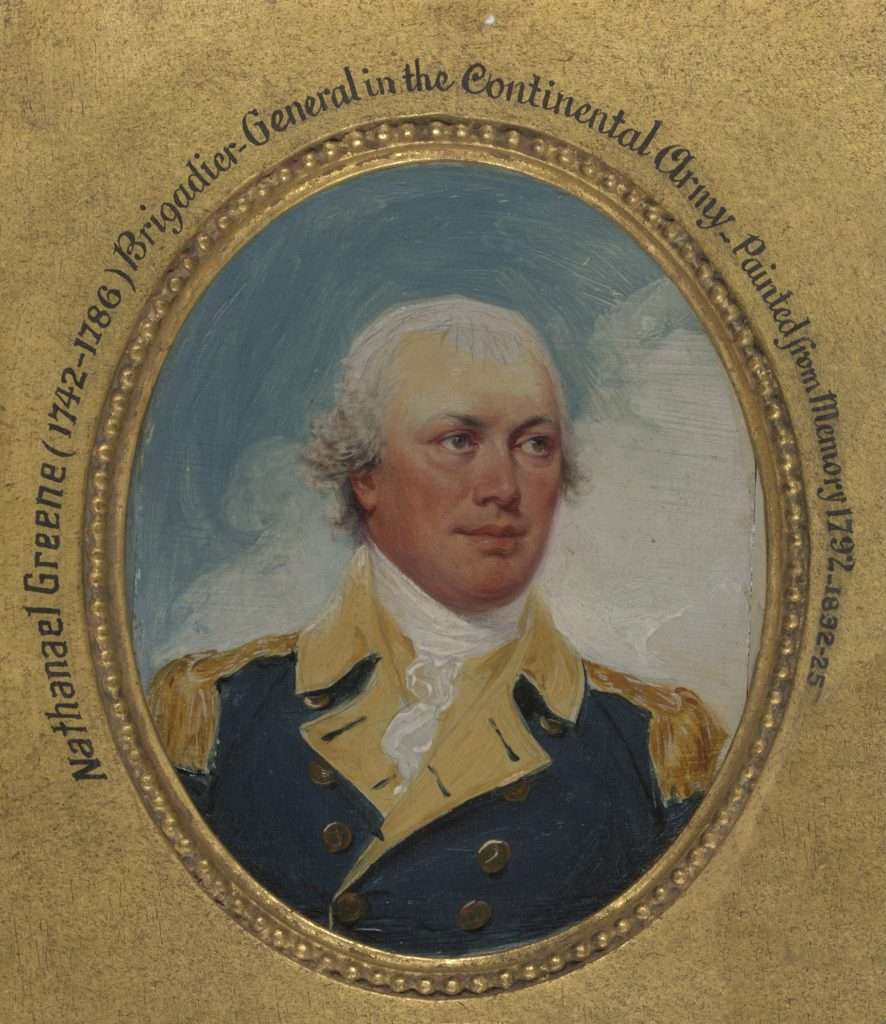
As the British approached Philadelphia and enthusiasm for the rebellion plummeted, Congress departed for Baltimore, giving Washington “full power to order and direct all things relative to … the operations of war” until further notice. General Greene assured Hancock that there was “no evil nor danger to the states in delegating such powers to the General,” as there “never was a man who might be more safely trusted nor a Time when there was a louder Call.”
The British and their Hessian auxiliaries continued scouring the east bank of the Delaware for a way across, and by New Year’s Day 1777, Washington expected to have little more to stop them than raw Philadelphia militia and a handful of Virginia and Maryland Continentals. The gravity of the situation was emphasized on December 19, 1776, with the publication of the first part of Thomas Paine’s “The American Crisis.” It opened: “These are the times that try men’s souls.” Within weeks, however, Washington orchestrated one of the most remarkable turnarounds in military history.
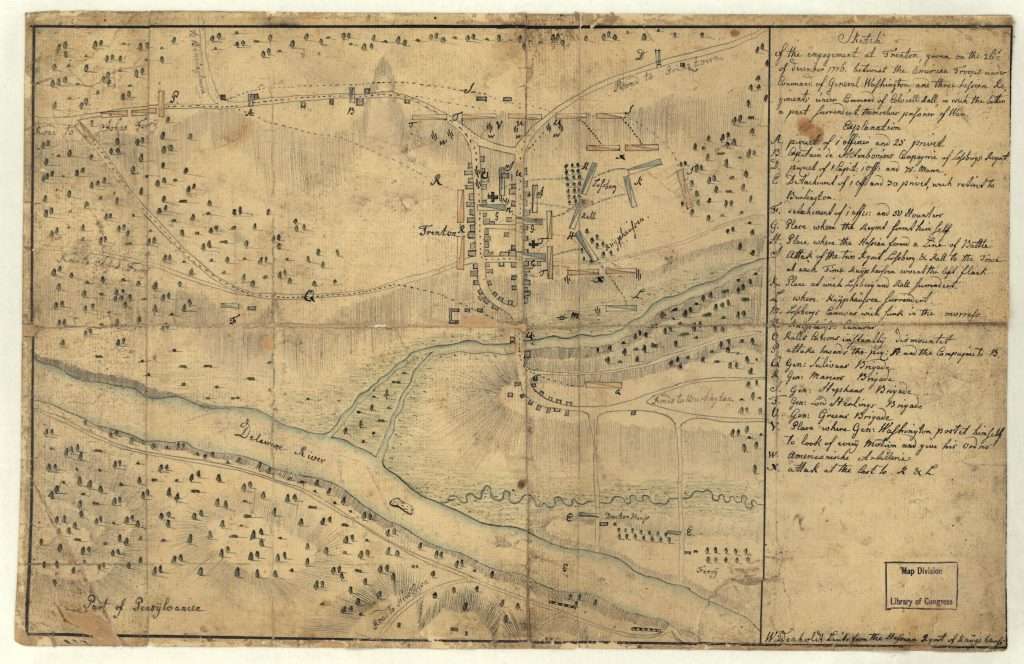
On December 14, 1776, Howe halted and quartered his troops across New Jersey, poised to cross the Delaware once it froze thick enough to support artillery. Howe’s line was spread wide, and southern outposts like Trenton, on the Delaware itself, were dangerously exposed. Given the dismal state of the Patriot cause, they seemed safe enough. Yet far from dissolving, Washington’s army in Pennsylvania was growing stronger. As Christmas approached, he commanded around 6,000 men fit for duty.
With many Continental enlistments due to expire at midnight on December 31, Washington was determined to preempt Howe’s advance with a blow of his own. His plan to “cross into the Jerseys” was encouraged by the activity of rebel militias there. Colonel Johann Rall, commanding the Hessians at Trenton, grew increasingly concerned, but his appeals for reinforcements were dismissed.
Washington’s adjutant-general Joseph Reed, who had been raised in Trenton, pushed for “a diversion or something more at or about” that town. On December 23, Washington replied that a strike against Trenton was scheduled for “Christmas Day at night.” It involved an ambitious, three-pronged attack. The largest force, under Washington, would cross at McConkey’s Ferry, nine miles above Trenton; of the two smaller groups, one would act close to Trenton, and the other farther downstream. But on the evening of December 25, snow, sleet, and hail stymied both of the supporting operations. Everything now depended on Washington’s column.

It was four o’clock on the morning on December 26 before all the guns were ferried across the Delaware and the march on Trenton began. The password was “Victory or Death.” At the halfway point, the column split in two, taking upper and lower roads. Both divisions attacked simultaneously around eight o’clock that morning. Surprised and outgunned, the Hessians were overpowered in forty-five minutes; some 500 men—about a third of the garrison—escaped, but the rest—nearly 2,000—were killed or captured. Mindful of British forces at Princeton, Washington withdrew across the Delaware with his prisoners that same evening. Washington’s bold coup stunned the British. By following his aggressive instincts, he not only gave a timely boost to Patriot morale but went far to restore his own self-confidence following the past year’s setbacks.
Exploiting a resurgence of militia in lower New Jersey, Washington recrossed the Delaware on December 30 and concentrated his troops at Trenton. There, he appealed to his men, offering a $10 bounty to anyone willing to serve a further six weeks. Washington retained 3,000 Continentals. Others had suffered enough, and no fine words could hold them. Washington recognized that for all his appeals to patriotic duty, the cash bounty was decisive in preserving the kernel of his army. Writing to Hancock on New Year’s Day 1777 he explained: “The Troops felt their importance, and would have their price.”
Washington now commanded 6,500 men, including militia downriver at Crosswicks and Bordentown, and forty guns. Meanwhile, General Charles Cornwallis had concentrated 8,000 Redcoats and Hessians at Princeton. Leaving a brigade of three regiments behind, Cornwallis marched for Trenton to tackle Washington. Late on January 2, British troops faced Washington’s army arrayed along Assunpink Creek. With darkness approaching, Cornwallis halted, intending to “bag the fox” the next morning.
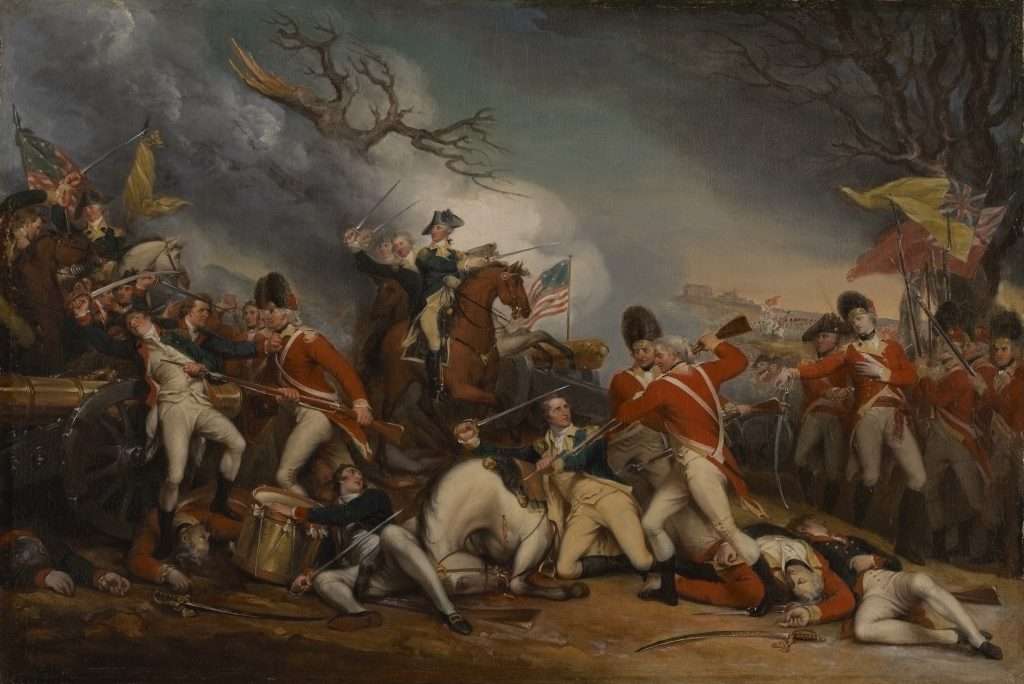
That night, a council of war agreed to give Cornwallis the slip and march fifteen miles to attack the British at Princeton. Cornwallis was oblivious to the stealthy withdrawal. By the next morning, Washington’s army was within striking distance of Princeton. It attacked in three converging columns—a risky gambit should one be caught alone. This very nearly happened after General Hugh Mercer’s weak brigade unexpectedly encountered British troops marching toward Trenton. Mercer’s men were pushed back in savage fighting, throwing supporting militia into confusion. At this crucial moment, Washington rode up and restored order as reinforcements deployed. Some two-thirds of Princeton’s garrison escaped, but Washington had scored another victory. With more Redcoats heading to Princeton, he withdrew north, occupying winter quarters at Morristown, in northern New Jersey.
The ten-day Trenton-Princeton campaign was the high point of Washington’s military career. By indulging his combative character, he redeemed his battered reputation, silencing—at least momentarily—those who questioned his abilities.
Washington’s offensive could not have been better timed. It encouraged Patriots, depressed Loyalists, and underwrote the rebellion’s survival. Howe withdrew from the Delaware to the east to the Raritan River, meaning that any move against Philadelphia via New Jersey would first need to regain lost ground. In addition, Howe’s growing obsession with destroying the main rebel field army under Washington upended the wary strategy he had followed in 1776. Howe’s fixation ensured that cooperation with a scheduled British advance from Canada that summer became a secondary priority.
The Philadelphia Campaign
Initially uncertain where Howe would strike, Washington undertook grueling marches before it became clear that Philadelphia was threatened. Reinforced by local militia to about 14,000 men, on September 11, 1777, Washington confronted Howe from behind Brandywine Creek, southwest of the city. Washington’s troops were arrayed in detachments over a six-mile front, but mostly concentrated about Chadds Ford, where the high road to Philadelphia crossed the creek. Washington’s knowledge of the terrain was patchy; he was unaware of other fords beyond the right of his line, and these were left unguarded. Enjoying excellent intelligence from local Loyalists, Howe exploited this weakness with a long flanking march. As at Long Island, Washington was duped by a “demonstration” to his front, which allowed time for the surprise attack to land with devastating effect.
A tactical defeat, Brandywine barely dented the morale of Washington and his troops. Now occupying Philadelphia and its suburbs, Howe’s army lay vulnerable to a counterstrike. Early on October 4, Washington attacked the British encampment at Germantown. Employing multiple columns, it initially caught the Redcoats off guard and forced their outposts back. In misty conditions, the advance lost momentum as some of Washington’s regiments fired upon each other and became bogged down in attacking a strongly defended house. Howe’s regulars regained the initiative and drove them back. Yet, even the British officers conceded it had been a boldly executed plan. Washington told Hancock that “the day was rather unfortunate, than injurious.” Not in the least dispirited, his troops had gained invaluable combat experience.
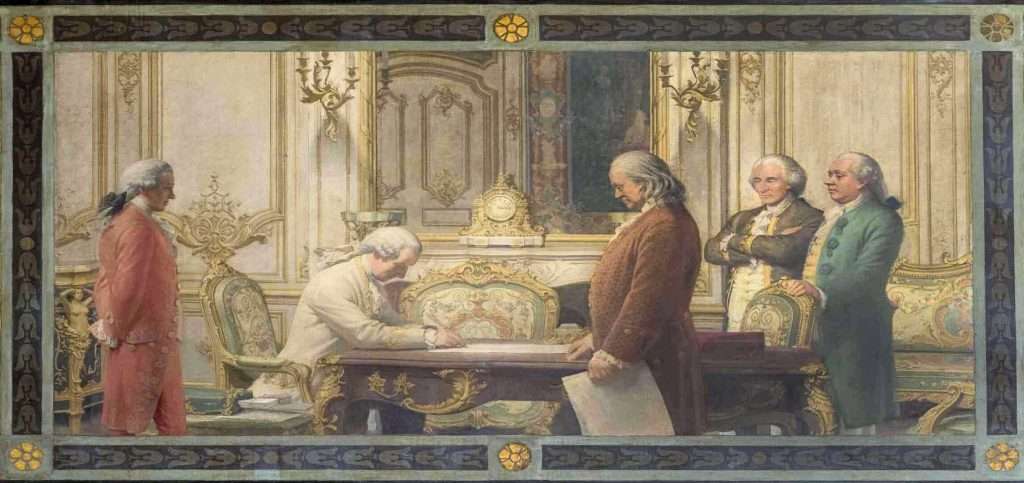
The full cost of Howe’s obsession with Washington and Philadelphia became clear with news of General John Burgoyne’s capitulation at Saratoga on October 17. The Americans, under General Horatio Gates, had eliminated an entire British field army. Saratoga transformed opinion in France. Louis XVI’s ministers had been negotiating with the Americans for some time, but Burgoyne’s defeat, and Washington’s creditable performance at Germantown, expedited events. When the news reached Paris in December 1777, France committed to recognizing the United States and entering into an official alliance. The formal treaties were signed in February 1778, with a declaration of war against Britain following in July.
Burgoyne’s downfall stemmed largely from Howe’s focus upon Washington, itself a consequence of Trenton and Princeton. But for Washington, the contrast between Saratoga and his own defeats at Brandywine and Germantown was mortifying.
From Valley Forge to Monmouth
Unable to eject the British from Philadelphia, Washington established winters quarters to the northwest, at Valley Forge. There, his army faced a potentially disastrous supply crisis. Unless food reached camp immediately, as Washington warned Henry Laurens, the new president of Congress, the army must “Starve—dissolve—or disperse.”

Washington’s presence at Valley Forge determined his army’s survival. He ensured that Congress knew of his soldiers’ sacrifices with frequent reports from headquarters and lobbied prominent congressmen. In January 1778, Congress acted and appointed a Committee at Camp to work with Washington to address recruitment, clothing, supply and discipline.
The winter of 1777–1778 also consolidated Washington’s position as unchallenged commander of the Continental Army. Historians have discredited the existence of a conspiracy, the so-called Conway Cabal to replace Washington with Gates, but there were enough rumors to prompt influential soldiers and politicians to champion him. A hiatus in hostilities provided an opportunity to improve the training of the Continental Army. Under regulations overseen by the former Prussian officer Friedrich Wilhem Augustus von Steuben, every unit learned the same drill, improving their ability to maneuver on the battlefield and instilling confidence into officers and men alike.
The Franco-American alliance had altered the nature of the war. Already struggling to suppress colonial insurrection, the British now faced a wider conflict against their traditional enemy. In March 1778, Howe’s replacement as commander in chief, Sir Henry Clinton, was told that Britain’s main effort must be directed against the French and switched from the mainland to the Caribbean. Additionally, Clinton must evacuate Philadelphia and withdraw to New York.
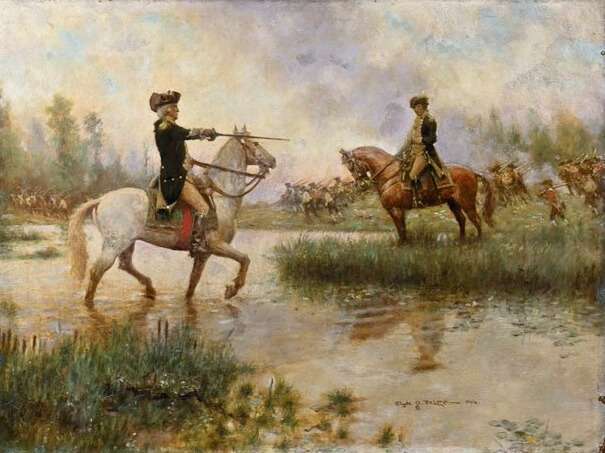
Marching across New Jersey, Clinton’s forces were shadowed by Washington’s reformed army. General Charles Lee wanted to let the enemy go unmolested, but for Washington and his more hawkish officers the enemy’s extended column offered a tempting target. It was agreed that a force under Lee’s command should snap at Clinton’s heels. Early on June 28, 1778, Lee attacked Clinton’s rear-guard near Monmouth Courthouse. The Americans were soon in trouble when the British, commanded by Cornwallis, counterattacked. As Lee’s outnumbered men recoiled, Washington rode up to angrily demand to know why he was retreating, then calmly restored order. Adopting a strong defensive position backed by well-sited artillery, Washington resisted British advances. With casualties mounting and dozens of men dropping from heat exhaustion, Clinton disengaged.
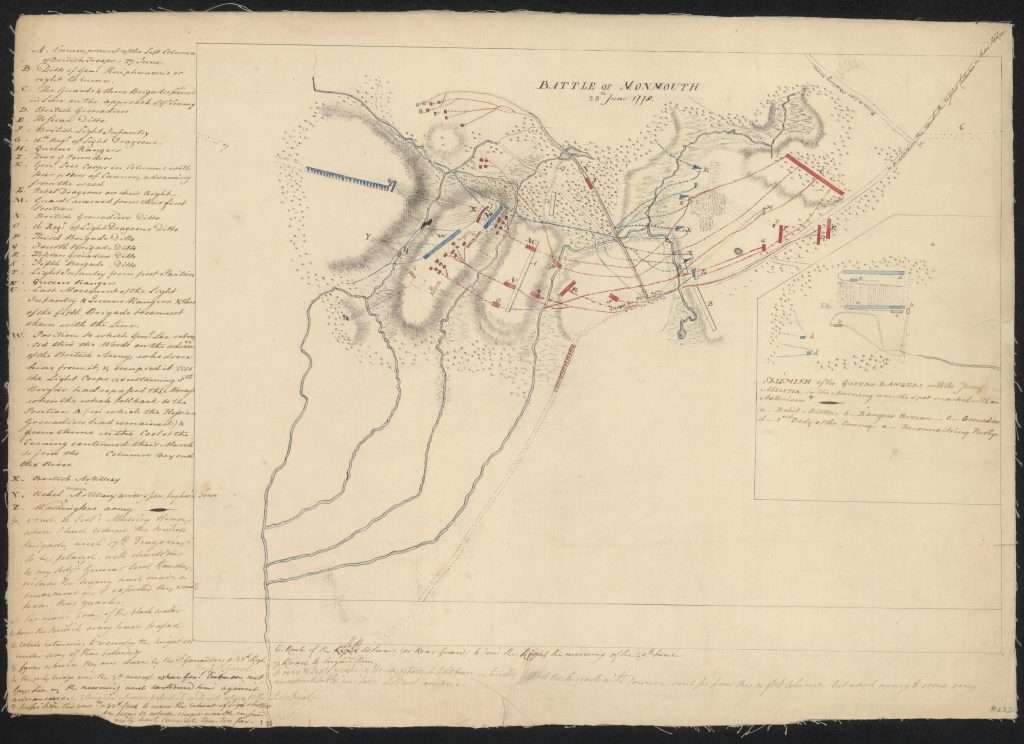
Monmouth, the last major battle in the war’s northern theatre, was indecisive. It nonetheless vindicated Steuben’s training regime and eliminated Washington’s sole remaining rival within the Continental Army. Found guilty of making a “shameful retreat,” Lee was suspended for a year and never returned to service.
As at Princeton, Washington’s personal leadership averted disaster. His aide Alexander Hamilton wrote: “By his own good sense and fortitude he turned the fate of the day … by his own presence, he brought order out of confusion, animated his troops, and led them to success.”
Stalemate and Crisis
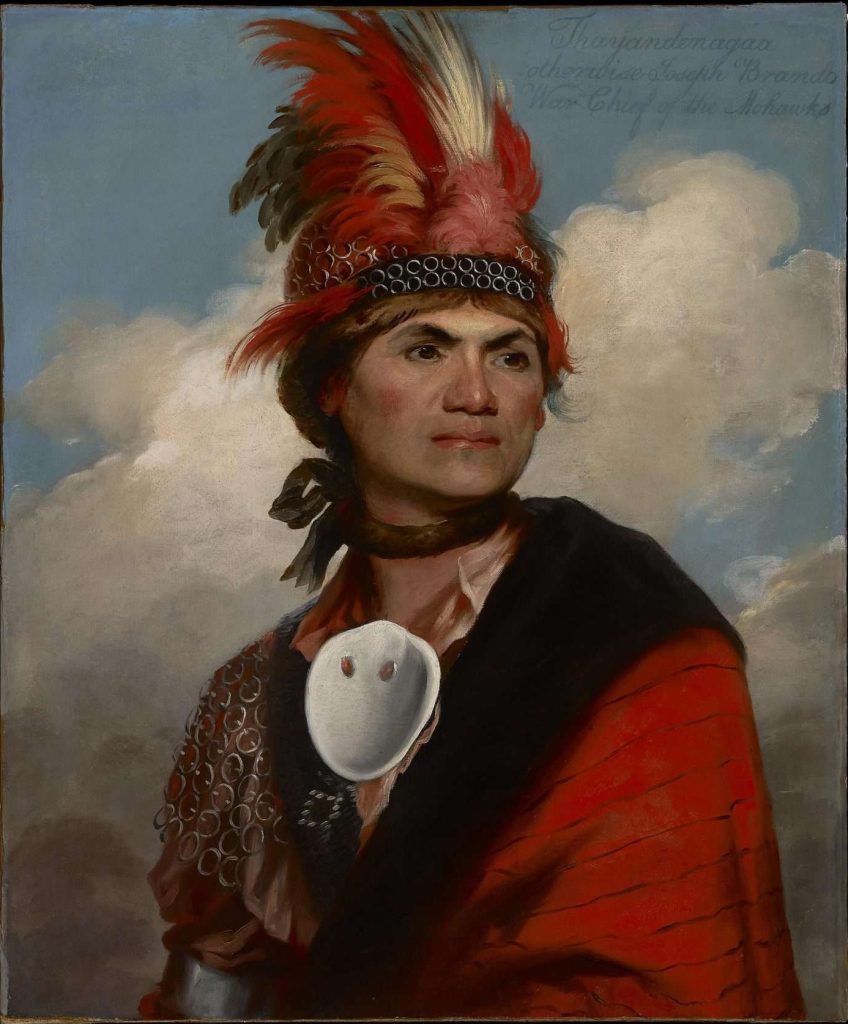
Washington and Clinton engaged in a tense standoff on the lower Hudson in summer 1779, with a series of skirmishes and raids. Meanwhile, a substantial detachment under Major General John Sullivan was sent to the northwest to punish Britain’s allies among the Six Nations of the Iroquois, who had been raiding the frontiers of New York and Pennsylvania. While Washington had been keen to avoid the horrors of unchecked irregular warfare in operations against the British, this was different. In his instructions to Sullivan, Washington emphasized that Iroquois settlements should “not be merely overrun but destroyed.”
Washington longed to recapture New York, and he considered nearly a dozen proposals to do so, but during the winter of 1779–1780 he was powerless to exploit Clinton’s temporary absence in South Carolina. In the coldest weather on record, the army’s sojourn at Jockey Hollow, near Morristown, was bleak. Supply shortages prompted plundering and a disciplinary crackdown. Conditions were so dire that in May 1780 Connecticut troops briefly mutinied.
Clinton captured Charlestown, South Carolina, on May 12, 1780, but stalemate in the north endured. Even the arrival of a long-anticipated French expeditionary force under General Jean-Baptiste Donatien de Vimeur, comte de Rochambeau, which landed 5,500 troops at Rhode Island in mid-July, failed to break the deadlock. The French fleet was blockaded in Newport by the Royal Navy, baffling any hope of a fresh Franco-American offensive.
Washington established a cordial working relationship with Rochambeau and his countrymen. With his dignified demeanor, fine horsemanship, and appreciation of good wine, Washington made a positive impression that facilitated effective cooperation between the allies.
The British recognized Washington’s importance for the Patriot cause. In February 1780 they planned a cavalry raid to abduct him from Morristown, a scheme baffled by icy roads. In addition, there’s compelling evidence that General Benedict Arnold’s plot to surrender West Point to Clinton in September 1780 not only envisioned delivering up the fortress but also Washington, who was due to inspect it.

Arnold’s stratagem came perilously close to success, and the defection of one of Washington’s favorite generals shocked him profoundly. Clinton believed that Washington’s decision to hang Arnold’s British contact Major John André as a spy was a vindictive response to “the near accomplishment of a plan which might have effectually restored the King’s authority and tumbled him from his present exalted situation.”
Victory in Virginia
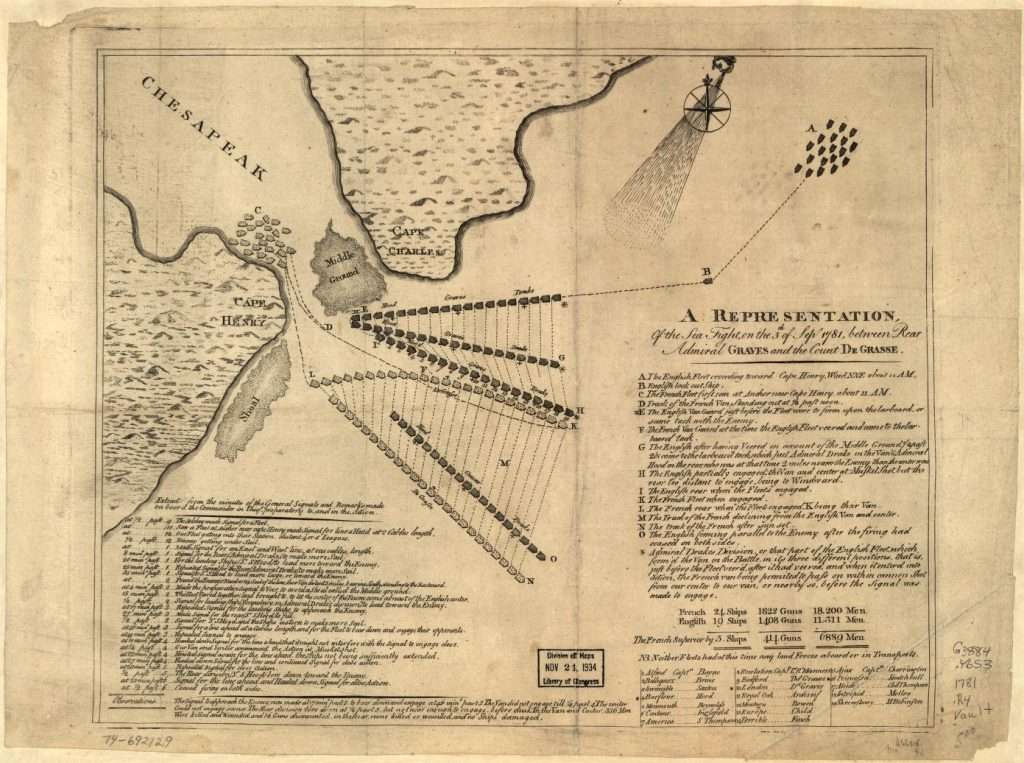
Opening with the short-lived but worrying mutiny of Pennsylvanian regiments on New Year’s Day, 1781 initially gave Washington little hope for victory. On May 22, when Washington met with French officers at Wethersfield, Connecticut, his objective, as ever, was New York. Even the expectation of another French fleet in the West Indies, which raised the possibility of shifting operations to the south, failed to deflect him. The allies rendezvoused in the Hudson Valley and reconnoitered Manhattan’s defenses, but by early August it was obvious that Congress was too weak to provide Washington the manpower and supplies he needed to attack them. By now, the strategic situation had also changed. Fortifying at Yorktown, Cornwallis was vulnerable. Upon learning that the French admiral François Joseph Paul de Grasse had left the Caribbean for the Chesapeake Bay, Washington didn’t hesitate to march south to meet him. The allied armies were already in New Jersey before Clinton realized their target was Yorktown rather than New York.
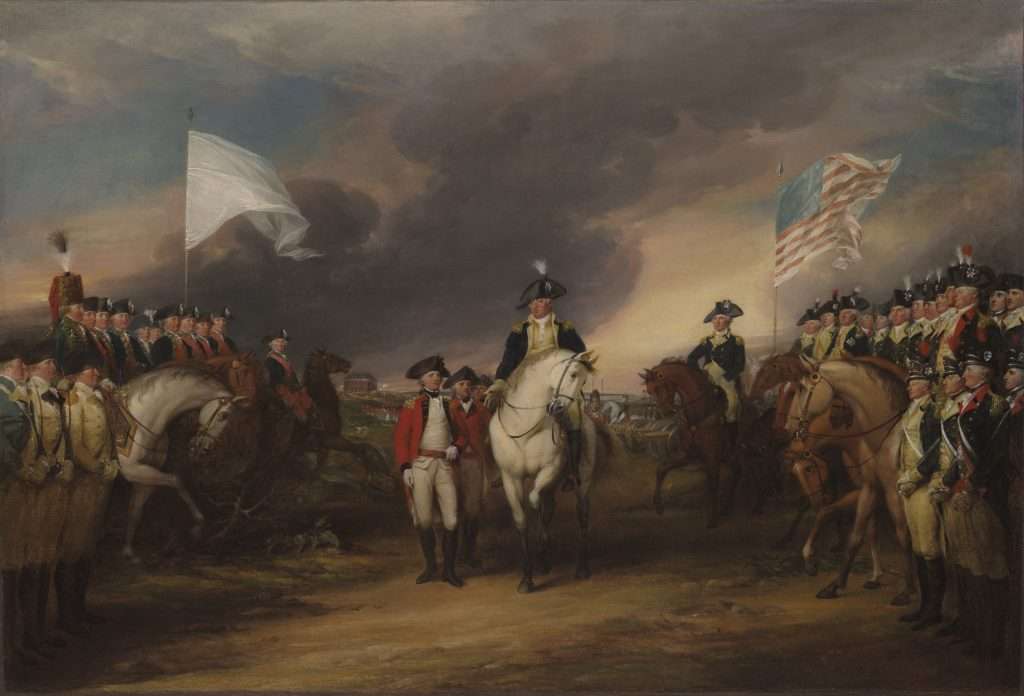
By the time Washington and Rochambeau reached Yorktown on September 28, de Grasse had fended off a British naval force in the Battle of the Capes (September 5, 1781), ending Cornwallis’s hopes of relief. Heavily outnumbered and facing a siege in which French gunnery and engineering expertise were decisive, his surrender was inevitable. Washington watched the British lay down their arms on October 19, 1781. Although the war smoldered on for another two years, Yorktown broke Britain’s resolve to retain America.
Prospects of Peace
Throughout 1782, the wary Washington kept his troops in fighting trim. As peace loomed their frustrations and anxieties mounted. Unpaid officers and enlisted men alike faced poverty. Unrest erupted in spring 1783, at Newburgh, north of West Point. Fears that Congress would disband the army before settling their back pay led disgruntled officers to seek a leader willing to secure their interests. Washington shunned that role. Despite his eminence as undisputed military commander, he never succumbed to the temptation of grasping dictatorial power. His second-in-command, General Gates, was more receptive to the officers’ appeals. On March 10, Gates’s aide, John Armstrong, issued an anonymous call for senior officers to meet and demand a redress of grievances.
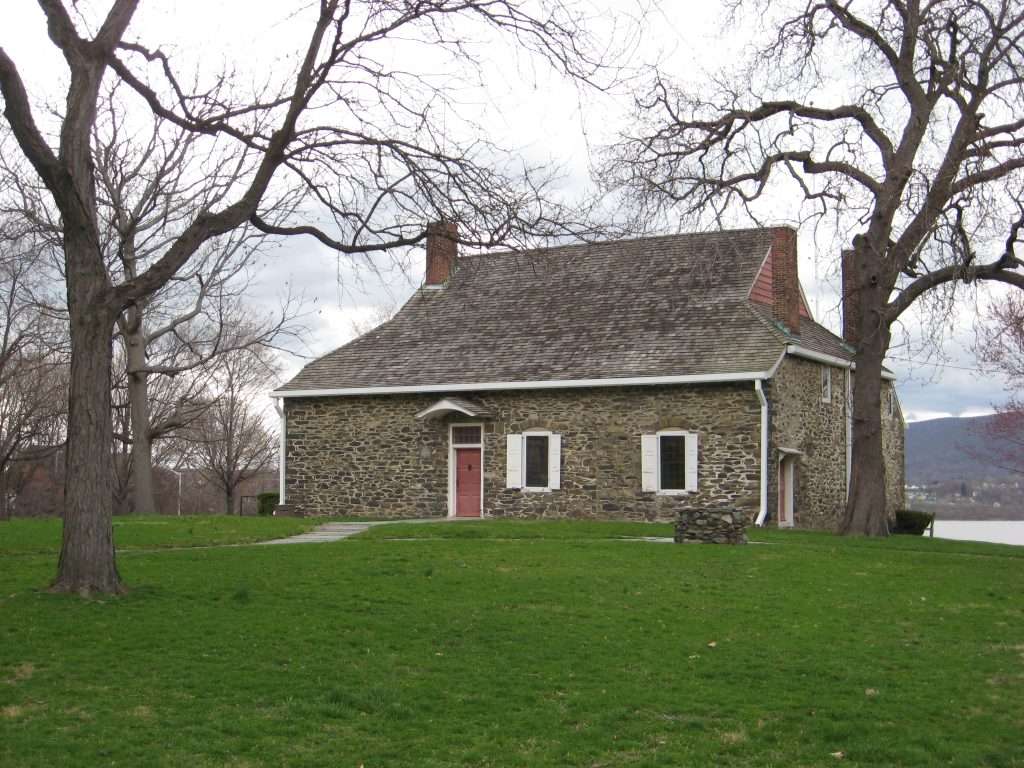
Aghast, Washington convened his own gathering on March 15. When his address was met with silence, he unfolded a letter and started to read it. Hesitating, Washington produced a pair of glasses from his pocket: “Gentlemen, you will permit me to put on my spectacles,” he apologized, “for I have not only grown grey but almost blind in the service of my country.” Instantly the mood changed as Washington’s officers recalled the dangers and hardships they’d shared under his unwavering leadership. They adopted a memorial affirming their “unshaken confidence” in Congress.
Soon after, news arrived that a treaty signed in January had ended hostilities with Britain. Although the definitive Treaty of Paris was not ratified until September 1783, in his General Orders of April 18 Washington announced the close of a “long and doubtful contest.” On November 2 he thanked his faithful officers and men. What this “band of brothers” had achieved during eight years of conflict, Washington declared, “was little short of a standing miracle.” The British evacuated New York on November 23, and Washington rode in that afternoon, to cheering crowds. On December 4, 1783, at Fraunces Tavern, he bid farewell to his generals and staff. Washington delivered his formal resignation to Congress on December 23, at Annapolis, Maryland.
Conclusion
As the defeats he sustained in 1776–1777 demonstrate, George Washington cannot be rated as an outstanding battlefield commander. Yet he compensated with other traits that made him an exceptional military leader: courage, determination, resilience, and, not least, the ability to inspire his subordinates under the most discouraging circumstances. Like his French allies, even his British opponents grew to admire and respect him. Whatever Washington’s flaws as a general, no one else possessed the combination of qualities that enabled him to wage, and ultimately win, America’s war of independence.


