

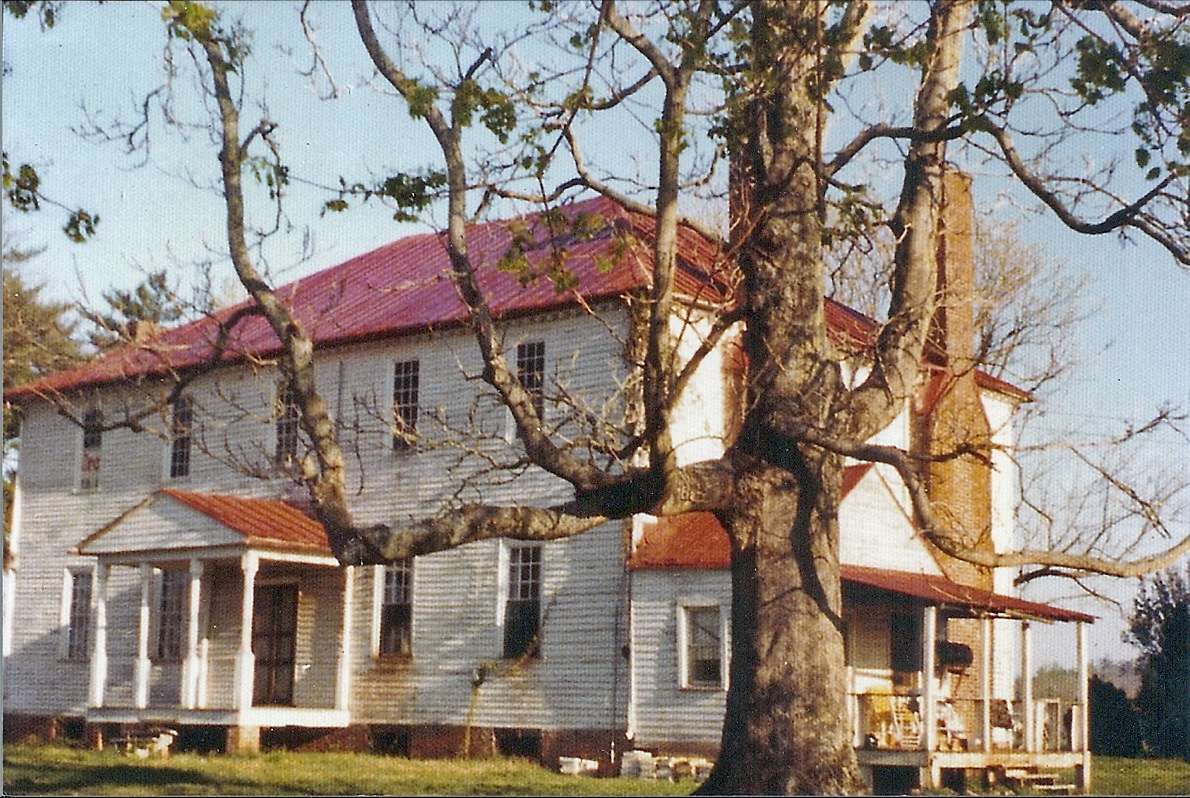
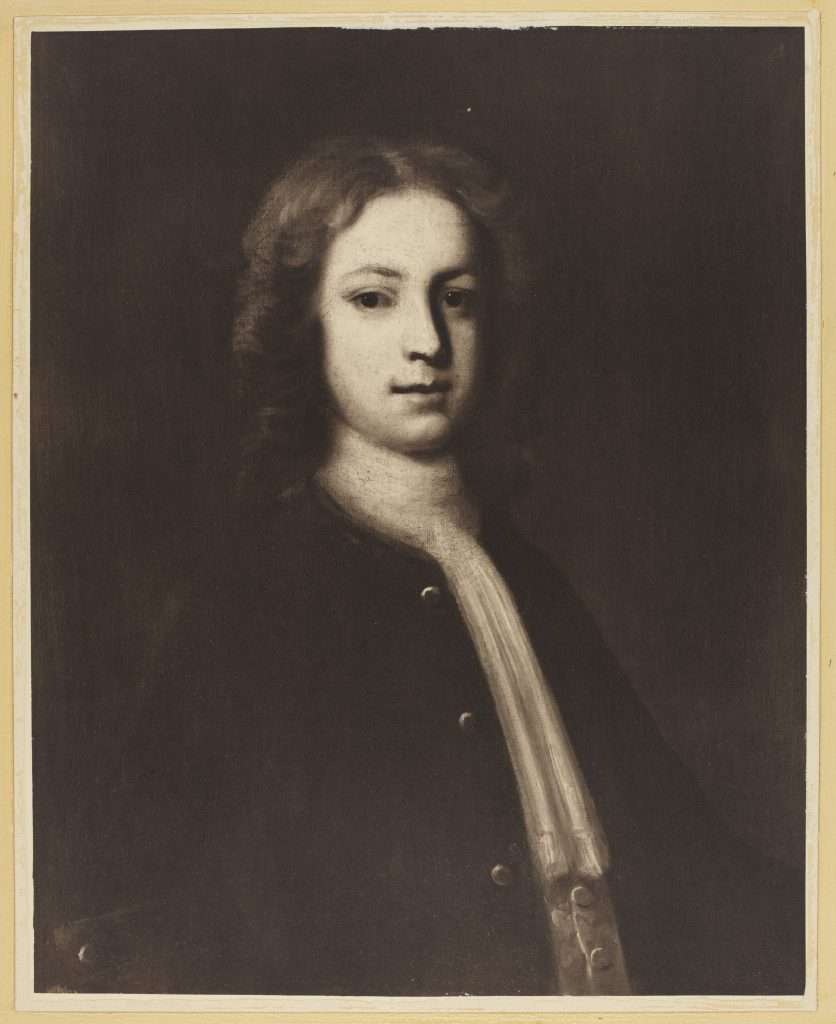
Cabell was born near Licking Hole Creek in Goochland County, the son of William Cabell (1700–1774), a prominent physician and surveyor, and his first wife, Elizabeth Burks Cabell. His brothers included John Cabell, who served in the Fifth Virginia Revolutionary Convention, and Joseph Cabell, a longtime member of the General Assembly. William Cabell’s formal education is undocumented, but he was most likely schooled at home and perhaps then at the College of William and Mary. Before he attained his majority, he began assisting his father with his surveying duties.
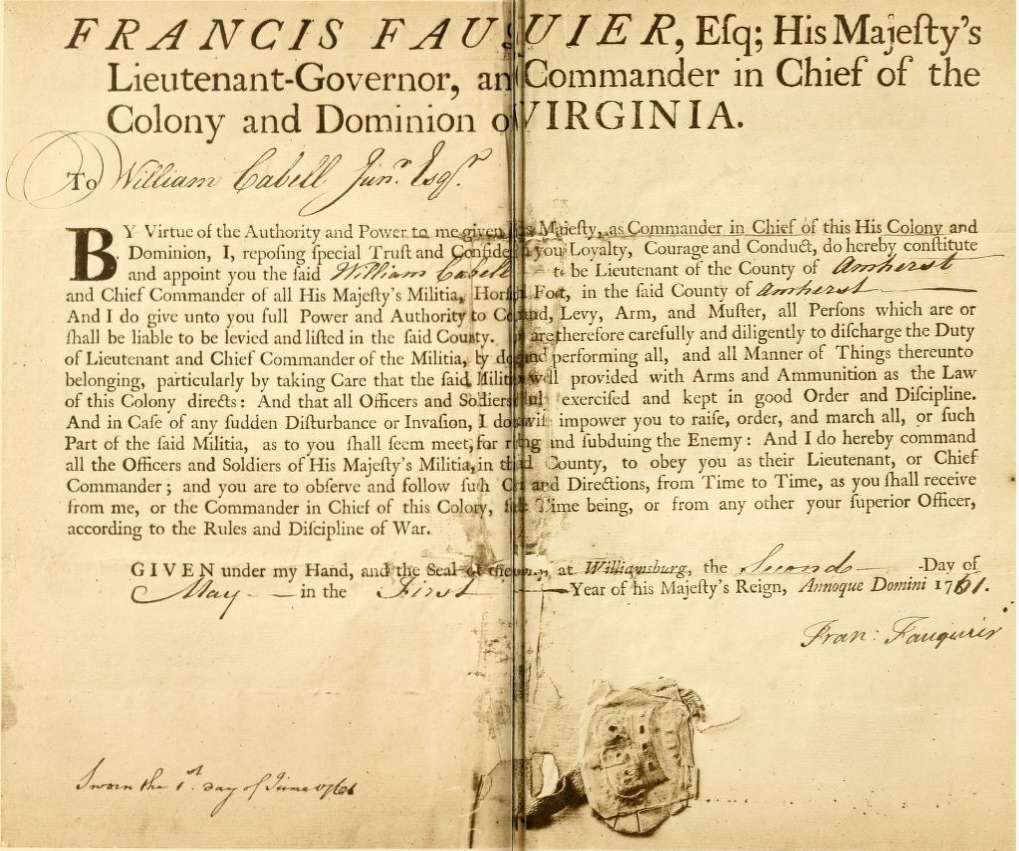
Cabell was frequently referred to in contemporary records as William Cabell Jr. Family histories and other secondary accounts often call him Colonel William Cabell to distinguish him from his father, who in those sources has often been styled Dr. William Cabell. The younger Cabell lived in the southern portion of Albemarle County that in 1761 became Amherst County. Surviving records do not make it clear whether it was Cabell or his father who was elected to the House of Burgesses from Albemarle County in 1756 and served during that time on the Committee for Courts of Justice, but Cabell was either reelected or elected for the first time in 1758. In April 1763, his father deeded him 1,785 acres of land, to which he added by grant and purchase until at one time his property may have exceeded 25,000 acres. Even at the time of his death, Cabell owned more than 13,000 acres of land in addition to the plantation where he lived. He held the public offices expected of a wealthy gentleman: vestryman of Saint Anne’s Parish, coroner, justice of the peace, sheriff, and officer in the county militia. Cabell became a colonel in the Albemarle County militia on October 11, 1760, and the following year was the first county lieutenant, or commander of the militia, of Amherst County. He was also a county surveyor and a member of the county court.
Early in 1756, Cabell married Margaret Jordan. Their three daughters and four sons included Samuel Jordan Cabell, who served in the House of Representatives. William Cabell represented Amherst County in the House of Burgesses from 1761 until the American Revolution. The absence of his name from the journals for several of the early sessions suggests that he was unable to attend, arrived too late to be appointed to a major committee, or perhaps initially failed to play a significant part in the legislative process. By the end of the 1760s, however, Cabell often served on the influential Committee of Privileges and Elections and the Committee of Propositions and Grievances, and during the final session of the House of Burgesses in June 1775 he also sat on the Committee for Religion.
Cabell supported the protests against Parliament that agitated the colony and the assembly during the decade before independence. In 1769, after the governor had dissolved the assembly for adopting vigorous protest resolutions and Cabell and other burgesses had signed an agreement to cooperate in their efforts to persuade Parliament to repeal acts they found odious, Cabell noted in his diary that he had been unanimously reelected to the House of Burgesses. Five years later, after the governor dismissed the assembly for protesting the Coercive, or Intolerable, Acts, Cabell proudly recorded in his diary that he was again reelected without opposition. He attended all five of the Virginia Revolutionary Conventions that met between August 1774 and July 1776. On August 17, 1775, Cabell was elected to the eleven-member Virginia Committee of Safety, which in effect governed Virginia until the next July. He was one of only two committee members not from the Tidewater or a port city. During the convention that met from May to July 1776 and ordered the Virginia delegates in the Second Continental Congress to move a declaration of independence, Cabell served on the Committee of Propositions and Grievances and the committee that introduced the drafts of the Virginia Declaration of Rights and the first Constitution of Virginia. Although he missed several days during the sessions of that convention, he was probably present to vote for both documents.

In September 1776, Cabell was one of two men elected to the new Senate of Virginia from the district of Albemarle, Amherst, and Buckingham counties. He was assigned to the Committee of Privileges and Elections, which he chaired during the May 1779 session. Cabell served in the Senate until his term expired in March 1781. On June 12 of that year, he and two other men were elected to the Council of State, but he declined the appointment two days later and preferred instead to hold the seat in the House of Delegates to which he had been elected that spring. There, Cabell was the ranking member of the Committee of Privileges and Elections during the May 1781 session. He sat on the Committee on Trade in the October 1781 session, the Committee of Propositions and Grievances in both of the 1782 sessions, and the Committee of Privileges and Elections in May 1783. In the October 1781 session, the May and October 1782 sessions, and the May 1783 session, Cabell chaired the Committee for Religion. At that time, Thomas Jefferson’s bill to establish religious freedom threatened the disestablishment of the Church of England. Because the bill had been debated in the House while Cabell was serving in the Senate and did not pass until after he retired from the House, his opinion of Jefferson’s proposal is unclear, but, like his brothers, he probably favored adoption of what became the Virginia Statute for Religious Freedom.
Cabell returned to the House of Delegates for two consecutive one-year terms beginning in 1787. In the October session of that year, he was the ranking member of the Committee for Religion and served on the Committee on Privileges and Elections, and on the Committee of Propositions and Grievances. During the short session of June 1788, Cabell was the ranking member of the Committee of Privileges and Elections. During the next full session in October 1788, he chaired the Committee of Propositions and Grievances and once again sat on the committees of Privileges and Elections and for Religion.
On March 3, 1788, Cabell and his son Samuel Jordan Cabell were elected without serious opposition to represent Amherst County in the convention called to consider ratification of the proposed constitution of the United States. At the time, both men were widely reported to be opposed to the constitution as drafted. At the convention, Cabell was appointed to the Committee of Privileges and Elections. He did not take part in the debates, so far as the records show, and he voted with other Anti-Federalists in favor of prior amendments, in favor of reducing the power of Congress to impose taxes, and against ratification.

Cabell joined other opponents of the U.S. Constitution in trying to block the election of James Madison to the House of Representatives in 1789, but, at the same time, he was chosen a presidential elector from his district and fulfilled his promise to his constituents by voting for George Washington as the country’s first president. Cabell was an original trustee when Hampden-Sydney College was chartered in 1783. He owned a part interest in an ironworks in Albemarle County, and from October 20, 1785, until at least 1791, he was a director of the James River Company, which planned to clear obstructed passages of the river and open it to commercial navigation. Cabell died on March 23, 1798, most likely at Union Hill, his Amherst County home, and was buried in the family cemetery there.


