


The Revolution of 1800

Jefferson was inaugurated as the third president of the United States on March 4, 1801, following the deeply partisan and particularly vicious election of 1800 and the first peaceful transfer of power among contending political parties in modern times. He termed his election the “revolution of 1800” and said that it was “as real a revolution in the principles of our government” as was the revolution of 1776. Key to this promised revolution was empowering citizens to more effectively control their government, shrinking the size and cost of the federal government, and hewing closely to the limited powers he believed were conferred by the U.S. Constitution. As in 1776, the possibilities seemed endless; reality would prove more difficult.
Jefferson’s first inaugural address, a deeply personal statement, is best remembered for the famous line: “We are all republicans: we are all federalists.” After the hyper-partisanship of the 1790s, the Federalists’ Alien and Sedition Acts that led Jefferson to term the era a “reign of witches,” open threats of secession, and the Electoral College tie between Jefferson and his erstwhile vice-presidential candidate, Aaron Burr, that almost deadlocked the electoral apparatus, his address focused on critical, shared American principles. He made clear that he was the president of all Americans; he expressed understanding for his former political opponents; and he reminded Americans that what united them was more important than what divided them. U.S. Supreme Court Chief Justice John Marshall caught the conciliatory spirit of the address, writing to Charles Cotesworth Pinckney, the defeated Federalist candidate for vice president, that it gave “the lie to the violent party declamation which has elected him.” The address was reprinted in English, French, Italian, and German.
Central to all of President Jefferson’s efforts was the exceptional cabinet he selected and with whom he worked closely: James Madison as secretary of state, Albert Gallatin as secretary of treasury, Levi Lincoln (and later John Breckinridge and Caesar Rodney) as attorney general, Henry Dearborn as secretary of war, and Robert Smith as secretary of the navy.
Dispute with the Judiciary
Among the most difficult policy disputes faced by Jefferson was the proper role for the judicial branch and its relation to the executive and legislative branches. After the results of the election of 1800 became known, the lame-duck Federalist Congress and President John Adams sought to limit the impact of the Democratic-Republican victory by ensuring Federalist control of a larger and more powerful judiciary.
The Judiciary Act of 1801, adopted on February 13—four days before Jefferson’s Electoral College victory—expanded federal court jurisdiction, created sixteen new circuit court judges, and eliminated the necessity of Supreme Court justices “riding circuit” through the states to hear appeals with local district court judges. Jefferson viewed the new circuit courts as an unnecessary expansion of federal power and the “Midnight Judges” appointed by the lame-duck Adams as an unwarranted attack on his newly elected government. Over desultory constitutional objections, he supported legislation eliminating the circuit courts and restoring the riding circuit for Supreme Court justices. With the circuit courts abolished, Jefferson was effectively able to fire the sixteen new Federalist judges who would otherwise have been beyond his control.

The Judiciary Act of 1801 also created a group of local Washington, D.C., magistrates. Among those named to the new position was William Marbury, but his commission, while signed before Jefferson was inaugurated, had not been delivered. When Jefferson took the position that a commission was not valid until delivered and ordered Secretary of State James Madison to withhold it, Marbury sued in the Supreme Court seeking to force Madison to deliver his commission. In the 1803 decision Marbury v. Madison, the Supreme Court under Chief Justice John Marshall decided that while Marbury’s commission was valid, it had no jurisdiction over the dispute because the law granting it that authority was itself unconstitutional. While technically a victory for Jefferson, the case, which has been called the most consequential in the history of the Supreme Court, confirmed the principle of judicial review—the power of the Supreme Court to declare unconstitutional an act passed by Congress and signed by the president, an important addition to the system of “checks and balances.”


Jefferson also sought to address what he viewed as abuses of judicial authority. Most notably, Federalist Supreme Court Justice Samuel Chase had been accused of injecting politics into judicial proceedings in several cases. He had aggressively enforced the Sedition Act and harangued grand juries, attorneys, and witnesses from the bench, and after the repeal of the Judiciary Act of 1801, he openly attacked the action during a grand jury proceeding. In response, Democratic-Republican firebrand Congressman John Randolph of Virginia, then a close ally of Jefferson’s, led an impeachment proceeding against Chase in the House of Representatives.
Chase was impeached on March 12, 1804, for, among other things, refusing to dismiss biased jurors and limiting defense witnesses based on politics. However, after a month-long trial, the Senate failed to convict Chase with the requisite two-thirds vote, further cementing the independence of the federal judiciary. Jefferson concluded that impeachment was inadequate to address judicial abuses, later referring to it as “not even a scare-crow.”
The Danbury Baptist Letter

As author of the groundbreaking Virginia Statute for Establishing Religious Freedom, Jefferson was widely known as an advocate of religious liberty. Given his reputation, sometime shortly after October 7, 1801, the Danbury Baptist Association of Connecticut wrote to him complaining about the lack of protection for the religious freedom of minority religions in Connecticut, where the established church was the Congregational Church. “What religious privileges we enjoy … we enjoy as favors granted,” they wrote. Both Jefferson and the Baptists understood that he had no authority to alter state-imposed restrictions; the First Amendment of the Constitution prohibiting government establishment of religion did not then apply to the states. Still, Jefferson saw that the letter posed an opportunity of “sowing useful truths & principles among the people.” In a reply to the Baptists, he took the opportunity to declare that the First Amendment created “a wall of separation between Church & State.”
Jefferson’s letter was widely circulated, with excerpts appearing in more than two dozen newspapers around the country within weeks. As Jefferson had hoped, the principles he articulated resonated long afterward. In its first decision concerning the scope of the Establishment Clause of the First Amendment, Reynolds v. United States, the Supreme Court unanimously declared in 1879 that Jefferson’s letter “may be accepted almost as an authoritative declaration of the scope and effect of the amendment.”
The Danbury Baptist letter is an excellent example of how Jefferson used the presidency as what President Theodore Roosevelt later termed a “Bully Pulpit”—using the office to speak broadly to the American people about important principles. Leading the nation in this manner was a hallmark of Jefferson’s presidency.
The Barbary War

Early American seamen often found themselves in conflict with a group of Barbary States in North Africa (Tripoli, Tunisia, Algeria, and Morocco) that sought to control passage through the Mediterranean Sea and parts of the eastern Atlantic. Major European powers paid these nations regular bribes, known as tribute, to permit passage of their ships, concluding that it was cheaper than going to war to secure passage. American ships benefited from British protection until the Revolutionary War; afterwards, the United States, too, had generally paid bribes.
In 1801, unhappy with the tribute he had been paid, the ruler of Tripoli, Yusuf Karamanli, began to seize U.S. merchantmen, requiring a ransom for their release and effectively declaring war. Since his term as minister to France in the 1780s, Jefferson had argued that paying tribute was dishonorable and inefficient; it would be better to fight to end what he saw as legalized piracy. With Tripoli’s declaration of war, President Jefferson decided to fight, a decision complicated by the fact that he also sought to cut the size of the small U.S. Navy as part of his effort to economize. From 1801 to 1805, Jefferson sent frigates to the Mediterranean to protect American ships and, later, to blockade and bombard Tripoli. Lacking a congressional declaration of war, Jefferson maintained that U.S. efforts against Tripoli were purely defensive.

Unfortunately, in 1803, the frigate Philadelphia ran aground in Tripoli’s harbor, and its 300 men were taken captive. In response, the navy tightened its blockade, and William Eaton, formerly consul to Tunis and now U.S. naval agent, directed a small group of mercenaries and Tripolitans, nominally led by Karamanli’s older brother, Hamet, to attack Tripoli from the east. While U.S. naval bombardment caused considerable damage, fear that his regime was endangered by the approach of his brother led Karamanli to negotiate a peace treaty. While the United States refused to offer tribute, it did agree to pay $60,000 as ransom for the 300 sailors, who had been held for nineteen months, and returned almost 100 Tripolitans captured during the American blockade.
While a short conflict with Morocco erupted in the midst of the war, generally peace was maintained with the other powers, and the United States was relieved of paying tribute. It was ironic that Jefferson, who campaigned on cutting the military and was skeptical of the value of a large navy, launched a foreign war. But the war proved popular, as Americans apparently trusted Jefferson to do what was necessary in this first instance of using military power to protect U.S. interests abroad.
The Merry Affair

In the 1790s, Democratic-Republicans had criticized the administrations of both George Washington and John Adams for mimicking British monarchical practices, from formal levies to bowing when greeting the president. Jefferson believed that such practices could undermine a clear understanding that, in a republic, all citizens were equal before the law. (Jefferson did not include women or African Americans among those to whom equal rights were owed.) As president, Jefferson took the opportunity to embrace publicly a far more plebian style, even when his actions sometimes offended European or political sensibilities, as was the case with what became known as the Merry Affair.
In November 1803, when Britain’s new diplomatic minister, Anthony Merry, came to present his credentials to Jefferson in full diplomatic regalia, complete with a plumed hat and dress sword, he was appalled to be received by the president in informal dress, including a pair of slippers. Jefferson multiplied the insult in the eyes of the new diplomat and his wife, Elizabeth Merry, when they were invited to a dinner at the president’s house and were seated “pell mell”—with no attention paid to rank—rather than the minister’s wife being escorted first into the dining room by the president as protocol dictated. An angry communique to Britain followed, insisting that not only had Merry been insulted but, by extension, so had King George. Similar breaches of formal protocol annoyed the Spanish minister, Marquis de Casa Yrujo, and his wife, Sarah McKean Yrujo, the daughter of the governor of Pennsylvania.
Jefferson was not trying to be rude. Rather, he was making a point about the lack of formal titles and pomp in America. He had made the same point when he decided to walk to his inauguration and when, each year on January 1, he opened the president’s house for a reception that welcomed not only members of Congress and the diplomatic corps but also scores of ordinary citizens.
The Louisiana Purchase

As the nineteenth century began, Spain controlled New Orleans and had on occasion shut the Mississippi River to American trade, doing so again in October 1802. This threatened the livelihood of hundreds of thousands of Americans living west of the Appalachian Mountains. Jefferson recognized the threat, telling Robert R. Livingston, the U.S. minister to France, “there is on the globe one single spot, the possessor of which is our natural & habitual enemy. it is New Orleans, through which the produce of three eighths of our territory must pass to market.”
In 1803, after Napoleon Bonaparte gained control of the Louisiana Territory that encompassed New Orleans, Jefferson asked James Monroe to join Livingston in France to try to purchase the city. Much to the diplomats’ surprise, Napoleon, desperate for funds to support his European wars and having suffered devastating losses in his effort to recapture Saint-Domingue from previously enslaved rebels, offered to sell the entire Louisiana Territory to the United States. A price of $15 million for the 827,000 square miles was agreed, and a draft treaty was sent to Washington.

By doubling the size of the young nation, Jefferson saw the Louisiana Purchase as an opportunity to expand dramatically what he called America’s “Empire of liberty.” But the U.S. Constitution did not expressly provide authority to enlarge U.S. territory, and Jefferson initially believed that a constitutional amendment was needed. When members of his cabinet objected that a delay could undermine the deal, Jefferson acquiesced and sent the treaty to the Senate for ratification. While he thought the executive branch had “done an act beyond the Constitution,” he urged Congress to approve it, unrestrained by “Metaphysical subtleties.” The American people’s approval would be sought in the 1804 election, he told Senator John Breckinridge, for “doing for them unauthorised what we know they would have done for themselves had they been in a situation to do it.”
For Jefferson, the Louisiana Purchase was not just a great land deal in which the country acquired millions of acres for about three cents an acre; it also guaranteed that Americans would have land available for generations. (Like many of his contemporaries, Jefferson believed that American Indians who occupied western lands should assimilate, move west, or face extermination.) Millions of yeoman farmers would drive the frontier west, cultivating and building, and, from Jefferson’s perspective, improving the land. He hoped that such farmers, independent and not beholden to an industrial employer, would be a voice for political independence. The result was that the United States retained its agrarian majority throughout the nineteenth century, and the mythology of the frontier farmer continues to play an outsized role in the American image. Doubling the physical territory of the United States became one of Jefferson’s most important legacies.
The Louisiana Purchase made Jefferson hugely popular. Alexander Hamilton, the only Federalist who might have seriously challenged Jefferson’s purchase, had been killed by Vice President Aaron Burr in a duel on July 11, 1804. Jefferson won reelection in 1804 in a landslide of 162 to 14 electoral votes, even carrying most states in the Federalist stronghold of New England.
Lewis and Clark Expedition
Even before the Louisiana Purchase, Jefferson was planning an expedition to explore the west beyond the Mississippi River for scientific and strategic reasons, to open trade with Native tribes, and for commercial development, especially finding the most practicable route to the Pacific Ocean.
Patrick Gass’s Personal Journal of the Lewis and Clark Expedition


With the Louisiana Territory secured, Jefferson provided detailed instructions to the Corps of Discovery, led by his personal secretary, Meriwether Lewis, and William Clark, a former army officer. The Lewis and Clark Expedition began to ascend the Missouri River in mid-May 1804. As many as forty-five people accompanied the expedition on parts of its journey, including Clark’s enslaved man, York; a Shoshone woman, Sacagawea; her husband, French guide Toussaint Charbonneau; and their infant son, Jean Baptiste Charbonneau. Descending the Columbia River, the expedition sighted the Pacific Ocean on November 7, 1805. They triumphantly returned to St. Louis on September 23, 1806, having traveled almost 8,000 miles and charted a host of western rivers, communicated with over forty Native tribes, gathered ethnographic information, and “discovered” numerous plant and animal species.
Jefferson supported other exploratory endeavors, including Zebulon Montgomery Pike’s expedition to the southwest (noted for the “discovery” of Pike’s Peak). These efforts served multiple purposes for Jefferson: expanding the American “empire of liberty,” scientific discovery, creating commercial opportunities, and developing relations with the Indigenous people in territory claimed by the United States.
Jefferson and American Indians
Peaceful contact with Indigenous peoples was one of the key objectives of the Lewis and Clark expedition. Jefferson hoped to encourage future trade with Native tribes to pave the way for other commercial traffic, including the fur trade, and to assert U.S. sovereignty by ending Native cooperation with Britain and Spain. Jefferson also had a long-term interest in collecting ethnographic data on America’s Native people, and Lewis and Clark gathered a wealth of information in that regard. As a result of Lewis and Clark’s expedition, over forty Native tribes were contacted, and a number of Indigenous leaders were encouraged to visit President Jefferson in Washington.

While Jefferson said that he hoped “to live in perpetual peace” with the Indigenous tribes, he believed that Native people should adopt American farming practices, “spinning & weaving,” and assimilate into U.S. culture (unlike his well-known view that after emancipation, free African Americans should be colonized elsewhere). Such assimilation would also mean that Native people, having given up hunting and a semi-nomadic lifestyle, could sell unneeded land to the United States, which was another of his major goals. In fact, Jefferson advised the governor of the Indiana Territory, William Henry Harrison, to run Indigenous people “in debt” to encourage the sale of land. If they did not assimilate, incorporating “with us as citizens of the US,” then Jefferson believed that they should “remove beyond the Mississippi.” The alternative was extermination.

While Jefferson’s Indian policy in many ways mirrored that of other American leaders, as president he was aggressive in land acquisitions. During his tenure, U.S. officials negotiated more than thirty treaties with Native tribes that surrendered millions of acres to the United States, especially in the old Northwest Territory. Realizing the implications of Jefferson’s policies, several Native movements sought to resist, including Tecumseh’s pan-Indian movement in the old Northwest Territories and the Creek Red Sticks in the southwest. These efforts would result in armed conflict and, ultimately, the loss of additional Native lands in the years following Jefferson’s presidency.
Slavery and Haiti
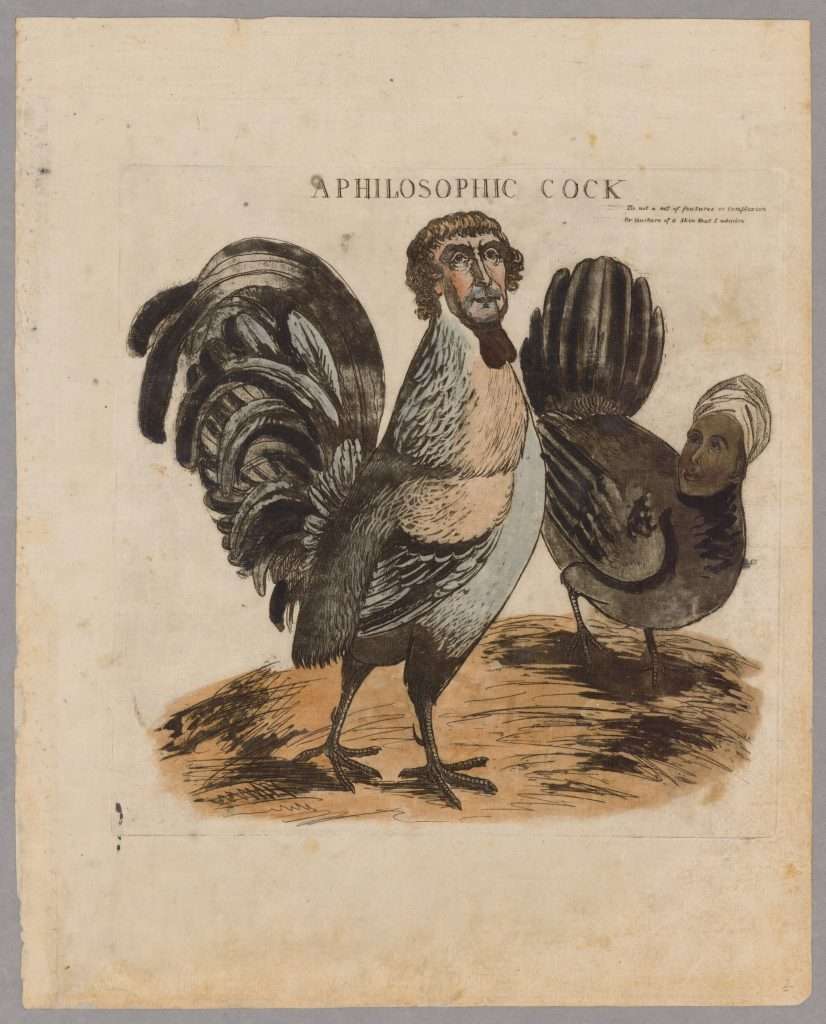
Jefferson’s legacy is wrapped up in the issue of slavery. The man who wrote that “all men are created equal” owned more than 600 humans, including some of his own children. Yet slavery did not take the prominent role in his presidency that it took during the later antebellum period as sectional hostilities took hold, furthered in part by the new territory added by the Louisiana Purchase and the expansion of slavery in the growing nation.
Jefferson did support legislation in 1807 that banned the international slave trade effective January 1, 1808, the first day permitted under the U.S. Constitution. However, this created a booming domestic slave trade that particularly benefitted enslavers in Upper South states like Virginia who had an excess of enslaved labor for their agricultural needs and found a ready market in newly expanding territories.

Jefferson also undermined diplomatic relations with the former French colony of Saint-
Domingue (today’s Haiti) in the aftermath of the slave rebellion there led by Toussaint Louverture that began in 1791. Both the Washington and Adams administrations encouraged trade with the formerly enslaved inhabitants of Saint-Domingue, and President Adams sent a consul to engage with Louverture and his followers. In 1806, however, Jefferson supported a ban on trade with Haiti, ostensibly to assuage France; but like other enslavers he clearly feared the influence of a successful slave revolt so close to the U.S. South. In 1802, he wrote to Rufus King, U.S. minister in London, noting that the “course of things in the neighboring islands of the West Indies appears to have given a considerable impulse to the minds of slaves … a great disposition to insurgency has manifested itself among them.” He referenced a recently foiled uprising in Virginia by a participant in Gabriel’s Conspiracy, which also had been linked to the Haitian revolt.
The National Debt and Fiscal Integrity

A central pillar of Jefferson’s campaign for the presidency was a commitment to reduce the size and cost of the federal government. His treasury secretary, Albert Gallatin, helped him to deliver on that promise. When Jefferson took office, the national debt stood at $83 million. Jefferson and Gallatin crafted a plan to eliminate the national debt and internal taxes within sixteen years. With the expenses of the Louisiana Purchase and the Barbary War, Jefferson was unable to fully implement the plan. Nonetheless, he did cut operating expenditures, slashing the budget for the army and navy, and with rapidly expanding import duties successfully eliminated internal taxes, including the highly unpopular tax on whiskey. He significantly reduced the national debt, cutting it to $57 million in 1809. All of these actions fed Jefferson’s reputation for fiscal restraint.
The Embargo of 1807
Jefferson’s most vexing problem involved the continuing wars in Europe precipitated by the French Revolution and the rise of Napoleon Bonaparte. With Britain and France locked in almost constant warfare from 1792 until the Battle of Waterloo in 1815, each sought to obtain food and supplies from the United States while denying them to their enemy. The result was a flurry of confusing British and French edicts permitting the seizure of U.S. ships trading with the enemy and, in the case of Britain, the seizure, or impressment, of seamen on U.S. merchant ships whom a British officer, often arbitrarily, identified as British deserters.

These conflicts came to a head in 1807, as British warships patrolled the coast of Virginia, hoping to capture French ships trading with the United States or U.S. merchant ships with British deserters onboard. On June 22, the British ship HMS Leopard sought to board the American frigate USS Chesapeake, which was reported to be carrying several British deserters, shortly after it left Norfolk. The American captain, not expecting conflict, was caught off guard when his refusal to “come to” for the British ship was met with three broadsides. Unprepared for battle, the Chesapeake quickly surrendered, but not before three U.S. seamen were killed and eighteen wounded. The British seized four suspected deserters, three of whom turned out to be American citizens.
The Chesapeake affair inflamed public opinion. “Never since the battle of Lexington have I seen this country in such a state of exasperation as at present,” Jefferson wrote to Pierre Samuel Du Pont de Nemours. Britain did pay some reparations, but calls for military reprisal continued. Hoping to avoid open warfare and lacking the navy to counter Britain, Jefferson charted an economic strategy. He initially supported a partial nonimportation agreement, but by December 1807 had settled on an embargo of all U.S. exports, both to protect U.S. ships and seamen and to coerce a more reasonable policy from Britain and France.

The embargo was deeply unpopular and roundly criticized domestically, especially in New England, and blatantly evaded. Ultimately, it proved ineffective at changing British or French policies but cost many U.S. merchants and farmers dearly. It did have the unintended consequence of fostering textile and other manufacturing in New England, which helped jumpstart the Industrial Revolution and encouraged manufacturing jobs rather than the yeoman farmers whom Jefferson preferred. While Jefferson believed the embargo could have been effective if it had continued for a longer period or had been more fully enforced, it was repealed on March 15, 1809, shortly after President James Madison was inaugurated. The underlying problems of impressment and shipping blockades would fester until the War of 1812.
Legacy
By December 1807, Jefferson made it clear that, following the tradition established by George Washington, he would serve only two terms. Given Jefferson’s popularity, it was anticipated that a member of his party would easily be elected, but there was some question as to whom that would be. Jefferson clearly hoped that Madison, his secretary of state and long-time friend, would be elected, but he avoided publicly interfering in the decision so as not to encourage intraparty strife. Some Democratic-Republicans, led by John Randolph, sought to promote Monroe for the position.

In the end, Madison easily won the nomination of the party caucus and a resounding Electoral College victory of 122 to 47. By and large, Madison continued Jefferson’s policies. Notably, he retained Gallatin as secretary of the treasury and made his ostensible rival Monroe his secretary of state. For his part, Jefferson left Washington pleased to be relieved of “the distressing burthen of power.”
From his historic assertion of the importance of the separation of church and state, to forcing a clarification of the powers of the Supreme Court, to his insistence that the president was, first and foremost, a citizen among co-citizens, Jefferson’s impact on the presidency and still-developing American democracy is hard to overstate. And despite his ambitions to preside over a smaller, less-intrusive government, he was a strong president who exercised executive authority broadly if not aggressively, as demonstrated by the Louisiana Purchase and the Barbary War. Although this led to claims of hypocrisy, it seems fair to conclude that after the negative reaction to the Kentucky and Virginia Resolutions, which were passed by the Kentucky and Virginia legislatures threatening the nonenforcement of what they perceived as the unconstitutional Alien and Sedition Acts, and the heated campaign of 1800, Jefferson abandoned the more radical aspects of his partisan agenda of the 1790s. Faced with the reality of governing a large and rapidly growing nation, Jefferson sought pragmatic solutions to problems, even when that meant using a strong federal hand.
Jefferson was also the first chief executive to effectively lead a political party as president. In doing so, he was enormously successful; for example, he never had to exercise his presidential veto as Congress usually conformed to his intended programs. Significantly, for twenty-four of the twenty-eight years after Jefferson left the presidency, avowed Jeffersonians held the office of president, a record not met since.


