


De Sequeyra was born in London, England, in about 1712 into a Sephardic Jewish family of Portuguese descent that numbered among its members several prominent physicians, including his father, Abraham de Sequeira. Occasionally, he signed his surname as de Siqueyra, and public record-keepers sometimes rendered it as de Sequera. In September 1736, at age twenty-four, de Sequeyra entered Leiden University in the Netherlands as a medical student and three years later received a degree. He dedicated his thesis, “de peripneumonia vera,” to his elder brother, Joseph Henriques de Sequeyra, then chief physician of the Portuguese hospital in the colony of Goa, on the west coast of India.

During de Sequeyra’s voyage to Virginia, a French vessel captured his ship, and he lost all of his belongings, including his diploma. He had arrived in the colony by September 1745. De Sequeyra established a medical practice in Williamsburg, where he met with success and treated Governor Norborne Berkeley, baron de Botetourt, and members of many prominent families, including the Burwell and Custis families. William Dering painted de Sequeyra’s portrait late in the 1740s. De Sequeyra apparently worked closely with other Williamsburg apothecaries and physicians. When the young John Minson Galt was preparing to study medicine in London in 1767, de Sequeyra inscribed a book for him, and some of de Sequeyra’s unpublished medical writings survive among Galt’s papers.
De Sequeyra never married. He owned no real estate but in 1772 leased part of a large house, later known as Shields Tavern, on Duke of Gloucester Street. During the 1780s and 1790s, he owned two household enslaved persons. By the early years of the nineteenth century de Sequeyra was credited—it is not possible to know how accurately—with having introduced the tomato to Thomas Jefferson and through him to American cuisine.
De Sequeyra left no body of papers, but several unsigned documents in his handwriting contain valuable information about colonial medicine and health care. “A True State of the Small Pox, Febry 22d, 1747/8,” his register of the smallpox epidemic that struck Williamsburg in the winter of 1747–1748, provides the most complete known roster of mid-eighteenth-century inhabitants of the city until such public records as the personal property tax lists began tracking residents in the 1780s. De Sequeyra’s account lists the households in the town with the number of people in each and indicates how many died, recovered, or escaped infection. De Sequeyra’s annual “Notes on Diseases of Virginia,” kept between 1745 and 1781 and possibly the most significant extant document dealing with the health of colonial Virginians, identified the most prevalent diseases troubling Virginians during each season and the therapeutics he employed. His surviving essays include “Diseases of Children,” “Diseases of Women,” and “Diseases of Both Sexes.”
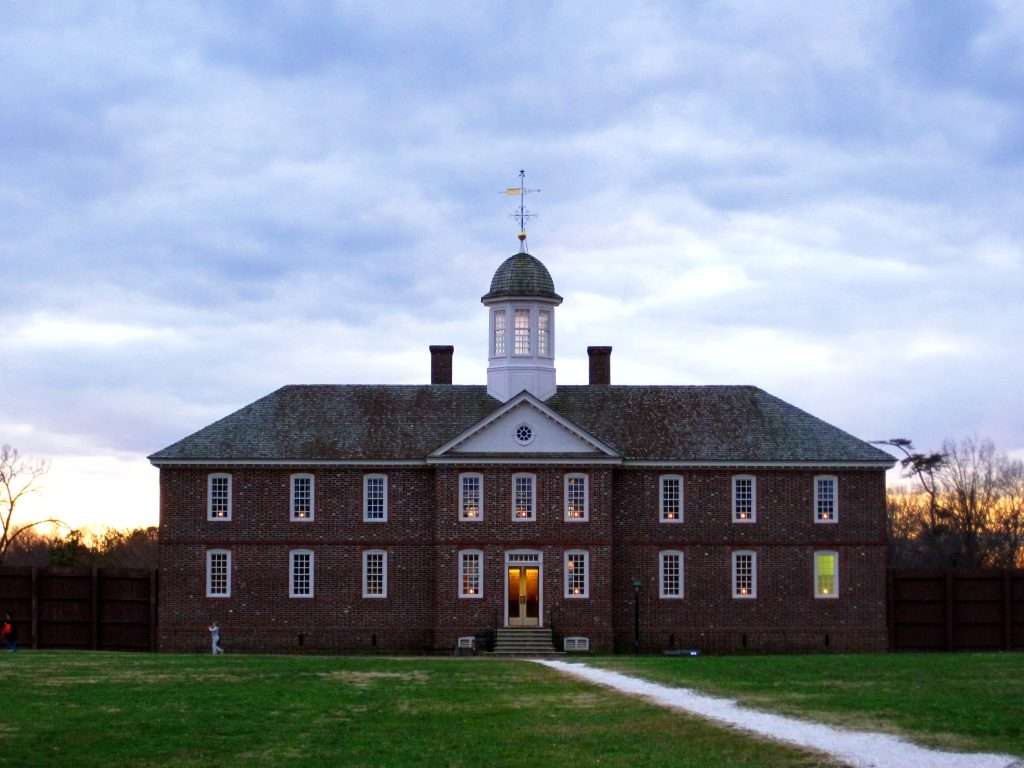
None of de Sequeyra’s writings reveal how or whether he tried to treat mental illness. In October 1773 he became visiting physician of the new Public Hospital for the insane (later Eastern State Hospital) in Williamsburg, and the following year he was elected to the hospital’s court of directors. De Sequeyra left no evidence that he took an interest in psychological factors in mental illness. His duty was to examine each patient when admitted to the Public Hospital and to visit each inmate at least once a week. It was not particularly demanding work; during his tenure there were never more than five or six patients at the hospital at any given time. De Sequeyra held the position until January 1795, although during and immediately after the American Revolution he had to appeal to the governor and to the General Assembly for his pay, which was frequently in arrears. The hospital’s facilities included a John de Sequeyra Building from 1935 until 1968.
John de Sequeyra died in Williamsburg, probably on January 30, 1795. His burial place is not known. The author of a brief obituary that appeared in two Richmond newspapers the following March stated that he “was reputed to be an eminent famous physician.”


