ENTRY

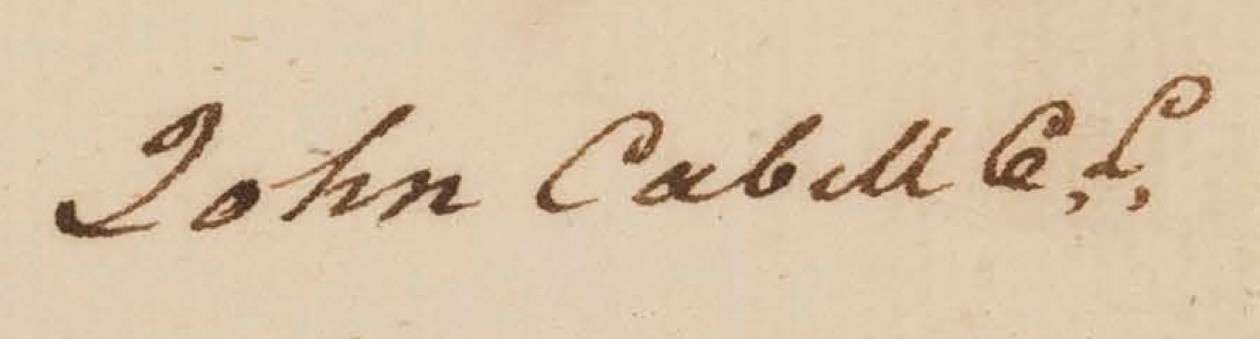
John Cabell (d. June 12, 1815)

SUMMARY

John Cabell was a Virginia planter, militia officer, and Revolutionary-era politician who emerged as a local leader in Buckingham County during the movement toward independence. The son of the prominent physician William Cabell, he accumulated more than 3,000 acres of land, raised tobacco and livestock, and held local offices as a militia captain, justice of the peace, and, in 1775, chairman of the county’s Committee of Safety and county lieutenant. Elected to the final Virginia Revolutionary Convention in 1776, Cabell served on the Committee of Propositions and Grievances, voted to instruct Virginia’s delegates in Congress to declare independence, and likely participated in the adoption of the Virginia Declaration of Rights and the first Constitution of Virginia. He represented Buckingham County in the House of Delegates in 1776 and in several later sessions, serving on standing committees but attending irregularly. After the American Revolution, Cabell remained active in county affairs as a magistrate and trustee while managing his plantations. He died in 1815, shortly after drafting his will on April 22.

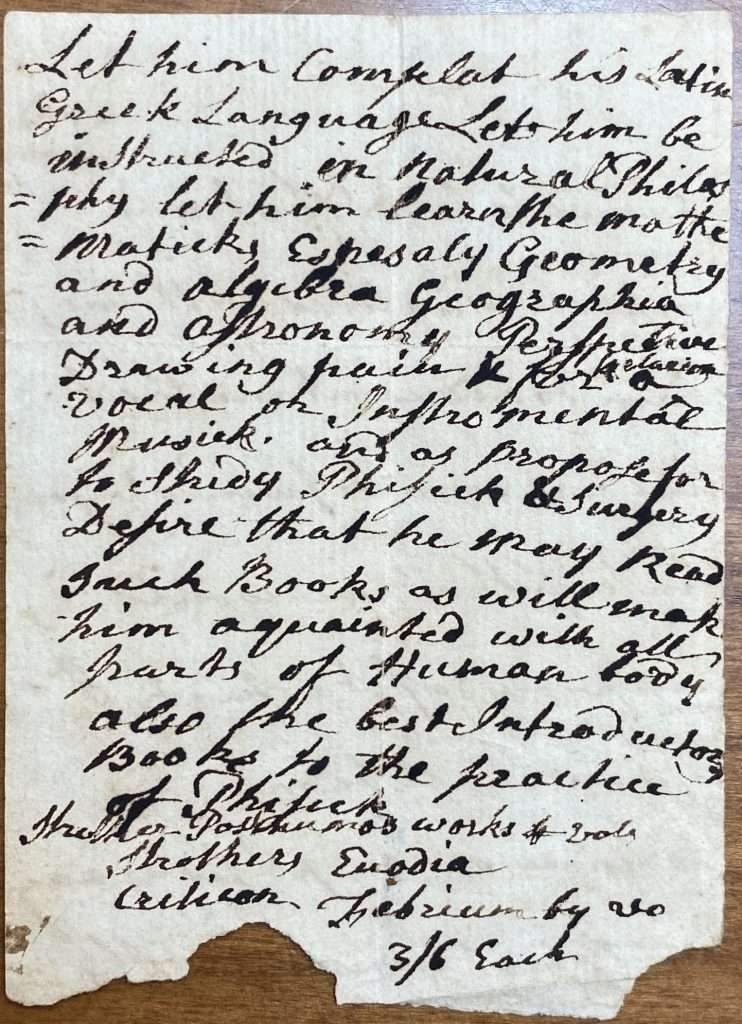
Cabell was the son of William Cabell (1700–1774), a prominent physician, and his first wife, Elizabeth Burks Cabell. He must have been conceived either before his father’s departure for England in 1735 or after his return in 1741. Little is known about Cabell’s early years or his studies, although his parents probably ensured that he was well educated, as were all their other children. His brothers included Joseph Cabell, who served in the General Assembly, and William Cabell (1730–1798), who served in the Fifth Virginia Revolutionary Convention and the 1788 Virginia Ratifying Convention. On May 20, 1762, Cabell married Paulina Jordon. They had seven sons and three daughters, but three sons died before reaching adulthood. Cabell’s wife died on July 31, 1781, and on July 19, 1787, he married Elizabeth Brierton Jones. They had no children. When Cabell drew up his will shortly before his death, he also provided for his two sons and one daughter by Frances Johnson.

Cabell acquired large tracts of land in Buckingham County, and at his death possessed more than 3,000 acres on which he raised tobacco and livestock, including horses and cattle. In October 1764, the General Assembly established a public ferry across the Fluvanna River (now the James River) connecting his estates. Cabell had become a captain in the Buckingham County militia by September 1763, and by 1767, he had been appointed a justice of the peace for the county. When Virginia’s counties formed committees in 1775 to enforce the economic measures adopted by the Continental Congress to pressure the British into repealing unpopular tax measures and then to organize for the defense of the colony, he was elected chairman of the Buckingham County Committee. The Virginia Committee of Safety appointed Cabell as county lieutenant, or commander of the Buckingham County militia, on September 26, 1775.

In April 1776, he was elected to the last of the Virginia Revolutionary Conventions and attended its sessions in Williamsburg from May 6 through July 5. There, Cabell served on the Committee of Propositions and Grievances. He and fellow Buckingham County delegate Charles Patteson received instructions from their constituents directing them to call for a complete break with England and to work for a constitution guaranteeing full representation and free elections. Even before these instructions reached Williamsburg, Cabell had voted on May 15, 1776, to instruct the Virginia delegates to Congress to introduce a resolution declaring the colonies independent. He was probably also present on June 12 and 29, 1776, when the convention unanimously adopted the Virginia Declaration of Rights and the first Constitution of Virginia.
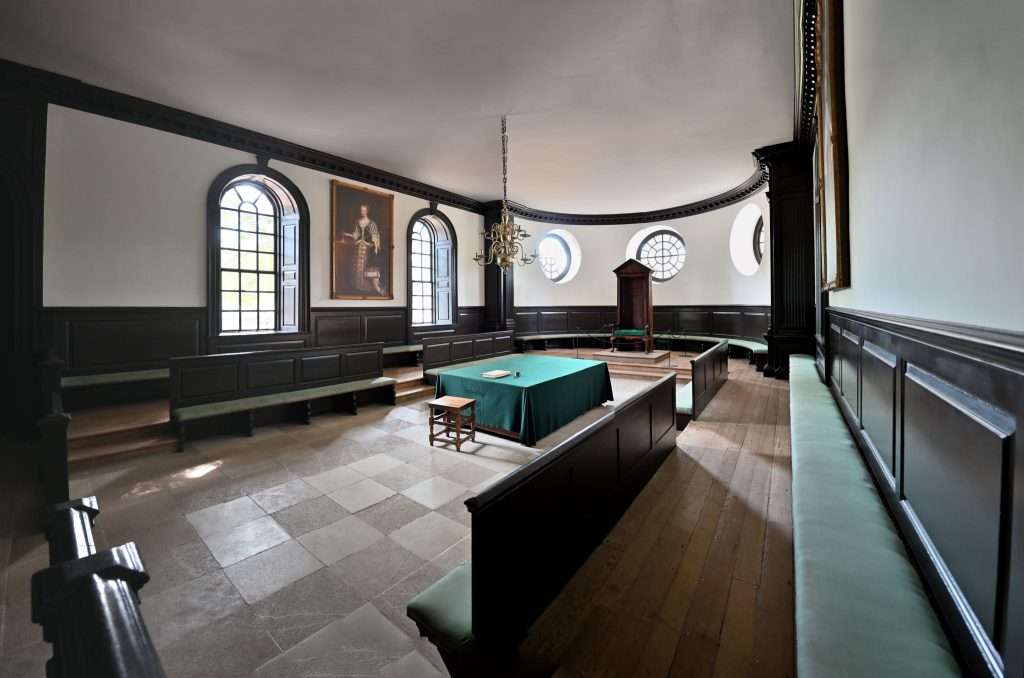
Cabell represented Buckingham County in the House of Delegates in 1776 and again served on the Committee of Propositions and Grievances. He was reelected to one-year terms in 1777, 1780, and 1783, although he did not always attend. In the last session, he served on the Committee of Privileges and Elections. After the Revolutionary War, Cabell continued to manage his plantations and serve as a justice of the peace. In November 1788, the assembly appointed him a trustee for the town of Greensville in Buckingham County. John Cabell dated his will on April 22, 1815, and died sometime between then and June 12, 1815, when the will was proved in the Buckingham County Court.

MAP
TIMELINE
Between 1735–1741

John Cabell is born, the son of William Cabell and Elizabeth Burks Cabell.

May 20, 1762

John Cabell marries Paulina Jordon. They have seven sons and three daughters, but three sons die before reaching adulthood.

September 1763

John Cabell serves as a captain in the Buckingham County militia.

October 1764

The General Assembly establishes a public ferry across the Fluvanna River (now the James River) connecting John Cabell’s estates in Buckingham County.

1767

John Cabell is a justice of the peace for Buckingham County.

1775

John Cabell is elected chairman of the Buckingham County Committee to enforce the Continental Association and organize for the defense of the colony.

September 26, 1775

The Virginia Committee of Safety appoints John Cabell as county lieutenant, or commander of the Buckingham County militia.

April 1776

John Cabell is elected to the fifth Virginia Revolutionary Convention.

May 6–July 5, 1776

John Cabell attends the fifth Virginia Revolutionary Convention and serves on the Committee of Propositions and Grievances.

May 15, 1776

John Cabell votes to instruct the Virginia delegates to Congress to introduce a resolution declaring the colonies independent.

1776

John Cabell represents Buckingham County in the House of Delegates.

1777

John Cabell is reelected to a one-year term in the House of Delegates.

1780

John Cabell serves in the House of Delegates.

July 31, 1781

John Cabell’s wife, Paulina Jordon, dies.

1783

John Cabell returns to the House of Delegates.

July 19, 1787

John Cabell marries Elizabeth Brierton Jones.

November 1788

The assembly appoints John Cabell a trustee for the town of Greensville in Buckingham County.

April 22, 1815

John Cabell draws up his will.

June 12, 1815

John Cabell’s will is proved in the Buckingham County Court.

FURTHER READING

Julienne, Marianne E. “Cabell, John.” In the Dictionary of Virginia Biography, Vol. 2, edited by Sara B. Bearss et al., 486–487. Richmond: Library of Virginia, 2001.

CITE THIS ENTRY
APA Citation:
Julienne, Marianne & Dictionary of Virginia Biography. John Cabell (d. June 12, 1815). (2026, April 06). In Encyclopedia Virginia. https://encyclopediavirginia.org/entries/john-cabell-d-june-12-1815.
MLA Citation:
Julienne, Marianne, and Dictionary of Virginia Biography. "John Cabell (d. June 12, 1815)" Encyclopedia Virginia. Virginia Humanities, (06 Apr. 2026). Web. 19 Oct. 2026
Last updated: 2026, April 06
Feedback
  • This field is for validation purposes and should be left unchanged.
  • This site is protected by reCAPTCHA and the Google Privacy Policy and Terms of Service apply.