

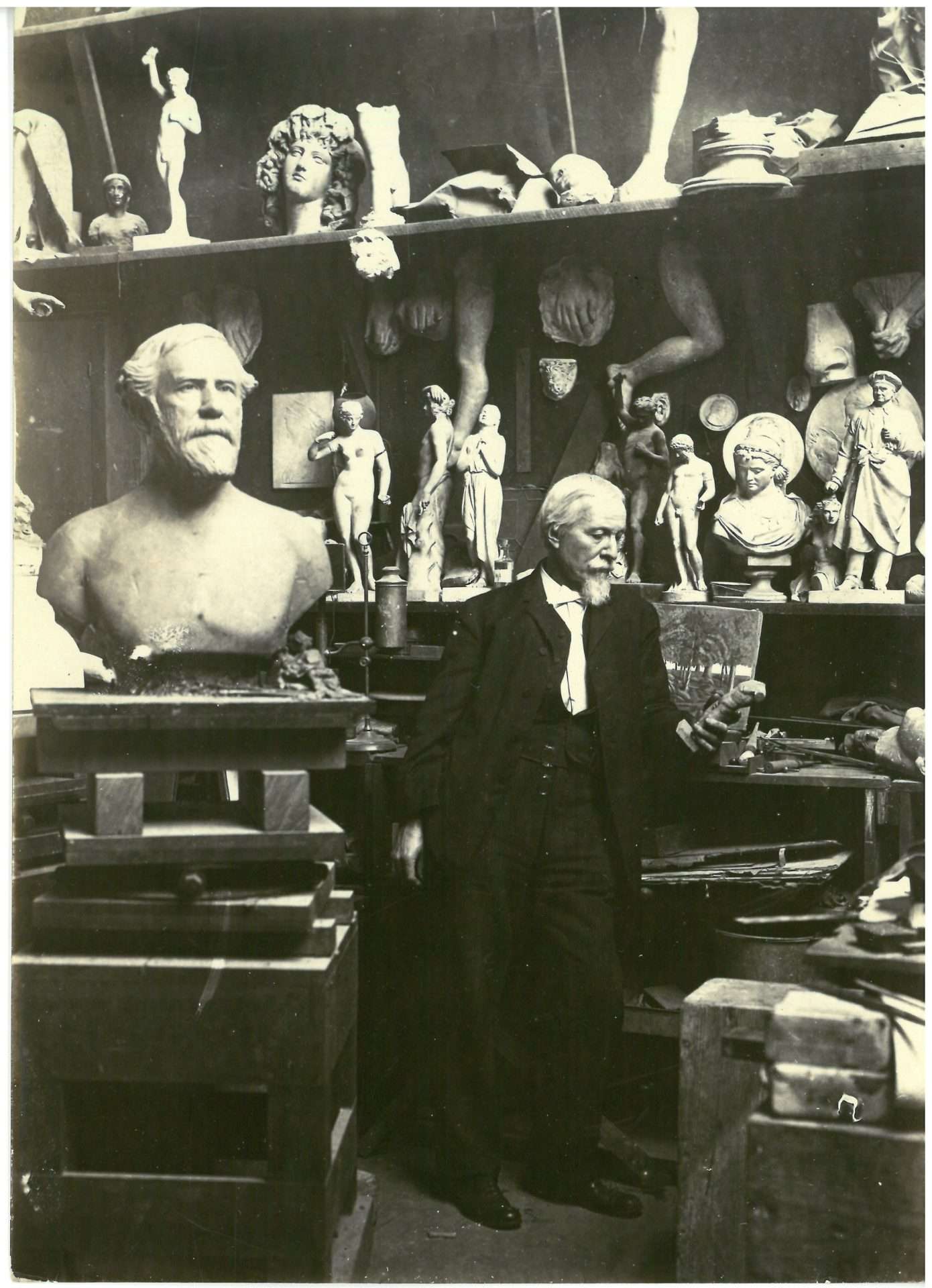
Early Life and Education
Valentine was the son of Virginia natives Mann Satterwhite Valentine and Elizabeth Mosby Valentine. Edward—sometimes called Ned by family and friends—was born in Richmond on November 12, 1838, and was the youngest of his parents’ six children who survived to adulthood. His father was a prominent businessman, and the family enslaved people. Visiting New York City in 1850, eleven-year-old Edward witnessed an abolitionist meeting attended by Frederick Douglass and wrote a derogatory account of it. The prejudices learned at an early age remained with Valentine, and race and the defense of slavery played a central role in his writings and artwork.
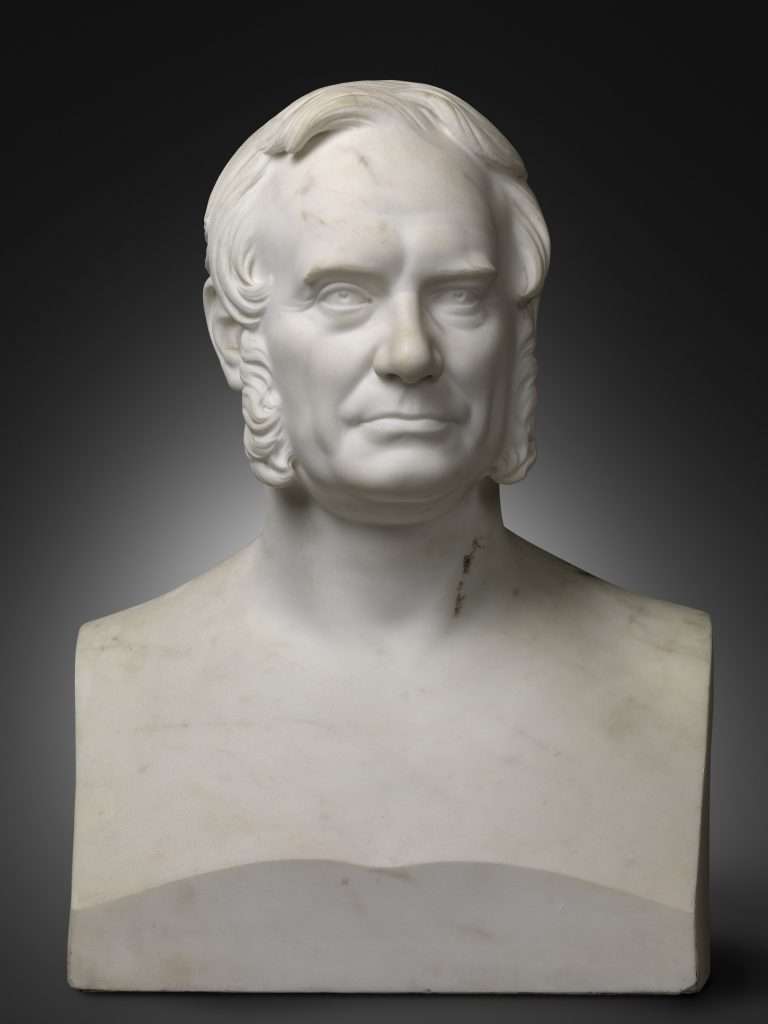
Valentine attended the private Richmond Academy and received instruction in drawing and painting and studied human anatomy at the Medical College of Virginia. In 1859, he traveled to Europe, where he studied under Italian artist Raffaello Bonaiuti and French painter Thomas Couture, among others, before settling in Berlin and working under German sculptor August Kiss until his death in 1865.
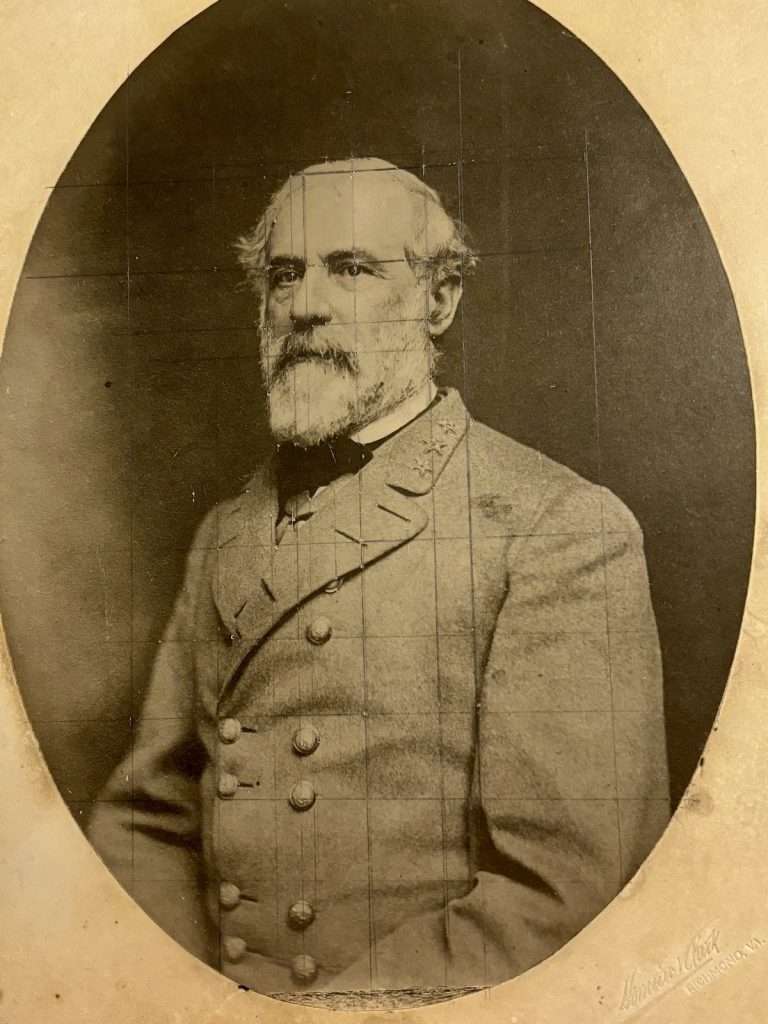
Valentine identified wholeheartedly with the cause of secession and Southern independence, writing to his sister in February 1864, “This separation from the North is for the South so fortunate,” saying “their bad example would have been very injurious to us.” Despite such views, he chose not to enlist in the Confederate Army, and he remained in Europe until the war’s end. Valentine nevertheless became a darling of the Lost Cause—the late nineteenth and early twentieth century celebration and vindication of the Confederacy in Southern literature, art, and public commemoration that buttressed white supremacy and racial segregation.
Even before returning to the United States, Valentine was working on sculptures of Confederate leaders. In early 1864, he completed a statuette of Robert E. Lee that was sold in England by a group raising funds for Confederate prisoners of war. Valentine designed the figure using images of Lee made especially for him. Valentine later returned to Lee as a subject with great success, and the two met several times before the general’s 1870 death.
Art Career
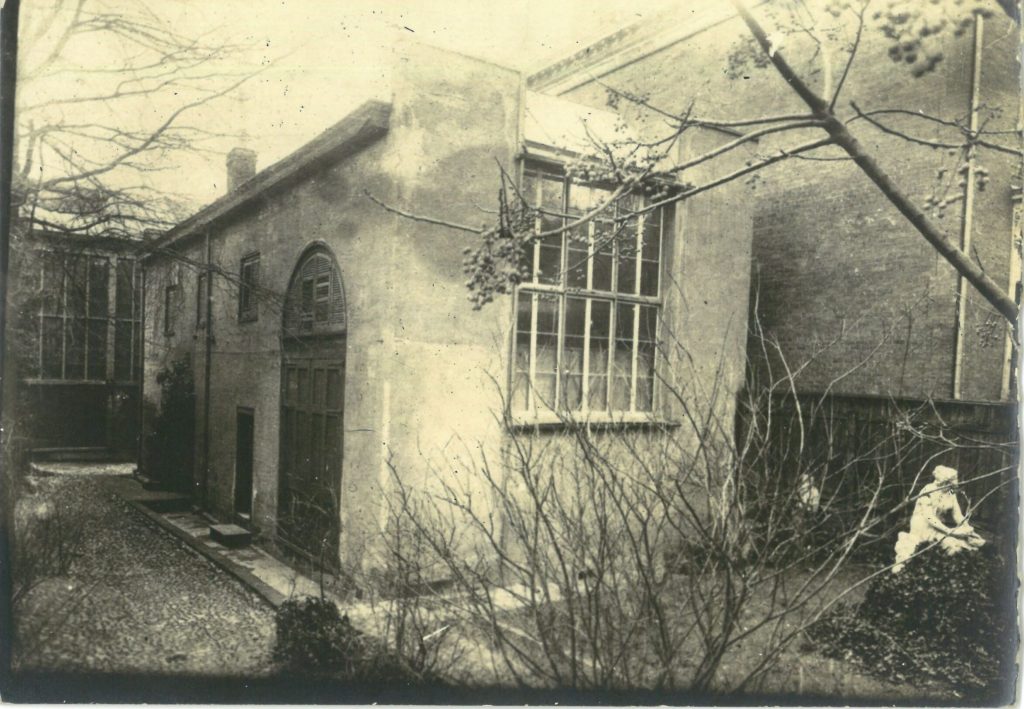
Prompted by the deaths of his father and of Kiss, Valentine returned to Virginia in the summer of 1865. He resided in Richmond for the rest of his life, occupying several work spaces before settling into a 1,200-square-foot studio on East Leigh Street. There, he progressed from designing small statues and busts to creating much larger works. His sculptures usually focused on Lost Cause themes—caricatures of African Americans and glorification of Confederate leaders—or classical images. Despite his identification with the Lost Cause, Valentine considered his finest work to be Andromache and Astyanax, a sculpture depicting Greek mythological characters, though he never sold it.
Edward Valentine’s Racist Caricatures
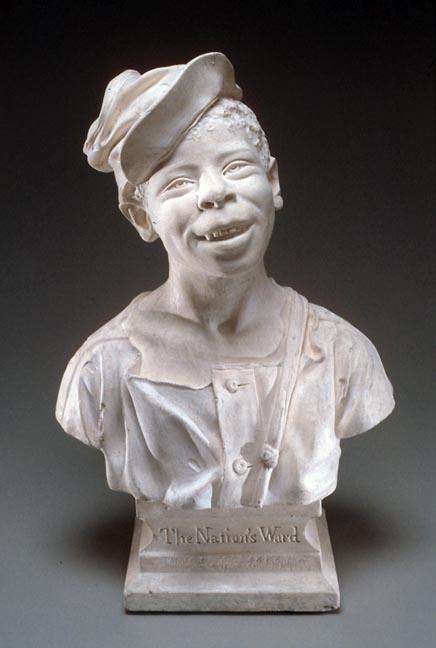


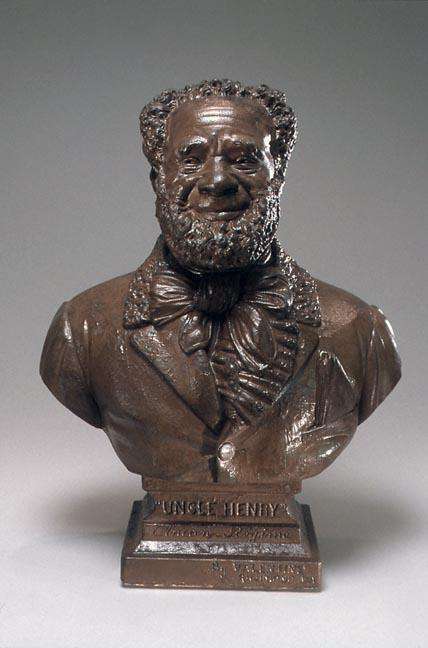
Today, Valentine’s works are controversial for their racism and embrace of Lost Cause ideology. Two works from early 1868—Nation’s Ward and Knowledge Is Power—offer sardonic commentary on the status of formerly enslaved people. Nation’s Ward uses as its subject a smiling African American boy in a Union cap, while Knowledge Is Power depicts a Black boy asleep with a book in his hand. Together, they reflect Valentine’s prejudices as well as those of white Southerners at the time. Another bust, Valentine’s Uncle Henry: Ancien Régime, is less negative in intent but was based on Henry Page, a carriage driver formerly enslaved by the Valentine family whom Valentine viewed in a paternalistic light. According to The Valentine museum, these works “popularized negative stereotypes of African Americans as unable to take care of themselves, unworthy of an education, and better off enslaved.” Both were exhibited at the National Academy of Design in New York to favorable reviews.
In 1872, with his career thriving, Valentine married Alice Churchill Robinson. The marriage appeared to be a happy one, though they had no children.

In 1875, Valentine completed one of his most famous works, Recumbent Lee, a life-sized marble statue of the general that depicted him asleep (not dead). The statue was commissioned for the chapel at Washington and Lee University, with Lee’s remains interred in the crypt below. It caused a sensation when it was exhibited at Valentine’s studio in Richmond and was widely hailed as a triumph, making Valentine famous well beyond the South.
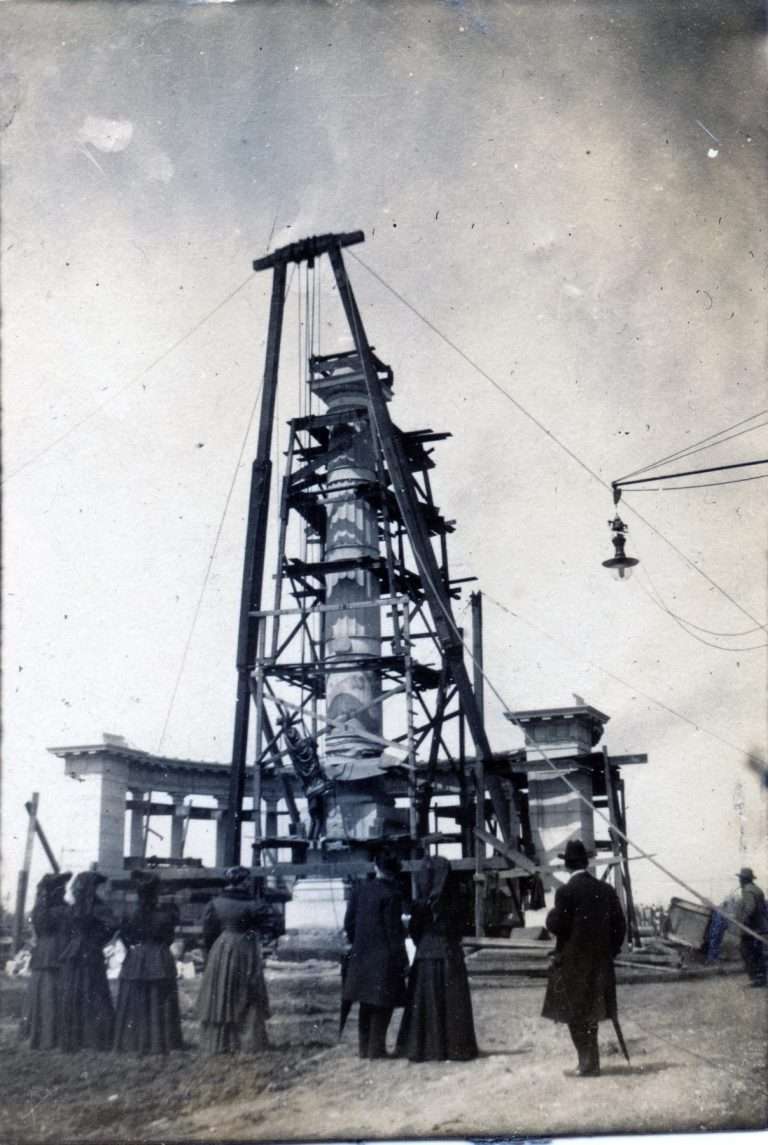

In the mid-1880s, Valentine was among the artists who competed for the commission to design an equestrian statue of Lee for Richmond’s Monument Avenue—the first of the city’s larger-than-life memorials to Confederate heroes. The commission, however, went to Parisian sculptor Antonin Mercié, disappointing those who thought that the honor should have gone to a Virginian. Despite this, Valentine’s career continued to flourish, and the United Daughters of the Confederacy eventually chose him to sculpt the figures on the Jefferson Davis monument that was unveiled in 1907. The third of the major Confederate memorials erected on Monument Avenue (after Lee and J. E. B. Stuart), the monument remained intact until the summer of 2020, when the statue of Davis was toppled by protesters in the wake of George Floyd’s murder; the other elements were later removed by the city.
In 1909, Valentine’s bronze sculpture of Lee became one of two sculptures representing Virginia in Statuary Hall in the U.S. Capitol. It remained there for more than a century, but in December 2020, it was removed and relocated to the Virginia Museum of History & Culture. (It will be replaced by a statue of civil rights activist Barbara Johns.)
As Valentine’s fame grew in the 1870s and 1880s, tourists and celebrities visited his studio, including the Irish playwright and poet Oscar Wilde, former Confederate secretary of war John C. Breckinridge, and former Confederate generals William Mahone and Joseph E. Johnston.
Alice Valentine died in 1883 at the age of thirty-eight. In 1892, Valentine married another Virginian, Katherine Coles Friend. They too had no children prior to her death in 1927.

Edward Valentine’s brother, Mann S. Valentine II, made a fortune through sales of a health tonic, Valentine’s Meat Juice, which he used to amass a collection of art and historical artifacts displayed in his Richmond mansion. When he died in 1892, the home and the collection became the Valentine Museum, which opened six years later with Edward as its president. He was also involved with the state art commission and the Virginia Historical Society (now the Virginia Museum of History & Culture).
Valentine produced no major works after 1910, spending the last twenty years of his life compiling research about Richmond and working on his memoirs. He also toiled for decades on a spy novel set in seventeenth-century Virginia, though he never published either it or his memoirs. In 1929, however, Valentine’s great-niece, Elizabeth Gray Valentine Thomas Huntley, published Dawn to Twilight: Work of Edward Valentine, which consisted of entries from his voluminous diaries as well as a narrative of his life and art.
Valentine died on October 19, 1930, at the age of ninety-one. He is buried in Richmond’s Hollywood Cemetery next to both of his wives.
Legacy
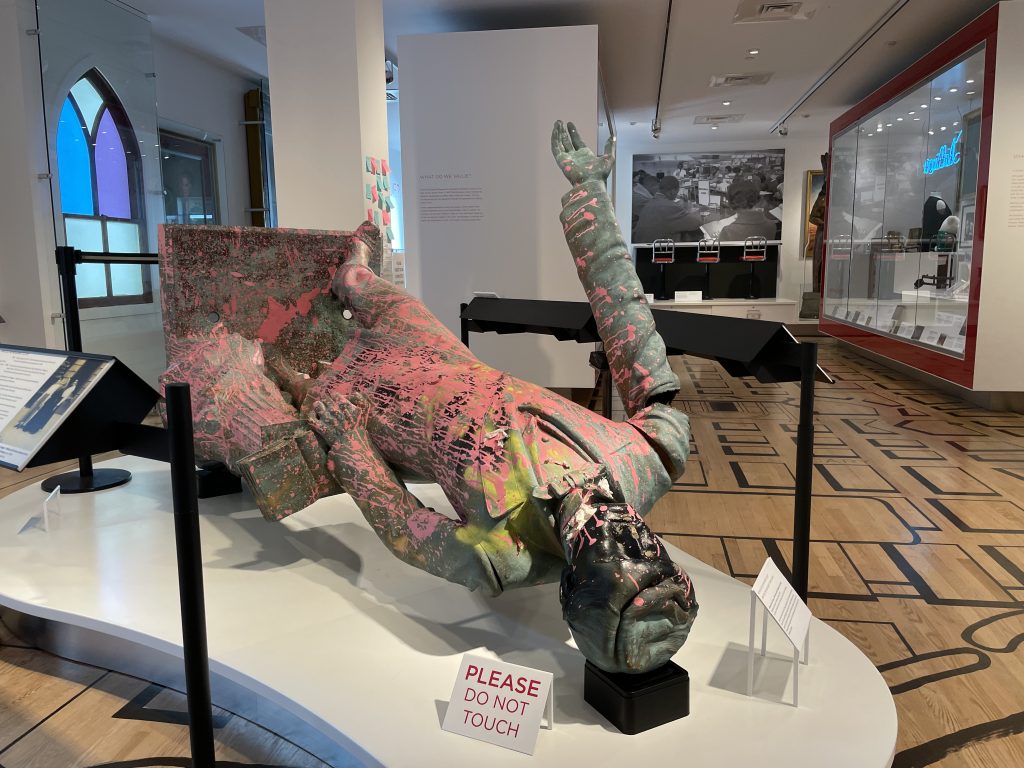
Valentine holds the dubious distinction of being one of the most prominent American artists of the Lost Cause. A number of his monuments have been removed from public display. In addition to the Lee statue at the U.S. Capitol and the Jefferson Davis monument on Monument Avenue, a statue of Confederate general, politician, and railroad executive Williams Carter Wickham was toppled in Richmond’s Monroe Park in the summer of 2020. Three years earlier, officials in New Orleans had removed Valentine’s statue of Jefferson Davis, which was a copy of the Richmond monument. Other Valentine works—Recumbent Lee, the statue of Stonewall Jackson in Lexington, and the statue of Thomas Jefferson at the Jefferson Hotel in Richmond—remain at their original locations.


