

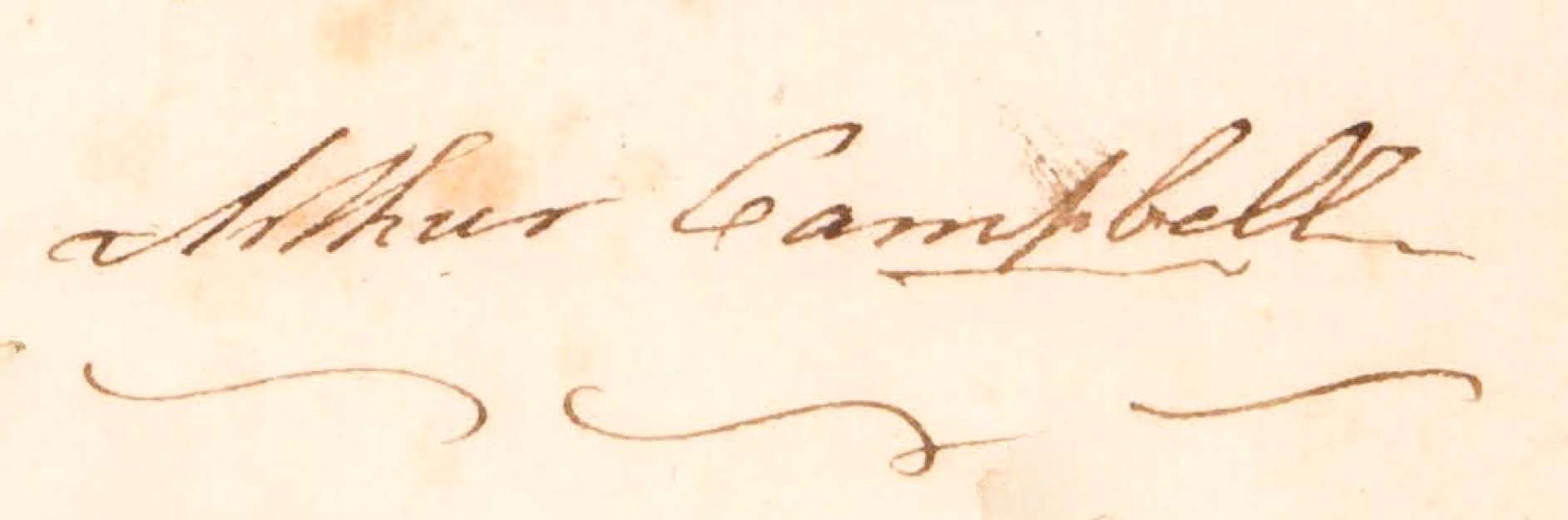
Campbell was born in Augusta County, the son of David Campbell and Mary Hamilton Campbell, both children of Scots-Irish immigrants who settled in western Virginia in the 1720s. The marriages of his six brothers and sisters connected the Campbells to many of the most influential families in the region. In September 1758, while serving in a company of Virginia rangers during the Seven Years’ War, Campbell was captured by members of the Wyandot Tribe and held captive until he escaped near Fort Detroit two years later. He returned to his family, who had presumed that he was dead, received a grant for 2,000 acres of land, and began a career in landownership and speculation. By the time of his death, Campbell’s landholdings totaled almost 15,000 acres.
In about 1769, Campbell moved with his family to the Holston River region. In 1773, he married his cousin Margaret Campbell. They had six sons and six daughters and lived at Royal Oak (later the site of Marion). Campbell became a justice of the peace in the new county of Fincastle in 1773. The following year, he was a major in command of county volunteers who guarded the southwestern Virginia frontier during Dunmore’s War. Campbell was an original member of the Fincastle County Committee, established on January 20, 1775, and during the ensuing months he kept his eye on frontier defense and on opportunities for land acquisition in Kentucky. He may have been engaged in Richard Henderson’s attempt to create a separate western colony of Transylvania. That attempt pitted members of rival land companies against one another, and Campbell became embroiled in controversies resulting from Henderson’s venture.

In April 1776, Campbell became a lieutenant colonel in the Fincastle County militia, and he and William Russell won election to represent the county in the Fifth Virginia Revolutionary Convention. Campbell served on the standing committees of Propositions and Grievances and on Public Claims and on drafting committees for measures to stimulate the manufacture of munitions, to enlarge the 9th Virginia Regiment, and to raise four troops of cavalry to defend the frontier. He voted for independence on May 15, for the Virginia Declaration of Rights on June 12, and for the first Constitution of Virginia on June 29.
Campbell returned to Williamsburg in October 1776 as a member of the House of Delegates and took seats on the committees of Propositions and Grievances and on Public Claims. He strenuously opposed a bill to divide Fincastle County into two new counties, one to include Kentucky, perhaps viewing the measure as a threat to Henderson’s western landholdings. After passage late in 1776 of an amended bill dividing Fincastle into three new counties (Kentucky in the west, Montgomery in the north, and Washington in the south), Campbell became the first county lieutenant of Washington County and presiding justice of its court. His local political position secure, he helped coordinate operations against Natives and Loyalists in the Virginia backcountry throughout the Revolutionary War. Campbell was elected to one-year terms in the House of Delegates in 1778, 1782, and 1783. He arrived at the 1778 assembly too late to be appointed to a major standing committee, but he served on the Committee of Propositions and Grievances during the 1782 and 1783 sessions and also sat on the committees for Courts of Justice and of Privileges and Elections in 1782.
By 1785, Campbell owned almost 5,500 acres in Washington County, far more than any of its other residents. Like many other ambitious frontier settlers, he built his public career through a combination of entrepreneurship, local leadership, and connections with political patrons from Virginia’s Tidewater elite. A large man of impressive appearance, Campbell read and traveled widely, especially after the Revolution, and was a fluent conversationalist. His nephew David Campbell (1779–1859), later a governor of Virginia, remembered that he was “hasty and excitable and disposed to be overbearing; and was often engaged in violent personal quarrels.”
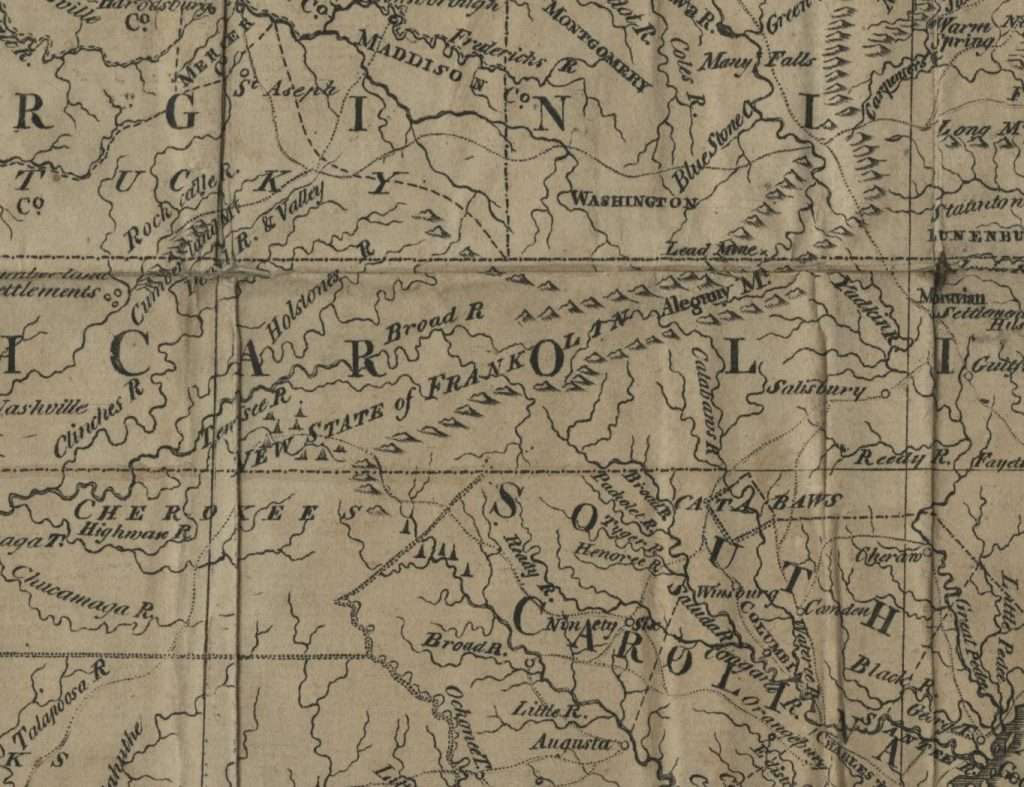
Campbell’s relationship with eastern Virginia leaders changed in the 1780s when he developed connections with the separatist movement that was attempting to establish a state of Franklin in western North Carolina. Believing that a new southwestern state would provide people in his area of Virginia with a more responsive legislature and better protection from the Natives, he led the effort to transfer jurisdiction over Washington County from Virginia to Franklin. When Governor Patrick Henry learned of these activities, he dispatched William Russell to suppress the perceived revolt. Henry’s action must have been galling to Campbell. Russell had been his sometime colleague and frequent competitor for office in the county for a decade, and Russell had recently become Henry’s brother-in-law by marrying the widow of Campbell’s own cousin and brother-in-law, Brigadier General William Campbell (1745–1781). The two men were even then contesting guardianship of the general’s children. At the June 1785 meeting of the Washington County Court, Russell executed Henry’s order to strip Campbell of his appointed offices. Henry also pushed through legislation that defined separatist activity as treason.
Campbell’s political estrangement from Virginia proved short-lived, and his local standing remained undimmed. He won election to the House of Delegates in 1786 and 1787 and served on the Committee for Courts of Justice during both sessions and on the Committee for Religion in 1787. In the latter year, the new governor, Edmund Randolph, reappointed Campbell justice of the peace and county lieutenant. During the winter of 1787–1788, Campbell took a leading role in meetings at the Washington County courthouse at which local political leaders drafted amendments to the proposed constitution of the United States, many of which were intended to weaken the power of the new national government, to abridge the influence of the president and the Senate, and to require that a bill of rights be added.
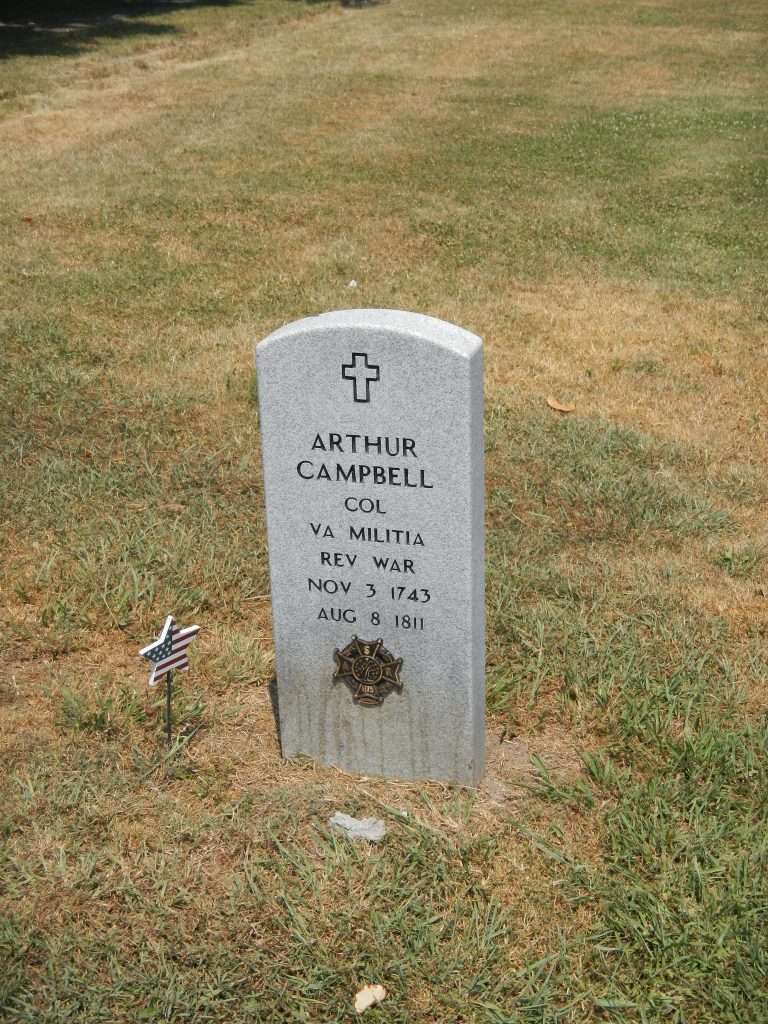
Campbell nevertheless became an active Federalist during the 1790s. George Washington appointed him an Indian agent in 1793, and the postmaster general gave him responsibility for transporting the mail between Staunton and Abingdon. Campbell resigned all of his public offices by 1799. Ten years later, he moved to the Yellow Creek settlement in Kentucky (later the site of Middlesboro), near some of his children and other family members. Campbell died there of cancer on August 8, 1811. His will directed that he be buried at Gideon’s Tenements near Cumberland Gap.


