


Early Life and Western Lands

Lewis was born on October 9, 1720, the second son of John Lewis and Margaret Lynn Lewis of County Donegal, Ireland. The Lewises emigrated to North America after John Lewis defended his family against an unprovoked attack by his landlord. By 1738, after some time in Pennsylvania, the Lewises settled in the “Irish Tract,” an area of the upper Shenandoah Valley in Augusta County near present-day Staunton known for its preponderance of Scots-Irish settlers. Familial connections enabled John Lewis to enter a partnership with William Beverley and others to develop Beverley’s lands. Lewis became a prominent land speculator through the Greenbrier Land Company. In 1748, his father was appointed to the governor’s Council. With his father and an older brother, Lewis began surveying the vast expanse of western Virginia during a great wave of immigration to the region. By the outbreak of the Seven Years’ War, Lewis had surveyed some 50,000 acres of the southwestern boundary of Virginia for the Greenbrier Company. In about 1744, he married Elizabeth Anne Givens, and they went on to have six sons and one daughter. Lewis became a justice of the peace for Augusta County in 1749.
The Seven Years’ War
Lewis’s “uncommon” strength and stature, combined with his grave demeanor, made him a natural and daunting commander. As early as 1742, Lewis had become captain of a company of the Augusta County militia, and he advanced to the rank of colonel ten years later. On March 8, 1754, after war had broken out between the British and the French in North America, Lewis’s skill and reputation as a soldier earned him a commission as a captain in the fledgling Virginia Regiment formed by royal governor Robert Dinwiddie. Lewis commanded a company during the unit’s initial expedition to the Ohio Country later that summer and was wounded during the fighting at Fort Necessity.

Recognizing the immediate danger to the borderlands, Dinwiddie sent Lewis to command a detachment of about forty-five men from the Virginia Regiment on September 11, 1754. The detachment was tasked with ranging on the vast western edge of the colony, and consequently, Lewis was not present when the British suffered a devastating loss at the Battle of the Monongahela. The General Assembly of Virginia resolved to rebuild the Virginia Regiment after this defeat, and in early September 1755, Lewis was appointed a major in the renewed unit. To protect the frontier after the French victory and in the wake of a series of Shawnee raids on settlements in the area, Dinwiddie ordered a December 1755 foray against the French-allied Shawnee. Lewis was selected to command a mixed force of about 340 soldiers, rangers, and volunteers supported by about 100 Cherokee warriors. The poorly equipped Sandy Creek Expedition set out from Fort Frederick on the New River in mid-February 1756, intending to attack Lower Shawneetown on the Ohio River. The soldiers were plagued by brutal weather, difficult terrain, and a lack of food and supplies, resulting in threats of mutiny and desertion. After four weeks, Lewis and his officers held a council of war, and on March 15, they voted to turn back, although it is perhaps a testament to Lewis’s ability to manage difficult situations that the expedition progressed as far as it did.
Dinwiddie subsequently turned his attention to strengthening ties with the southern Native nations. He selected Lewis as emissary to the Overhill Cherokee, the first of numerous instances in which Lewis was chosen to negotiate with Native nations. His background had prepared him for this role: the Irish Tract was near ancient paths that connected Native peoples throughout the Eastern Woodlands, and he had learned to navigate the complexities of relations with the many different Indigenous peoples.
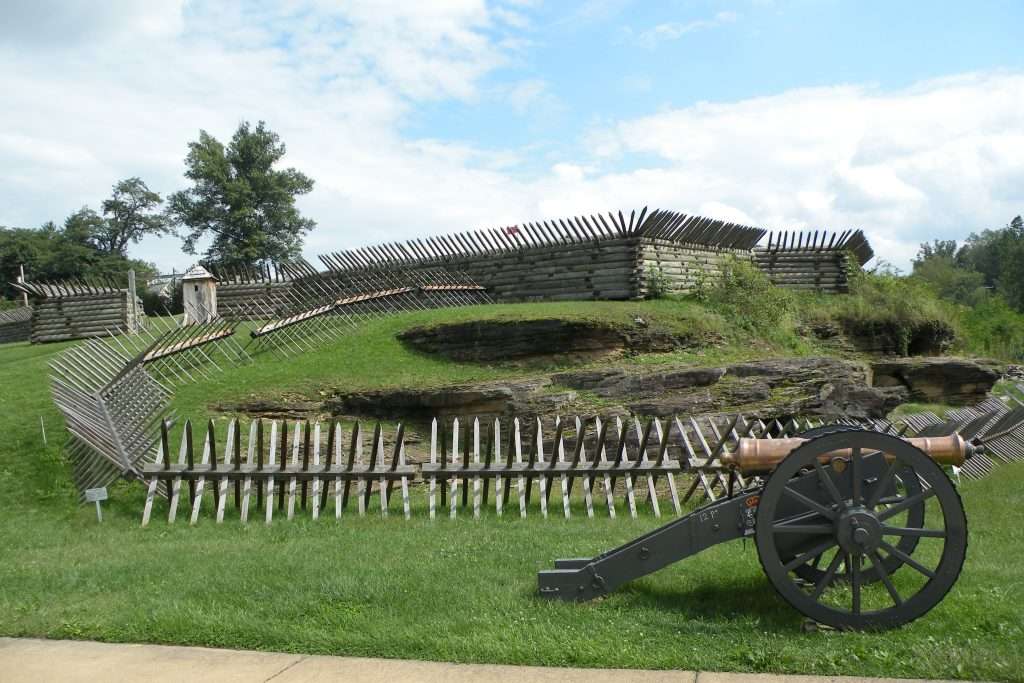
On May 17, 1756, Great Britain formally declared war against France. For the next two years, Lewis assisted in recruiting and training members of the Virginia Regiment. He also commanded detachments to build forts and patrol the vast irregular frontier of Virginia and North Carolina. By 1758, the British ministry had devised a new war strategy that included driving the French from the Ohio Country. To that end, Brigadier General John Forbes was to advance to the forks of the Ohio River with a military force that included Colonel George Washington’s Virginia Regiment. Major Lewis was tasked with scouting and superintending the building of roads and was part of a detachment from Fort Ligonier that launched an exploratory strike on the enemy in mid-September 1758. Unbeknownst to the British-American forces, however, Fort Duquesne recently had been reinforced, and the detachment was routed. When the smoke cleared, Lewis was missing and feared dead. Washington wrote that Lewis’s absence “is a great loss to the Regiment, & Colony we have the Honr to serve; he opposd that Expedition to the utmost, unavailingly, but went chearfully upon it after his Sentiments were known.” Lewis survived, however, and spent a little over a year as a prisoner of war in Canada.

Lewis returned to Virginia in time to counter a Cherokee uprising in the early months of 1760. He returned to duty with the Virginia Regiment and served until the summer of 1761, when the Cherokee sued for peace, and Lewis finally returned home after seven years of fighting. But the ink on the Treaty of Paris had barely dried in the summer of 1763 when he was called back into the field. In reaction to the multinational Native revolt known as Pontiac’s Rebellion, royal governor Francis Fauquier called out the militia to protect the western frontier and placed Lewis in command of the force in the southwest. Though the uprising did not include major intrusions against Virginia’s frontier, small raids resulted in the death and capture of settlers in numerous frontier communities. In London, Pontiac’s Rebellion became the final argument for the Proclamation of 1763, which banned colonial settlement and speculation west of the Allegheny Mountains.
As tensions over frontier settlement grew, on May 8, 1765, a mob of white men attacked a small party of British-allied Cherokee passing through Augusta County with Lewis’s permission, killing five men. In his capacity as justice of the peace, Lewis arrested and jailed two of the offenders. Saying they would never allow “a man to be Confined or brought to Justice for killing of Savages,” a mob calling themselves the Augusta Boys broke both men out of jail. Despite a reward offered by Governor Fauquier, no additional arrests for the murder were made, and the Augusta Boys felt secure enough in their local support to issue a proclamation offering a reward for the capture of Lewis.
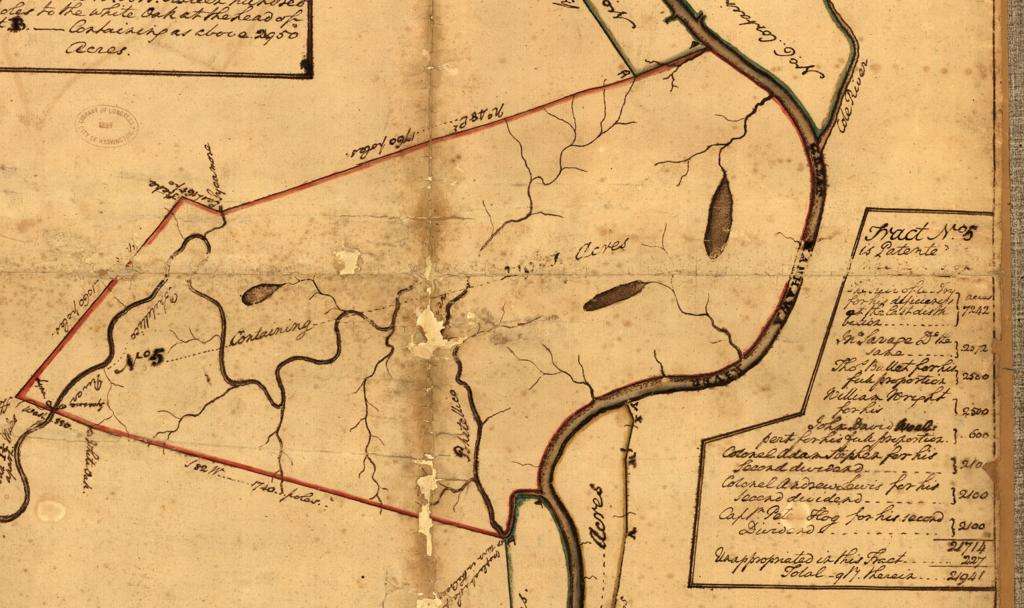
In 1768, Lewis was appointed to represent Virginia in negotiations with the Overhill Cherokee at Hard Labor, South Carolina, which resulted in the Treaty of Hard Labor, and with the Haudenosaunee (the Six Nations of the Iroquois) at Fort Stanwix. The Treaty of Fort Stanwix further opened the West to white settlement, resulting in the 1769 establishment of Botetourt County. Lewis moved his family to Richfield, a 2,000-acre plantation in the Roanoke Valley worked by enslaved laborers. He was appointed county lieutenant, or chief militia officer, for Botetourt County on March 2, 1770, and was elected to the Virginia House of Burgesses two years later. Lewis also resumed his land speculation, which had been stymied by the Proclamation of 1763. With George Washington and others, Lewis began pursuing bounty lands that had been promised to the officers and soldiers of the Virginia Regiment.
Dunmore’s War

The Treaty of Fort Stanwix opened the Ohio River Valley west of the Appalachian Mountains to white settlement without regard to the claims of the Shawnee who hunted in the region. Both Native nations and Euro-Americans engaged in sporadic violence throughout the region in the early 1770s, and the situation reached a head by the summer of 1774. When attempts at peace failed, royal governor John Murray, fourth earl of Dunmore, organized a two-pronged offensive against the Shawnee in the Ohio Country. He would lead a force of 1,000 men from the northwest, while Colonel Lewis commanded an equal force from the southwest. The two armies were to meet at Point Pleasant, at the junction of the Ohio and Kanawha rivers. But Dunmore bypassed this rendezvous and sought to meet up with Lewis’s forces at Chillicothe, further west. Before Lewis could comply, however, his division was surprised by a large force of Shawnee and Mingo warriors at Point Pleasant on October 10, 1774. The Virginians emerged victorious from the hard-fought Battle of Point Pleasant, and all parties signed a peace treaty nine days later.
American Revolution and Death
As the breaking point with Great Britain drew nearer, Lewis’s sympathies lay squarely with the disaffected colonies. As a delegate to the March 1775 Second Virginia Convention, he used his military and diplomatic experience in his role on a committee charged with placing Virginia in “a posture of Defence” as well as during his attendance at a conference with Native nations of the upper Ohio River Valley at Fort Pitt. Lewis was likely elected to but did not attend the Third Virginia Convention in the summer of 1775, but he did participate in the Fourth Virginia Convention from December 1775 to January 1776, where he refused a position in a regiment headed by Patrick Henry because he had never seen active military service.

On March 1, 1776, the Continental Congress recognized Lewis’s military experience and appointed him a brigadier general in the Continental Army. George Washington, now the army’s commander in chief, approved the selection, writing that he had “always look’d upon him as a Man of Spirit and a good Officer.” Establishing his headquarters in Williamsburg, Lewis set out to build and direct Virginia’s military forces. Chief among his many tasks was to counter the Crown forces of the now-exiled Dunmore, who had abandoned the capital the previous summer. Dunmore eventually sought to resupply, refit, and rest his troops on Gwynn’s Island, at the mouth of the Piankatank River. Seizing the opportunity, Lewis led a force to the area and on the morning of July 9, 1776, put the match to the first gun that fired on the enemy’s camp. By the time Lewis’s infantry landed on Gwynn’s Island the next morning, Dunmore and the remnants of his disease-ravaged Ethiopian Regiment had retreated to their ships. They eventually joined the larger British military force in New York, thereby ending British rule in Virginia.
In February 1777, after Washington’s victories at Trenton and Princeton, the Continental Congress promoted several officers to the rank of major general, but Lewis was not among them. In a letter to John Hancock, the president of Congress, Lewis cited the dishonor of serving under officers whom he had once commanded. Although Washington personally conveyed his disappointment to Lewis and beseeched him not to resign, Lewis submitted his resignation, which the Continental Congress accepted on April 15.
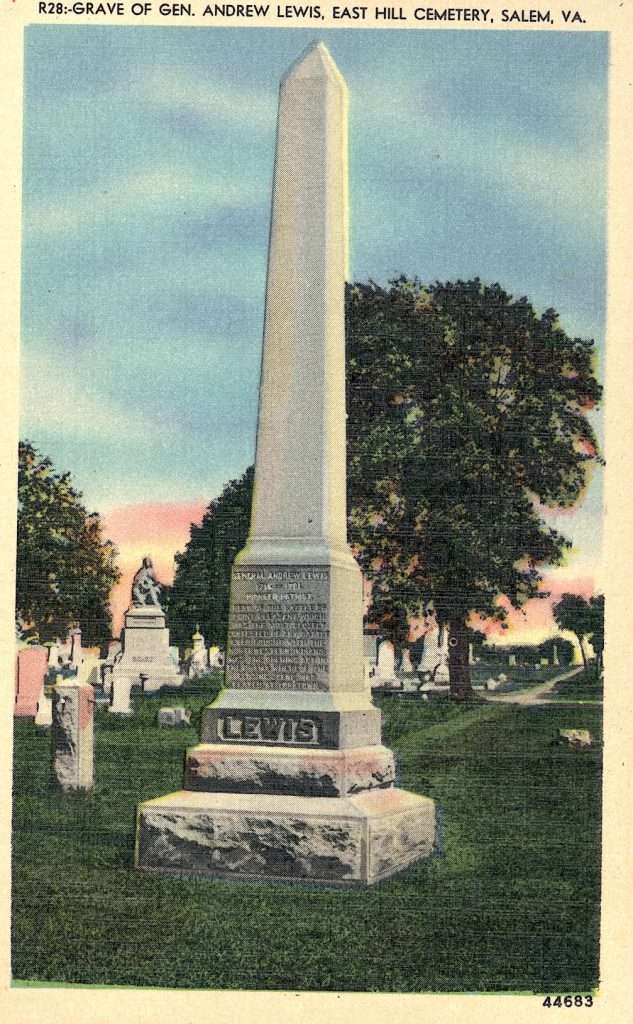
Lewis returned to Botetourt County but still cast a vigilant eye on the western frontier. He continued to serve Virginia as a negotiator with Indigenous nations and in tactical planning for frontier fortifications in 1778 and 1779. On May 24, 1780, he was elected to the Privy Council, advising Virginia governor Thomas Jefferson as the enemy’s main offensive shifted southward and Benedict Arnold raided Richmond. While returning to his home after a council meeting, Lewis suddenly became ill and died on September 25, 1781. As his fellow frontiersman, land speculator, and military officer William Preston noted, “His remains were decently Interred … on his own Land in presence of his Family and a Number of Friends, whose Silent Grief and sorrowful Countenances plainly discovered the feelings of their Hearts on the mournful Occasion.” He was later reinterred in East Hill Cemetery in Salem. His estate included 30,000 acres of land and twenty enslaved people.


