ENTRY

Abraham Bowman (October 16, 1749–November 9, 1837)

SUMMARY

Abraham Bowman was a Continental Army officer from Virginia who later became a prominent Kentucky planter and civic leader. Born near Cedar Creek in Frederick County to George and Mary Hite Bowman, he came from a military family—his brothers John and Joseph also served as officers during the Revolutionary War. Likely trained as a surveyor, Bowman gained early experience in frontier defense and became a justice of the peace in the newly formed Dunmore County (now Shenandoah County) in 1772. He helped organize the county’s Committee of Safety in 1775 and briefly served as a peace officer in Kentucky before returning to Virginia to join the Revolutionary cause. In early 1776, he was appointed lieutenant colonel of the 8th Virginia Regiment, known as the German Regiment, which earned distinction during the defense of Charleston that June. Promoted to colonel in 1777, Bowman led his regiment in the Battles of Brandywine and Germantown and served through the Battle of Monmouth in 1778 before returning home to recruit new troops. In 1779 Bowman settled near Lexington, Kentucky, where he prospered as a landowner and planter. He married Sarah Henry Bryan in 1782, with whom he had seven children, and served as a Fayette County justice of the peace and later as an elector for Kentucky’s first Senate. Highly regarded in his community, Bowman hosted the Marquis de Lafayette during his 1825 visit to Lexington. He died at his Fayette County home on November 9, 1837.

Bowman was born near Cedar Creek in Frederick County, the son of George Bowman and Mary Hite Bowman. His brother John Bowman was a frontier militia officer, and another brother Joseph Bowman was an officer in George Rogers Clark’s Illinois Regiment. Nothing is definitely known of Abraham Bowman’s education, but he probably worked for a local surveyor and may have intended to follow that profession. When Bowman was about seventeen he assisted his neighbors in repelling an attack from Indigenous peoples, and when Dunmore County was formed out of Frederick in the spring of 1772, he was appointed one of the new county’s first justices of the peace.

On January 10, 1775, Bowman was a founder of the Dunmore County Committee, organized to enforce the nonimportation association that the First Continental Congress had adopted. Shortly thereafter he traveled to Kentucky, where on June 5, 1775, agents of the Transylvania Company appointed him a conservator of the peace at the Boiling Springs community. Bowman returned to Dunmore County in the autumn, and when John Peter Gabriel Muhlenberg issued his call for volunteers from the lower Shenandoah Valley to form a regiment to fight for Virginia, Bowman was one of the first to respond. On January 12, 1776, the Virginia Convention of 1775–1776 appointed Muhlenberg colonel and Bowman lieutenant colonel of the 8th Regiment Virginia Infantry, also called the German Regiment because many of its first soldiers were of German birth or ancestry. Muhlenberg and Bowman took their qualifying oaths on April 3, 1776, and received commissions dated March 1.
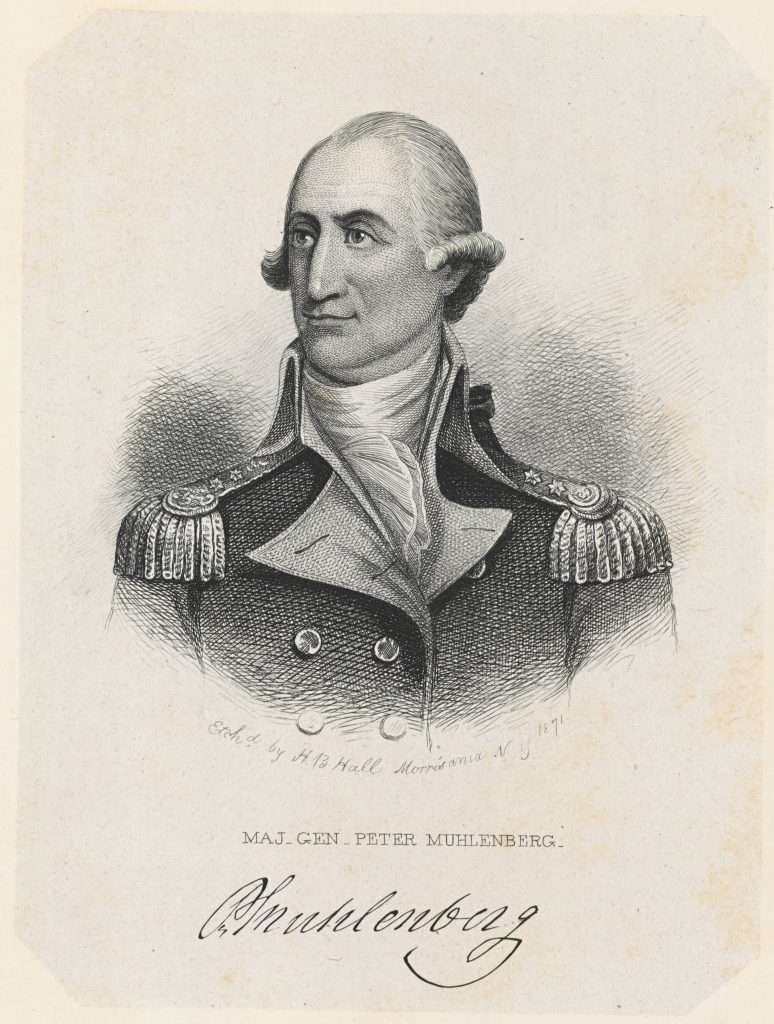
The German Regiment was one of the most famous Virginia regiments in the Revolutionary War. General Charles Lee and other commanders complained of its soldiers’ unmilitary deportment during service in Tidewater Virginia in the spring of 1776 and en route to South Carolina early in the summer, but the regiment so distinguished itself during the defense of Charleston on June 28 that Lee singled it out for high praise. The Continental Congress voted in principle to take the regiment into the Continental Army on March 25, 1776, subsequently ruled that the unit would not be accepted until it was fully manned, and on August 13, 1776, reversed itself and admitted it into the Continental establishment dating from May 25.

After Muhlenberg’s appointment as brigadier general, Bowman was promoted to colonel on  March 22, 1777, with his commission to date from January 30. He led the German Regiment in the Battles of Brandywine and Germantown in the autumn of 1777 and continued to serve until after the Battle of Monmouth in June 1778. Bowman returned to Virginia to recruit more soldiers, but, perhaps because recruitment funds had been exhausted, he did not return to the army.

Bowman moved to Kentucky in 1779 and settled near Lexington in what became Fayette County a year later. During the summer of 1782 he married Sarah Henry Bryan, the widow of John Bowman’s stepson. She had one son by her first husband, and the Bowmans had four sons and three daughters. Bowman had begun investing in land during the 1770s, on his own and in partnership with his brothers John Bowman and Joseph Bowman, and he amassed several thousand acres and prospered as a planter. Bowman became a Fayette County justice of the peace on July 19, 1786, and in 1792 served as an elector for the new Senate of Kentucky. He lived to be old and respected, and as one of the most prominent Revolutionary War veterans in central Kentucky he hosted the Marquis de Lafayette when the French general visited Lexington in May 1825. Abraham Bowman died at his home in Fayette County, Kentucky, on November 9, 1837.

MAP
TIMELINE
October 16, 1749

Abraham Bowman is born near Cedar Creek in Frederick County, the son of George Bowman and Mary Hite Bowman.

1772

Abraham Bowman is appointed one of Dunmore County’s first justices of the peace.

January 10, 1775

Abraham Bowman founds the Dunmore County Committee to enforce the First Continental Congress’s nonimportation association.

June 5, 1775

Agents of the Transylvania Company appoint Abraham Bowman a conservator of the peace at the Boiling Springs community in Kentucky.

Autumn 1775

Abraham Bowman answers the call for volunteers from the lower Shenandoah Valley to form a regiment to fight for Virginia.

January 12, 1776

The Fourth Virginia Convention appoints Abraham Bowman lieutenant colonel of the 8th Regiment Virginia Infantry, also called the German Regiment.

Spring 1776

General Charles Lee and other commanders complain of the German Regiment’s unmilitary deportment during service in Tidewater Virginia and en route to South Carolina.

June 28, 1776

General Charles Lee singles out the German Regiment for high praise following the regiment’s performance during the defense of Charleston.

August 13, 1776

The Continental Congress admits the German Regiment into the Continental Army.

March 22, 1777

Abraham Bowman is promoted to colonel of the German Regiment.

Autumn 1777

Abraham Bowman leads the German Regiment in the Battles of Brandywine and Germantown.

June 1778

Abraham Bowman returns to Virginia to recruit more soldiers and does not return to the army.

1779

Abraham Bowman settles near Lexington, Kentucky.

Summer 1782

Abraham Bowman marries Sarah Henry Bryan. She had one son by her first husband, and the Bowmans had four sons and three daughters.

July 19, 1786

Abraham Bowman becomes a Fayette County justice of the peace.

1792

Abraham Bowman serves as an elector for the new Senate of Kentucky.

May 1825

Abraham Bowman hosts the Marquis de Lafayette during his visit to Lexington.

November 9, 1837

Abraham Bowman dies at his home in Fayette, County, Kentucky.

FURTHER READING
  • Nelson, Paul David. “Bowman, Abraham.” In the Dictionary of Virginia Biography, Vol. 2, edited by Sara B. Bearss et al., 1148–149. Richmond: Library of Virginia, 2001.
CITE THIS ENTRY
APA Citation:
Nelson, Paul David & Dictionary of Virginia Biography. Abraham Bowman (October 16, 1749–November 9, 1837). (2025, November 06). In Encyclopedia Virginia. https://encyclopediavirginia.org/entries/abraham-bowman-october-16-1749-november-9-1837.
MLA Citation:
Nelson, Paul David, and Dictionary of Virginia Biography. "Abraham Bowman (October 16, 1749–November 9, 1837)" Encyclopedia Virginia. Virginia Humanities, (06 Nov. 2025). Web. 19 Oct. 2026
Last updated: 2025, November 06
Feedback
  • This field is for validation purposes and should be left unchanged.
  • This site is protected by reCAPTCHA and the Google Privacy Policy and Terms of Service apply.