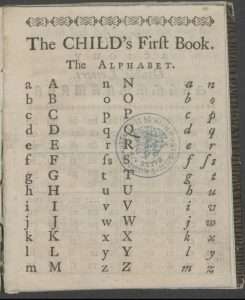
The American Revolution was revolutionary in more ways than one. Beyond creating the United States and securing its independence from Britain, the Revolution inspired republican ideals that reverberated long after the guns had gone silent. Access to tax-supported, widespread public education was one such ideal, although as our new entry by Mark Boonshoft of the Virginia Military Institute on Education in Virginia in the Revolutionary Era shows, it would take some time to get there. Read more about: The Revolutionary Fervor for Public Education
Blog
Back to School with Encyclopedia Virginia
The pencils are sharpened, the backpacks are stocked, and the class hamster is home—it must be back-to-school season, and Encyclopedia Virginia couldn’t be more excited! We’re reaching out during back-to-school season to ask for your continued support for this critical educational resource at a time of decreased federal funding for the humanities. Read more about: Back to School with Encyclopedia Virginia
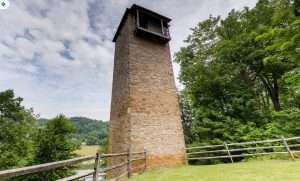
Shooting the Shot Tower
One of the advantages of Encyclopedia Virginia being digital is that we can illustrate our entries with interactive media. We use Google technology to create tours of historic locations in Virginia so that our users can virtually step into the places we talk about in our entries. Right now, EV features 90 virtual tours, and that number is constantly growing. Read more about: Shooting the Shot Tower
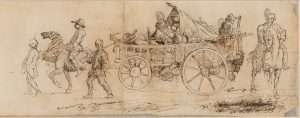
George Washington’s Women of the Army
For as long as there have been armies, there likely have been camp followers—the civilians, usually women, who tagged along providing goods and services to soldiers. And for just as long, camp followers have been derided as nuisances at best and prostitutes at worst—hangers-on looking to exploit the loneliness and wages of military personnel. Read more about: George Washington’s Women of the Army
Delivering on Our Mission
“Encyclopedia Virginia’s mission is to provide a free, reliable, multimedia resource that tells the inclusive story of Virginia for students, teachers, and communities who seek to understand how the past informs the present and the future.”
Encyclopedia Virginia’s mission statement was created in 2017 just after I became director of the project. Read more about: Delivering on Our Mission
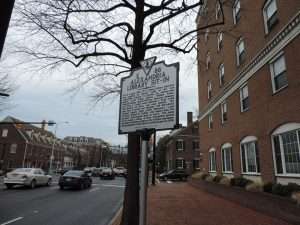
History Under Our Feet
Sometimes history is right under our feet and we don’t even realize it. When I lived in Old Town Alexandria, I frequented the quaint brick Kate Waller Barrett branch of the Alexandria Library. Not only was it around the corner from my house, but it contains the city’s local history and special collections reading room, where I spent many hours poring through old newspapers and documents as I worked on various projects. Read more about: History Under Our Feet
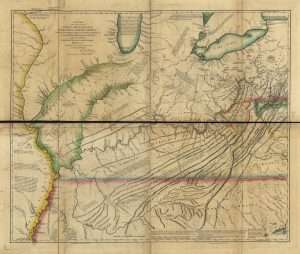
What Was “Virginia” during the Revolution?
When I started to look for images to illustrate our new entry about the Fincastle Resolutions, I figured that a map was a good place to start. Where was Fincastle County? What part of Virginia did it represent?
It turns out that Fincastle County, as a political entity, wasn’t just a portion of what I, or many of us, think of as “Virginia.” It sprawled into what is now the entire state of Kentucky and a big hunk of West Virginia. Read more about: What Was “Virginia” during the Revolution?
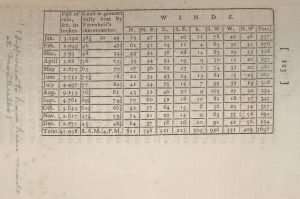
Jefferson the Weatherman
Whether it’s ferocious Santa Ana winds howling through Los Angeles or a polar vortex holding much of the country in its icy grip, it’s impossible to ignore the weather or how it affects everyday life. Human civilizations have long sought to make sense of the weather, to seek patterns that make it more predictable. Read more about: Jefferson the Weatherman
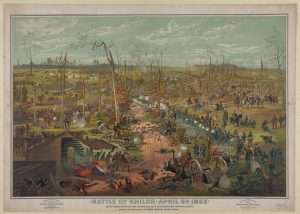
How Deadly Was the Civil War in Virginia?
No one disputes that the American Civil War was the bloodiest conflict in American history. But for decades historians and demographers have had difficulty pinpointing the exact number of casualties, especially on the Confederate side, due to poor record-keeping and records that were destroyed when Richmond fell at the end of the war. Read more about: How Deadly Was the Civil War in Virginia?
“Liberty to Slaves”
This November marks the 249th anniversary of Lord Dunmore’s Proclamation, the effort by Virginia’s last royal governor John Murray, fourth earl of Dunmore, to arm enslaved Black people to fight the mounting Patriot rebellion.
The idea of enlisting enslaved men to fight for the Crown had been brewing for some time, partly to play on fears of slave rebellion that regularly coursed through a colony where just over 40 percent of the population was held in bondage. Read more about: “Liberty to Slaves”