

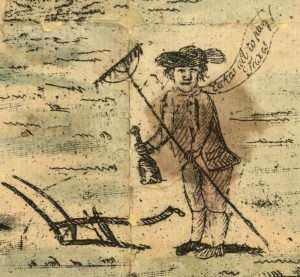
Late in 1775, a tenant revolt broke out in Loudoun County that pitted elite Patriot leaders against tenant farmers who had been battered by the economic realities of the Revolutionary War (1775–1783). These tenant revolts stemmed from issues that had emerged long before the Revolution and involved some of Virginia’s best-known revolutionaries. The rebellion started when James Cleveland, a tenant of George Washington’s, refused to pay rent, and expanded to other leaseholders who refused to pay their taxes and other debts as well. As the rebellion grew and threatened the success of the Revolution, elite revolutionaries mustered their power to quash the uprising. By the time the rebellion died out, it was clear that the tenant rebels and elite revolutionaries were fighting for different kinds of independence. Insurgent tenants wanted a more equal society based on widespread distribution of property, which would provide them access to political power. Landed revolutionaries, however, wanted to limit access to both property and power so they could stay in control of what would become the new state of Virginia. Thus, both groups shaped the state that became a social and political leader of the fledgling United States.
ENTRY


