Author: Philander D. Chase

ENTRY

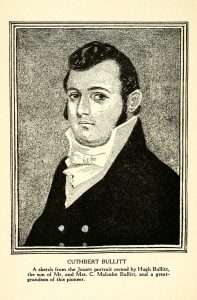
Cuthbert Bullitt (d. August 8, 1791)

Cuthbert Bullitt, probably born by 1732 in Prince William County, was a Virginia attorney, planter, and Revolutionary-era politician who played an active role in the colony’s move toward independence and in the early state government. Educated in the classics and trained in law, he practiced in Prince William and Fauquier counties, accumulated land worked by enslaved laborers, and served on local committees of correspondence in 1774. Elected to the final Virginia Revolutionary Convention in 1776, Bullitt sat on key committees, including those that drafted the Virginia Declaration of Rights and the first state constitution, and voted to instruct Virginia’s delegates to support independence. He represented Prince William County in the House of Delegates for multiple terms between 1776 and 1788, where he became influential despite periodic controversies, including an earlier fatal duel ruled self-defense and a later investigation into his borrowing of public funds that led to new legal restrictions. A political ally of Patrick Henry, Bullitt opposed ratification of the U.S. Constitution and voted against it in the 1788 Virginia convention. In December 1788, the General Assembly elected him a judge of the General Court, but illness curtailed his service; he died on August 8, 1791, at Warm Springs in Bath County, where he was likely buried.

ENTRY
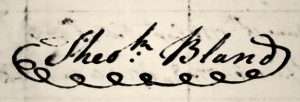
Theodorick Bland (March 21, 1742–June 1, 1790)

Theodorick Bland, officer, member of the Continental Congress, and member of the Convention of 1788 was born at Cawsons in Prince George County, Virginia, to Theodorick and Frances Bolling Bland. Educated in England, he studied medicine in Liverpool and at the University of Edinburgh, graduating in 1763. After returning to Virginia, he practiced medicine in Blandford but gave it up in 1771 due to poor health, turning instead to plantation management at Farmingdell, his estate near Petersburg. By the mid-1760s, Bland was active in local affairs as a vestryman and justice of the peace. A staunch advocate of American rights, he joined the Prince George County Committee in 1775 and wrote political letters under the pseudonym Cassius criticizing royal governor John Murray, fourth earl of Dunmore. That same year he entered military service, and in 1776 he was appointed major commandant of Virginia’s cavalry. His regiment joined George Washington’s army in early 1777, performing reconnaissance and security duties during the Philadelphia campaign. Bland later supervised the transfer and management of the Convention Army (British and German prisoners from Saratoga) to Charlottesville in 1779 before resigning his commission. Elected to the Continental Congress in 1780, Bland served until 1783, working on medical, military, and financial committees and advocating stronger congressional powers and moderation in foreign policy. After the war, he resumed life as a planter and later represented Prince George County in the Virginia House of Delegates (1786–1788). Although generally a nationalist, he opposed ratification of the U.S. Constitution without a bill of rights. In 1789 Bland was elected to the first U.S. House of Representatives as an Anti-Federalist. He supported Alexander Hamilton’s plan for federal assumption of state debts but died in New York on June 1, 1790, and was buried at Trinity Episcopal Church. His remains were later moved to Congressional Cemetery in Washington, D.C. Having no surviving children, he left most of his estate to his wife, Martha Dangerfield Bland.