

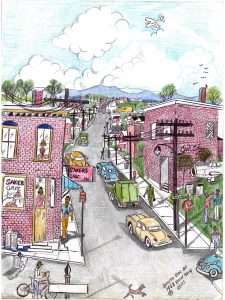
From 1955 until the close of the twentieth century, the City of Roanoke destroyed most of its Black neighborhoods under three urban renewal projects. In 1955, the Commonwealth Redevelopment Project razed 83.5 acres of homes, businesses, and schools in the largely Black Northeast neighborhood. Most of the remaining homes in Northeast were destroyed in 1964 under the Kimball Project. Redevelopment of the Gainsboro neighborhood occurred in a piecemeal manner after federal urban development funding formally ended in 1974, eventually destroying the Henry Street neighborhood that was the center of Black culture in Roanoke. Altogether, some 1,600 homes, several historic schools, 24 churches, and at least 200 small businesses were razed to make way for Interstate 581, a civic center, parking lots, the city’s main post office, the Roanoke Gas Company offices, and other businesses. The long-term effects of urban renewal continue to be felt in Roanoke, muddling land-use discussions to this day.
ENTRY


